Sorry, you need to enable JavaScript to visit this website.
Skip to main content

21 to 25 Apr 2025 | By invitation only

United Nations Conference Centre, Bangkok, Thailand

Logo_CS81


The eighty-first session of the Economic and Social Commission for Asia and the Pacific (ESCAP) will be held from 21 to 25 April 2025 at the United Nations Conference Centre in Bangkok.  It will bring together ministers from across Asia and the Pacific and other key stakeholders to exchange views on current and emerging policy issues for inclusive and sustainable development in Asia and the Pacific.

Guided by the theme “Regional cooperation for resilient and sustainable urban development in Asia and the Pacific”, the session will also be an opportunity to foster inclusive urban growth and promote steadfast action for the implementation of the 2030 Agenda for Sustainable Development at all levels.


Home to over 2.2 billion city dwellers and many of the planet’s largest megacities, Asia and the Pacific is the world’s urban powerhouse. At the same time, the region faces a number of challenges, with population growth slowing and key vulnerabilities, such as economic volatility, climate-related risks and social disparities, requiring integrated sustainable development strategies. The session will underscore the critical role of regional cooperation in addressing these issues and advocate for shared approaches to realize the ambitions of the global development agendas, including the 2030 Agenda, the Paris Agreement and the New Urban Agenda. 

Urban Transformation in Asa and the Pacific: from growth to resilience


The theme study explores the future of urbanization in Asia and the Pacific, focusing on the dynamic shifts in the region’s urban landscape. It highlights the region’s demographic transformations, including population ageing, and the persistent challenges of urban poverty and inequality. The analysis covers urban areas of all sizes, from megacities to smaller towns, and emphasizes the need for innovative governance models and sustainable development strategies to meet the region’s unique urban needs. Key vulnerabilities, such as economic volatility, climate risks and social disparities, are addressed, as are opportunities for cities to serve as testing grounds for new solutions.  It further underscores the critical role of regional cooperation in overcoming the challenges faced by cities and identifies shared approaches to localizing global goals, enhancing multilevel climate action and fostering inclusive urban growth. It also emphasizes the importance of data, digital transformation and innovative financing in supporting sustainable urban development and ensuring cities are equipped to navigate the complex future ahead.


CREDENTIALS AND REGISTRATION

Each delegation is required to submit a letter of credentials, duly signed by the appropriate authority of the respective Government or organization by 25 April 2025 to [email protected].

All participants who appear in the letter of credentials are requested to register online at https://indico.un.org/e/CS81. Only the names of duly accredited and registered participants will be included in the list of participants.


DELEGATES ASSESSMENT

Participants are kindly requested to assess the 81st session of the Commission by completing the questionnaire under the following link.

21 Apr 2025
09:00
12:00
Opening of the session
ESCAP HALL, UNCC

livewebcast

9:00-10:30

Agenda item 1

Opening of the session

Agenda item 1 (b) Election of officers

Agenda item 1 (a) Opening addresses

- H.E. Mr. Philemon Yang, President of the 79th session of the United Nations General Assembly (video) (statement)

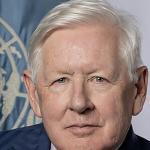
- H.E. Mr. Bob Rae, Eightieth President of the Economic and Social Council (video) (statement)

- Ms. Amina J. Mohammed, Deputy Secretary-General of the United Nations (video) (statement)

- Ms. Armida Salsiah Alisjahbana, Executive Secretary of ESCAP (statement)

- H.E. Ms. Paetongtarn Shinawatra, Prime Minister, Royal Thai Government (statement)

Agenda item 1 (c) Adoption of the agenda

Special remarks by Heads of State/Government 

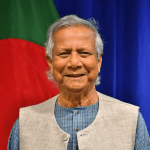
- H.E. Mr. Mohammad Yunus, Chief Advisor of Bangladesh (video) (statement)

- H.E. Mr. Panapasi Nelesone, Deputy Prime Minister and Minister of Finance and Economic Development of Tuvalu (statement)

10:30-12:00

Agenda item 2

Current and emerging policy issues for inclusive and sustainable development in Asia and the Pacific: 

Agenda item 2 (a) General debate

- Policy statement by the Executive Secretary (statement)

- Country statements 

12:00
12:15
Official Opening of New Engagement Spaces in the Secretariat Building
Secretariat Building
12:15
13:15
LUNCH
13:15
14:15
SIDE EVENTS
14:30
17:30
Agenda item 2: Current and emerging policy issues for inclusive and sustainable development in Asia and the Pacific
ESCAP HALL, UNCC

livewebcast

Agenda item 2 (a): General debate (continued)

- Country statements

18:00
20:00
RECEPTION HOSTED BY ESCAP AND MINISTRY OF FOREIGN AFFAIRS, ROYAL THAI GOVERNMENT
Ministry of Foreign Affairs
22 Apr 2025
08:45
09:00
Re-opening ceremony of Conference Room 1
Conference Room 1
09:00
12:00
Agenda item 3 Theme: “Regional cooperation for resilient and sustainable urban development in Asia and the Pacific”
ESCAP HALL, UNCC

livewebcast

- Presentation of the findings of the theme study 

- Keynote by Ms. Anacláudia Rossbach, Executive Director of UN-Habitat 

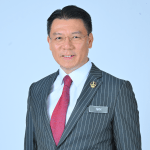
- Special address by H.E. Mr. Nga Kor Ming, Minister of Housing and Local Government, Malaysia 

- ROUNDTABLE (concept note)

- Moderator: Ms. Bernadia Irawati Tjandradewi, Secretary-General, United Cities and Local Governments Asia-Pacific 

- Mr. Tevita Boseiwaqa, Chairman of Suva City Council  

- Ms. Shinta Widjaja Kamdani, Chair of the ESCAP Sustainable Business Network (ESBN), Chief Executive Officer of Sintesa Group, and Chairman of the Indonesian Employers Association (APINDO)  

- Ms. Lajana Manandhar, Coordinator, Asian Coalition for Housing Rights (ACHR) 

11:00
13:00
ELECTION OF GOVERNING COUNCILS
Conference Room 1, UNCC

Election to the Governing Councils of 

The Asian and Pacific Training Centre for Information and Communication Technology for Development (APCICT)

The Asian and Pacific Centre for the Development of Disaster Information Management (APDIM)

Centre for Sustainable Agricultural Mechanization (CSAM)

Statistical Institute for Asia and the Pacific (SIAP)

12:00
12:45
LUNCH
12:45
13:45
SIDE EVENTS
14:00
16:00
Agenda item 4: Special Body on Least Developed, Landlocked Developing and Small Island Developing States
ESCAP HALL, UNCC

Harnessing a New Generation of Programmes of Action for Sustainable Development Ambitions (Concept note)

- Opening addresses:

- H.E. Mr. Rexon Ramofafia, Minister of National Planning and Development Coordination, Solomon Islands

- H.E. Mr. Bremity Lakjohn, Minister in Assistance to the President and Environment, Marshall Islands

- H.E. Mr. Allakbayev Begmyrat, Deputy Minister of Finance and Economy, Turkmenistan

- Keynote addresses

- Video to introduce the Asia-Pacific Countries with Special Needs Development Report 2025livewebcast

- Country interventions

16:00
17:00
Agenda item 3 Theme: “Regional cooperation for resilient and sustainable urban development in Asia and the Pacific”
ESCAP HALL, UNCC
23 Apr 2025
08:30
09:30
ELECTION OF GOVERNING COUNCILS
Conference Room 1, UNCC

Special ballot to determine who participates in the second round of elections to the Governing Council of the Centre for Sustainable Agricultural Mechanization (CSAM). 


09:00
11:00
Agenda item 2: Current and emerging policy issues for inclusive and sustainable development in Asia and the Pacific
ESCAP HALL, UNCC

livewebcastAgenda item 2 (b): Subregional perspectives

- High-level dialogue with subregional organizations (Concept Note)

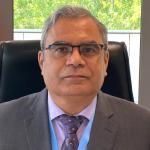
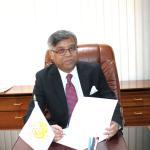
- H.E. Mr. Indra Mani Pandey, Secretary-General, Bay of Bengal Initiative for Multi-Sectoral Technical and Economic Cooperation 

- H.E. Mr. Golam Sarwar, Secretary-General, South Asian Association for Regional Cooperation

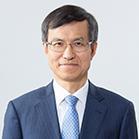
- H.E. Mr. Lee Hee-sup, Secretary-General, Trilateral Cooperation Secretariat

- H.E. Mr. Kairat Sarybay, Secretary General, Conference on Interaction and Confidence Building Measures in Asia

- H.E. Mr. Mohammad Taghi Hosseini, Deputy Secretary General, Asia Cooperation Dialogue

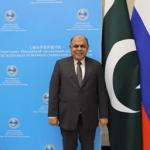
- H.E. Mr. Sohail Khan, Deputy Secretary-General in charge of Economic Cooperation, Shanghai Cooperation Organization

- H.E Mr. Esala Nayasi, Deputy Secretary-General, Pacific Islands Forum Secretariat

- H.E. Mr. San Lwin, Deputy Secretary-General for ASEAN Socio-Cultural Community, Association of Southeast Asian Nations

- Country interventions

11:00
13:00
ELECTION OF GOVERNING COUNCILS
Conference Room 1, UNCC

Second round of balloting for the elections to the Councils of:

Centre for Sustainable Agricultural Mechanization (CSAM)

Statistical Institute for Asia and the Pacific (SIAP)


12:30
14:00
LUNCH
11:00
17:00
URBAN INNOVATIONS FAIR AND SIDE EVENTS

11:15 - 12:30 Side events

14:00 - 15:15 Side events

15:45 - 17:00 Side events

24 Apr 2025
09:00
12:00
Agenda item 5: Review of the implementation of the 2030 Agenda for Sustainable Development in Asia and the Pacific and issues pertinent to the subsidiary structure of the Commission
ESCAP HALL, UNCC

livewebcast(a) APFSD

(b) Social development

(c) Environment and development

(d) Disaster risk reduction

(e) Energy

12:00
12:45
LUNCH
12:45
13:45
SIDE EVENTS
14:00
17:00
Agenda item 5: Review of the implementation of the 2030 Agenda for Sustainable Development in Asia and the Pacific and issues pertinent to the subsidiary structure of the Commission: (continued)

livewebcast(f) Transport

(g) Macroeconomic policy, poverty reduction and financing for development

(h) Trade investment, enterprise and business innovation

(i) Information and communications technology, science, technology and innovation

(j) Statistics

25 Apr 2025
09:00
12:00
Agenda item 6, 7, 8, 9 and 10

livewebcastAgenda item 6

Management Issues:

(a) Proposed programme plan for 2026

(b) Overview of partnerships, extrabudgetary contributions and capacity development

(c) Evaluation of the Asian and Pacific Centre for the Development of Disaster Information Management

(d) Evaluation of the Centre for Sustainable Agricultural Mechanization

(e) Evaluation of the Statistical Institute for Asia and the Pacific

Agenda item 7

Midpoint review of the conference structure of the Economic and Social Commission for Asia and the Pacific

Agenda item 8

Activities of the Advisory Committee of Permanent Representatives and Other Representatives Designated by Members of the Commission

Agenda item 9

Dates and venue of and theme for the eighty-second session of the Economic and Social Commission for Asia and the Pacific (2026)

Agenda Item 10

Other matters 

12:00
12:45
LUNCH
12:45
13:45
SIDE EVENTS
14:00
17:00
Agenda item 11: Adoption of the report

livewebcastAgenda item: 

Adoption of the report 

Closing

11:16
11:16
Apr
20
2025
High-level consultation: "Unlocking Capital for Development in High-Risk, Neglected Markets: UNCDF’s Unique Role in Unlocking Private Finance for the Most Vulnerable”

In-person, Thailand

Apr
21
2025
13:15 - 14.15 || Sustainable Urbanization through Three Zeros: Transforming Cities for a Resilient Future

In-person and online, Thailand

Apr
21
2025
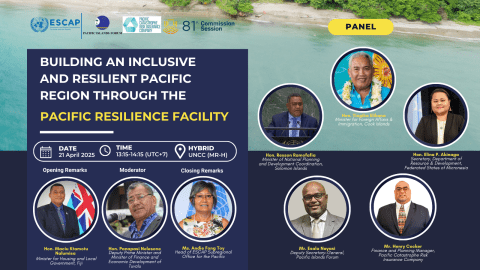
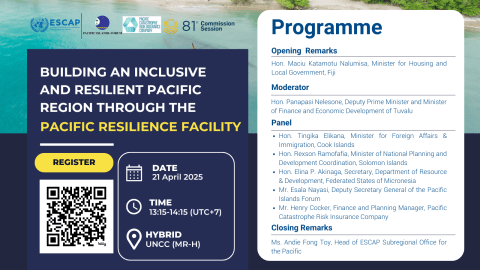
13:15 - 14.15 || Building an inclusive and resilient Pacific region though the Pacific Resilience Facility

In-person and online, Thailand

Apr
21
2025
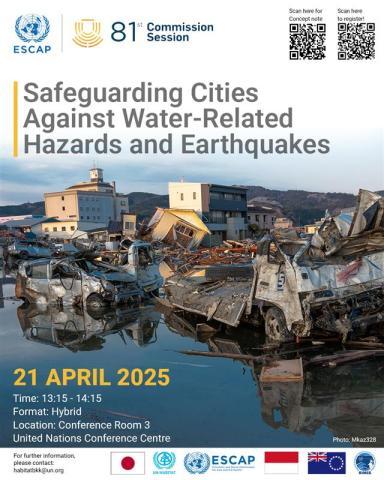
13:15 - 14.15 || Safeguarding Cities Against Water-Related Hazards and Earthquakes

In-person and online, Thailand

Apr
21
2025
13:15 - 14.15 || Building Green Cities Through Regional Cooperation on Foreign Direct Investment: Launch of the UK Green Transition Fund ESCAP-ASEAN Green Investment Catalyst

In-person, Thailand

Apr
21
2025
13:15 - 14.15 || Ensuring Adequate Housing for All in Asia and the Pacific (Special Session)

In-person, Thailand

12:45 - 14:15 || Road safety and sustainable urban transport development in developing countries

In-person, Thailand

Apr
22
2025
12:45 - 14:15 || Local and Regional Government Assembly

In-person, Thailand

Apr
22
2025
12:45 - 14:15 || Transforming Urban Transport for a Resilient and Sustainable Future

In-person and online, Thailand

Apr
22
2025
12:45 - 14:15 || COP29 Multisectoral Actions Pathways (MAP) for Resilient and Healthy Cities

In-person, Thailand

Apr
22
2025
12:45 - 14:15 || Reimagining private sector engagement for urban development in Asia and the Pacific

In-person and online, Thailand

Apr
22
2025
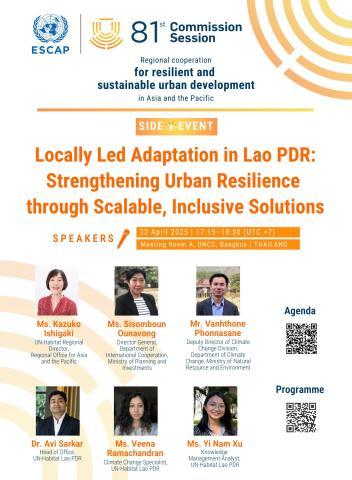
17:15 - 18:30 || Locally Led Adaptation in Lao PDR: Strengthening Urban Resilience Through Scalable, Inclusive Solutions

In-person and online, Thailand

Apr
22
2025
17:15 - 18:30 || Urgent Call for Tackling Marine Plastics and Promoting Circular Economy in Coastal Cities of the Asia-Pacific and SIDS

In-person and online, Thailand

Apr
22
2025
17:15 - 18:30 || Enabling Environment on Environmental and Climate Change Governance

In-person, Thailand

Apr
23
2025
11:15 - 12:30 || Harnessing Digital Technologies for Sustainable Development in the Bay of Bengal Region

In-person and online, Thailand

Apr
23
2025
11:15 - 12:30 || Building Urban Resilience to Sand and Dust Storms: Regional Cooperation for Sustainable Development

In-person, Thailand

Apr
23
2025
11:15 - 12:30 || Cities in the Foreground: Climate Change and Environment

In-person, Thailand

Apr
23
2025
11:15 - 12:30 || Advancing a Just Energy Transition in SCO Member States

In-person and online, Thailand

Apr
23
2025
11:15 - 12:30 || Urban Resilience and Nature

In-person, Thailand

Apr
23
2025
14:00 - 15:15 || Building Climate-Resilient Cities: Tackling Air Pollution for a Sustainable Urban Future

In-person and online, Thailand

Apr
23
2025
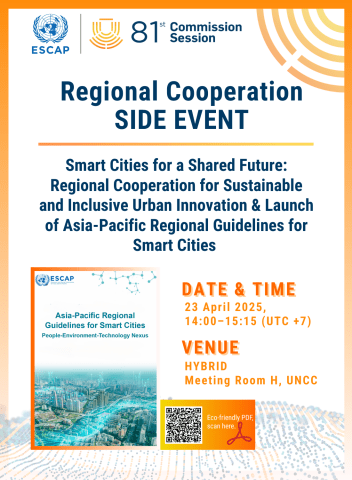
14:00 - 15:15 || Smart Cities for a Shared Future: Regional Cooperation for Sustainable and Inclusive Urban Innovation & Launch of ESCAP’s Regional Smart City Guidelines

In-person and online, Thailand

Apr
23
2025
14:00 - 15:15 || Catalyzing inclusive and sustainable urban development: Transit-oriented development (TOD)

In-person and online, Thailand

Apr
23
2025
14:00 - 15:15 || Collaborative Pathways to Net-Zero: Innovations in Sustainable Building for the Asia-Pacific

In-person, Thailand

Apr
23
2025
14:00 - 15:15 || The Asia Pacific Urban Agenda Platform (AP-UAP): A Collaborative Platform to Accelerate the Sustainable Urban Agenda in Asia Pacific Region

In-person, Thailand

Apr
23
2025
14:00 - 15:15 || Innovation and Collaboration: Pathway for Resilient and Sustainable Urban Transportation Development in Asia and the Pacific

Online, Thailand

Apr
23
2025
15:45 - 17:00 || Oceanic Pathways to Sustainable Cities & Towns: Launch of the 2025 UN State of Urbanisation in the Pacific Report

In-person and online, Thailand

Apr
23
2025
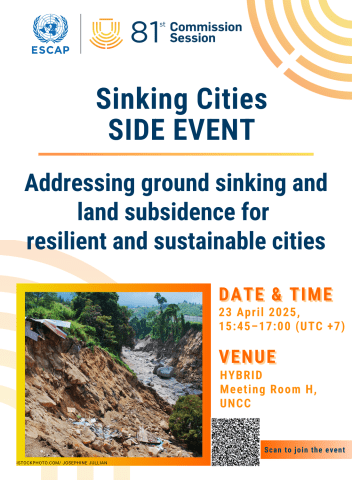
15:45 - 17:00 || Addressing ground sinking and land subsidence for resilient and sustainable cities

In-person and online, Thailand

Apr
23
2025
15:45 - 17:00 || Urban Green Belt for Sustainable Development

In-person and online, Thailand

Apr
23
2025
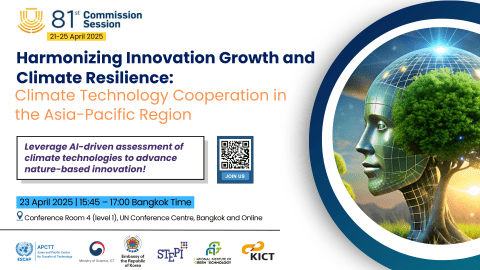
15:45 - 17:00 || Harmonizing Innovation Growth and Climate Resilience: Climate Technology Cooperation in the Asia-Pacific Region

In-person and online, Thailand

Apr
23
2025
15:45 - 17:00 || Russian Urban Initiatives: Advancing Regional Collaboration for Sustainable Development in Asia and the Pacific

Online, Thailand

Apr
23
2025
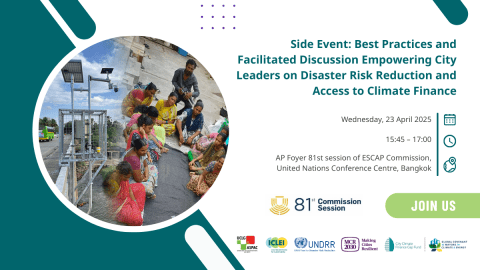
15:45 - 17:00 || Best Practices and Facilitated Discussion Empowering City Leaders on Disaster Risk Reduction and Access to Climate Finance

In-person and online, Thailand

Apr
24
2025
12:45 - 13:45 || Transforming urban care systems: a whole-of-society approach to resilient and sustainable cities

In-person and online, Thailand

Apr
24
2025
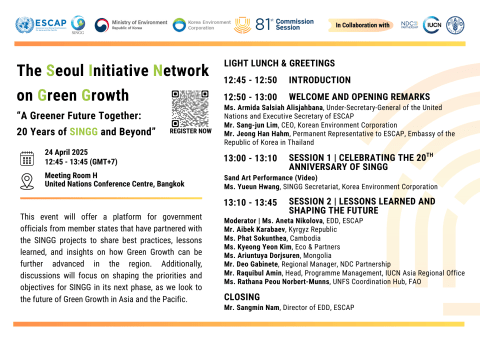
12:45 - 13:45 || The Seoul Initiative Network on Green Growth "A Greener Future Together: 20 Years of SINGG and Beyond"

In-person and online, Thailand

Apr
24
2025
12:45 - 13:45 || Unlocking the Potential of Multilevel Governance for SDG Localization in Asia-Pacific

In person and online, Thailand

Apr
24
2025
12:45 - 13:45 || Regional Dialogue on Adequate and Environmentally Sustainable Housing in the Asia-Pacific Region

In-person, Thailand

Apr
24
2025
12:45 - 13:45 || Disinformation in the City: Local and Multi-level response

In-person and online, Thailand

Apr
25
2025
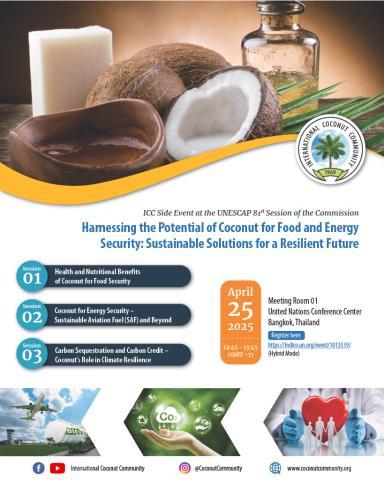
12:45 - 13:45 || Harnessing the Potential of Coconut for Food and Energy Security: Sustainable Solutions for a Resilient Future

In-person and online, Thailand

Apr
25
2025
12:45 - 13:45 || Strategies for Strengthening Green Project Pipelines in Emerging Markets

In-person and online, Thailand

Apr
25
2025
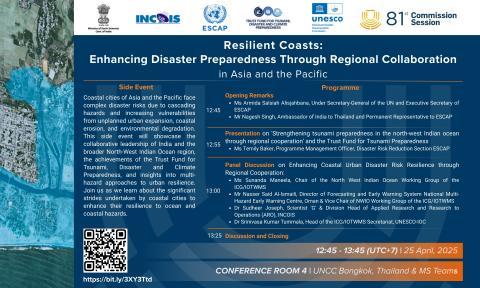
12:45 - 13:45 || Resilient Coasts: Enhancing Disaster Preparedness through Regional Collaboration

In-person and online, Thailand

Apr
25
2025
12:45 - 13:45 || Building resilient cities and communities in climate displacement settings: Regional learnings and avenues for cooperation

In-person and online, Thailand

General

This document provides links to external and third-party website, for convenience of meeting participants, and for use at their discretion. ESCAP cannot vouch for the accuracy or correctness of the information contained therein.

The 81st session of the Economic and Social Commission for Asia and the Pacific is scheduled to be held at the United Nations Conference Centre, Bangkok (UNCC) from Monday, 21 to Friday, 25 April 2025. The opening of the session will take place in the morning of Monday, 21 April 2025.

Credentials

Each delegation is required to submit a letter of credentials, duly signed by the appropriate authority of the respective Government or organization, at the earliest convenience prior to Friday, 4 April 2025 to [email protected] with copy to the team of the Secretary of the Commission (Mr. Lorenzo Santucci, Secretary of the Commission at [email protected], Ms. Caridad Canales Davila, Deputy Secretary of the Commission at [email protected] and Ms. Wilasluck Aurtaveekul, Senior Meetings Services Assistant at [email protected]). Only delegates who appear on the credentials will be recognized in the list of participants.

Each delegate who appears in the aforementioned letter of credentials is required to register online as soon as possible at https://indico.un.org/e/CS81. Only registration of accredited delegates will be accepted.

Registration and identification badges

In order to facilitate the registration process participants are REQUIRED to register online at https://indico.un.org/e/CS81. well in advance, but no later than Friday, 4 April 2025, to facilitate smooth coordination of the issuance of photo badges as well as the compilation of the list of participants.

Please note that prior online registration is mandatory in line with standard security procedures to facilitate security clearance and entrance to the premises. A document containing tips on completing the online registration on behalf of another participant can be accessed on the registration portal, noted above.

Participants whose online registration was cleared can collect their photo badges at the registration counter, located on the Ground Level, UNCC, from 08:00 to 16:00 hours during the Commission session as well as on 17 and 18 April 2025.

Participants who are not able to register online during the times indicated above are requested to do so upon their arrival at UNCC and before going to the conference room. Only the names of duly registered participants will be included in the list of participants.

For identification and security reasons, all participants are REQUIRED to wear their meeting badges at all times while they are in the UN complex, which include meetings and social functions. The loss of a meeting badge should be immediately communicated to the registration counter or the UN security, so that the incident could be recorded, and a new badge can be issued.

Communications

Inquiries about the session may be addressed to:

Mr. Lorenzo Santucci

Secretary of the Commission

Office of the Executive Secretary

ESCAP, United Nations Building

Rajdamnern Nok Avenue

Bangkok 10200

Thailand

E-mail: [email protected] with a copy to [email protected]


Meeting documents

Considering the carbon footprint involved in producing papers and printing documents, it is strongly recommended to utilize soft copies at the maximum extent. If hard copies are needed, participants are requested to bring with them their own copies of the meeting documents distributed by the ESCAP secretariat to their Governments/Agencies/Organizations prior to the session. Hard copy will only be made available upon request (print on demand service) and only one set per member State delegation in compliance with ESCAP’s environmental management commitments and policies.

Documents for circulation or distribution at the session should be handed to Mr. Lorenzo Santucci, Secretary of the Commission, (email: [email protected]), Office of the Executive Secretary, Executive Office Suite, Level 2, United Nations Conference Centre.

In accordance with the UN regulations for the control and limitation of documentation, the secretariat cannot undertake to process, reproduce and/or distribute a document or a statement submitted by individual delegations, unless the Commission specifically takes a decision to that effect and approves the financial implications thereof.

Meeting organizers are encouraged to avoid handing out print copies of documents, newsletters, flyers or other such material. As an alternative, they are urged to use innovative and eco-friendly means to deliver such information, such as using QR codes, social media, website or email. 

Daily subsistence allowance

N/A

Health and vaccination Health and vaccination

Zika virus

Zika is endemic in Thailand and cases have been reported amongst tourists. All travelers are advised to protect themselves from mosquito bites while in Thailand. Given possible transmission of the disease to unborn babies, pregnant women should consider postponing travel to Thailand or talk to their doctor about the implications of traveling to Thailand during this time.

In addition to the above, Medical Services Division at UNHQs advises that pregnant UN personnel should not undertake duty travel or be relocated to countries/areas where local transmission of Zika virus is known to occur. Women who are seeking pregnancy should obtain individual advice from their medical practitioner on risk management regarding their plans to travel into a Zika-affected area. For further information, please refer to the Zika virus FAQ.

Information on other non-vaccine preventable diseases to watch out for while in Thailand can be found here: Thailand - Traveler view | Travelers' Health | CDC.

Air pollution and Health

Bangkok, like many metropolitan Asian cities in the world, is periodically affected by high levels of air pollution, with haze and high concentrations of PM2.5 particularly of concern for sensitive groups.

The Tourism Authority of Thailand advises tourists to monitor Bangkok’s air pollution and take precautions when necessary. People who have existing asthma or are particularly vulnerable to the effects of air pollution should consult their treating physician as to whether a trip to Bangkok is advisable at this time. Information on the Air pollution can be found Air4Thai website, maintained by the government of Thailand with daily information on air pollution.

Insurance and emergency medical service

Delegates are strongly encouraged to subscribe to a travel or health insurance which is valid in the Kingdom of Thailand, in order to cover any medical bills or hospitalization fees. In case of medical emergency, please call 1669. The nearest hospital to the UNCC is Bangkok Adventist (Mission) Hospital, which has English speaking medical support staff +662-282-1100.

When feeling unwell while in the UNCC: Anyone who feels unwell while already within the UNCC is advised to call any medical service staff at +66 2288 1352/1353/1761 during business hours, for further guidance. After business hours, they are advised to call the UN Medical Officer at +66 2288 1353 for further guidance. In case of a medical emergency within the UNCC, they are advised to call UN Security at +66 2288 1102/1120 for assistance in calling an ambulance.

Visa requirements Visa and entry requirements

Visa Requirements (as of 21 October 2026)

Participants are REQUIRED to obtain an appropriate entry visa from the Royal Thai Embassy or the Royal Thai Consulate-General before entering Thailand, EXCEPT the holders of Diplomatic/Official passports listed in this link and the holders of Ordinary passports listed in this link.

Please note that participants holding UN Laissez-Passer (UNLP) travelling on official business to Thailand are also REQUIRED to obtain an appropriate visa before entering.

To apply for an appropriate entry visa to Thailand, participants are required to submit their applications through Thai e-Visa Official website. It is important to note that applicant is required to be physically located in the jurisdiction of the respective Royal Thai Embassy/Consulate-General (RTE/RTCG) where they are applying for the Thai entry visa. You may explore RTE/RTCG websites for more information.

In addition, for tourism purpose, Thailand offers the 15-day visa exemption scheme to nationals listed in this link, 30-day visa exemption scheme to nationals listed in this link as well as visa on arrival to nationals listed in this link.

Participants who may need further assistance from ESCAP on their visa application should contact the meeting organizer, well in advance, for necessary action.

Participants who are eligible to apply for a visa on arrival at Suvarnabhumi International Airport or Don Muang International Airport should comply with the following requirements:

  1. The applicant must possess a passport with the validity of more than 30 days, at least one completely blank page, and be in possession of a valid return ticket with date of departure within 15 days of the date of entry.
  2. The applicant must fill out an application form, which is available at the Visa-on-Arrival counter at the airport, supply one recent passport-sized photograph and a fee of Thai Baht (THB) 2,000.
  3. The applicant must provide proof of means of living expenses at the amount of THB 10,000 per person or THB 20,000 per family.

Entry Requirements (as of 19 September 2026)

Thailand Digital Arrival Card (TDAC)

All foreigners entering Thailand are required to complete the TDAC online through website within 3 days prior to arriving in Thailand, including the date of arrival. Please find Guide on how to complete TDAC.

Health Control

Yellow Fever Vaccination

Upon arrival at the port of entry in Thailand, in addition to the completed Health Declaration done through TDAC, participants who are nationals of or have traveled from/through countries listed below, which have been declared Yellow Fever infected areas, must provide an International Health Certificate proving that they have received a valid Yellow Fever vaccination at the Port Health and Quarantine Counter upon arrival before proceeding to immigration. A valid vaccination certificate means that the vaccine was administered at least 10 days prior to travel to the affected country. The International Health Certificate must also be submitted together with the visa application form.

The countries/areas listed below have been declared yellow fever infected areas (Source: Ministry of Public Health, Thailand):

  1. Angola
  2. Argentina
  3. Benin
  4. Bolivia
  5. Brazil
  6. Burkina Faso
  7. Burundi
  8. Cameroon
  9. Central African Republic
  10. Chad
  11. Colombia
  12. Congo
  13. Republic of the Congo
  14. Cote d’Ivoire
  15. Ecuador
  16. Equatorial Guinea
  17. Ethiopia
  18. French Guiana
  19. Gabon
  20. Gambia
  21. Ghana
  1. Guinea
  2. Guinea-Bissau
  3. Guyana
  4. Kenya
  5. Liberia
  6. Mali
  7. Mauritania
  8. Niger
  9. Nigeria
  10. Panama
  11. Paraguay
  12. Peru
  13. Senegal
  14. Sierra Leone
  15. South Sudan
  16. Sudan
  17. Suriname
  18. Togo
  19. Trinidad & Tobago
  20. Uganda
  21. Venezuela
Ebola Screening Measures

Effective 19 September 2026, Ebola prevention measures remain for all travellers travelling from or through the Democratic Republic of Congo.

In this regard, all travellers travelling from or through Democratic Republic of Congo to Thailand are required to be quarantined or isolated for the maximum of 21 days upon arrival at Suvarnabhumi International Airport, as follows:

  1. Travellers without symptoms shall be “quarantined” at a venue designated by the communicable disease control officer.
  2. Travellers with symptoms will be “isolated” at a state medical facility designated by the communicable disease control officer.

The costs of quarantine or isolation will be covered by the Thai authorities for the first 72 hours. Thereafter, travellers will be responsible for all related expenses.

The Ministry of Public Health indicated that they will closely monitor the situation to evaluate appropriate measures periodically. This means the measures may change without prior notice or with very short notice.

NOTE: Travellers from Yellow Fever and Ebola affected countries may also be required by the airline to present a separate completed Health Declaration Form T.8 form before boarding. To prepare the T.8 form in advance, please refer to the Health Declaration Form (T.8). Please click link for guidance on how to complete the form.

Accessibility support for persons with disabilities Accessibility support for persons with disabilities

The UNCC is fully wheelchair-accessible and houses the Accessibility Centre on Level 1. For more information, please visit the Accessibility Centre’s webpage.

Travel agent Travel agent

The American Express Global Business Travel (AMEX-GBT), whose office is located on Level 1, UNCC, can offer assistance in making reservations.  Please feel free to send request to [email protected].

Travel Advisory Travel Advisory

Visitors are advised to be respectful of Thai customs at all times. Please note that Thailand has laws against making negative comments about the institution of the monarchy. Such laws are strictly enforced and are applicable to spoken, written, gestures and electronic communication, including social media.

Transport to attend meetings Transport to attend meetings

Participants need to make their own transport arrangements to and from the UNCC. Metered taxis are readily available in the city and you may also book your transportation via applications such as Grab, Bolt, and Taxi VIP EV Society for EV vehicles. Electric tuk-tuks (Muvmi) are available via an app, providing a sustainable option for participants commuting to and from the BTS Skytrain and around the neighborhood. Some hotels close to the UN building may provide complimentary transfer service on fixed schedule, to and from the UNCC, so please check with the hotel concierge.

Transport from and to Airport Transport from and to Airport

Participants need to make their own transportation arrangements from Suvarnabhumi International Airport or Don Mueang International Airport to their respective hotels. For the Airport Rail Link, an express and commuter rail connecting to Makkasan Station (MRT subway Petchaburi Station) and Phayathai Station (BTS Skytrain), passengers should go to Level B. Detailed information can be found at https://www.srtet.co.th/index.php/en/ .

Electric taxis (EVsociety/VIP) are currently available at the Suvarnabhumi International Airport. The counter is located next to the main taxi area. The service is available 24 hours and can be pre-booked via: 
Line ID: @evsociety
Phone: +66 2039 8888
Email: [email protected] 
EV Society Facebook

Metered taxi and bus services are readily available at the airport. More information is available at https://www.bangkokairportonline.com

To use the airport limousine service, participants should only contact the authorized officials at the counters located in the airport arrival zone. These officials will issue a ticket for the assignment of a limousine for transporting passengers to the desired destination, upon request. The Suvarnabhumi International Airport limousine service counters are located on Level 2 at Baggage Claim and Arrival Hall exits, channels A, B and C.

For public taxis, participants are advised to proceed to Level 1 of the Passenger Terminal, between exit doors 4 and 7, an outdoor area, where they will find automatic dispensing machines from which they can collect a queueing ticket for a public taxi. In addition to toll fees, there is a THB 50 surcharge to be added to the meter charge from the airport to the city. Please refer to the airport website noted above for details.

Souvenir shop Souvenir shop

The souvenir shop is located near the Sustainability and Innovation Centre on Level 1 of UNCC. It is open from 09:00 to 16:00 hours, Monday through Friday. The shop can be contacted at +66 2288 1295.

Safety and Security Safety and Security

To enter UNCC, please enter through UN Main Entrance gate located near the intersection. You are REQUIRED to show your Passport/ID card and registration QR code to the UN security officer at the gate and to go through the security screening.

The next step is to collect your meeting badge at Registration Counter on Ground Floor of the UNCC. These badges need to be worn all the time while in the UN complex. After collecting meeting badges, confirm your meeting details including the venue on the digital signage screen near the escalator.

Loss of a meeting badge should be immediately communicated to the registration counter or security officer in presence, so that the incident could be recorded before issuing a new badge.

For security and safety reasons, participants are reminded NOT to leave their belongings unattended. Belongings left unattended within the UNCC may be removed to the nearest Lost and Found counter or the Security Operations Centre.

All drone unmanned aircrafts are prohibited from flying over the UNCC as per the security requirements.

All occupants of the UNCC MUST comply at all times with all lawful directions given by the officers of the United Nations Security and Safety Section. Failure to do so may lead to the participant’s removal from the UNCC.

Contact numbers:

UN Security
Security Control Centre (24/7): +66.2.2881102
UN Security Emergency Number: +66.2.2881100
Mobile +66.81.8078471

Thailand Emergency Numbers:
Police general emergency call: 191
Fire: 199
Ambulance and rescue: 1669/1554
Tourism Police: 1155

Zero Tolerance towards harassment

The United Nations has a zero-tolerance policy for any form of harassment, including sexual misconduct, sexual harassment and sexual exploitation and abuse, and will deal with such complaints promptly. Please refer to the United Nations Code of Conduct and report any incident to the Secretary of the Commission and/or Security and Safety Section either in person or by extension at 1102.

Security protocols for UN personnel

In line with security procedures for UN staff, travel notification through the Travel Request Information Process (TRIP) is required prior to any official travel. Upon notification of travel on TRIP, UN staff members will automatically receive an updated security advice for UN visitors to Thailand. Please visit https://dss.un.org to apply for this travel notification.

In addition, the UN Department of Safety and Security requires all UN personnel, including interns and consultants, to complete the mandatory BSAFE Security Awareness Training These security certifications are required to be completed, prior to having commenced official travel.

Prayer and meditation rooms Prayer and meditation rooms

Prayer and meditation room is located near ESCAP Hall on Level 2, UNCC.

Postal services Postal services

Postal services are available at the United Nations branch of Thailand Post, located on the Ground Level of UNCC. It is open from 08:00 to 16:00 hours, Monday through Friday. The office can be contacted at extension 2911.

Lost and Found Lost and Found

Please contact the Security Operations Centre, either in person or by phone at +66.2.2881102.

Airline reservations Airline reservations

Many international airlines operate regular services to and from Bangkok. Participants are advised to secure their return bookings prior to their departure for Bangkok. If this is not possible, they should make firm return bookings immediately upon arrival in Bangkok. Travel services are available through the American Express Global Business Travel (AMEX-GBT) office located on Level 1, UNCC.

Library facilities Library facilities

ESCAP Library facilities are available on the ground floor of UNCC (next to the garden) from 09:00 to 15:00 hours, Monday through Friday. For details on the use of the ESCAP Library resources, please consult the staff on duty or call extensions 1329 and 1360. Further information about the ESCAP Library can be found on its website at http://www.unescap.org/library. Participants are also encouraged to visit the ESCAP Repository to access the full-text of ESCAP publications from 1947-present, and ESCAP iSearch to explore the Library’s full research collections, including full-text articles, journals, and e-books. Official UN Documents can be found on the UN Official Document System (ODS).

Internet services Internet services

Free wireless internet access is available in all conference and meeting rooms and in the public areas of the UNCC. Please use UN-WiFi, no password is required. Internet usage in UNCC is regulated by the organization's policies and guidelines. Failure to comply may lead to the revocation of these services.

Hotel accommodation Hotel accommodation

Hotels, located relatively close to ESCAP or by mass-transit routes, may be used by participants, should they choose to. The selection of hotels at a walking distance from the UNCC is encouraged to reduce participants’ local travel emissions and their exposure to traffic. Click here for a list of hotels, with indicative prices.

NOTE: ESCAP cannot vouch for accuracy of the information or rates contained in the document. The list is meant purely for reference and for ease of participants. The special discount rates provided are subject to change without notice. Please confirm the room rates with the hotel directly.

Participants are responsible for booking their own rooms and are requested to contact the hotel well in advance. Any cancellations, postponements or other changes should be reported to the hotel. Rooms not occupied may be charged to the participants as per the hotel’s policies.

Before departure from Bangkok, participants should settle directly with the respective hotels all accounts, including room charges and other expenses, such as for local and long-distance telephone calls, Internet usage, business center usage, laundry, room and hotel transportation services, mini-bar items, as well as restaurant and bar services. Participants are also responsible for any charges incurred with respect to rooms remaining vacant owing to late arrival or rescheduled departure for which inadequate prior notice is given.

Foreign currency declaration Foreign currency declaration

Any person who brings or takes an aggregate amount of foreign currency exceeding USD 20,000 or its equivalent into or out of the Kingdom of Thailand shall declare such amount of foreign currency to a Customs Official. Failure to make such a declaration or making any false declaration to a Customs official is a criminal offence.

For reference, participants may use – at their discretion – online currency conversion tool, such as https://freecurrencyrates.com for indicative currency conversion rates.

Floor plans UNCC Floor plans

The UNCC floor plans are available at https://www.unescap.org/uncc/our-rooms. The UN buildings are smoke-free. Smoking is permitted only in the designated areas outside of the buildings and in the UNCC, the designated smoking area is outside of the Asia-Pacific Foyer, Ground Floor, UNCC.

Financial & administrative arrangements Financial & administrative arrangements

In those cases where the participation costs are borne by the ESCAP Secretariat, the Secretariat will provide only travel and DSA as expressed and will not assume responsibility for any other expenditure, including the following:

  1. All expenses in the home country incidental to travel abroad, including expenditure for visa, medical examination, inoculations and other such miscellaneous items and internal travel to and from the airport of arrival and departure in the home country;
  2. Salary and related allowances for the participants during the period of the meeting;
  3. Costs incurred by participants in respect of travel insurance, accident insurance, medical bills or hospitalization fees in connection with attending the meeting;
  4. Compensation in the event of death or disability of participants in connection with attending the meeting;
  5. Any loss of or damage to personal property of participants while attending the meeting or losses or damages claimed by third parties as a result of any negligence on the part of the participants;
  6. Any other expenses of a personal nature, not directly related to the purpose of the meeting.
Electric plug and socket Electric plug and socket

The electric power in Thailand is 220V running at 50Hz and the plug types used are either Type A, Type B, or Type C. A hybrid socket is almost universally found, which accepts a combination of the above plug types.

Delegates are strongly encouraged to carry their own adapters for use with laptops and other electrical appliances as the Secretariat will not be able to provide these. In case of need, adapters can be purchased from shops in the city dealing in electronic and electrical items.

Catering services Catering services

Operating hours

Catering services are available at the following locations:

  • International Cafeteria (Level 1, UNCC), which serves breakfast from 8.00 to 10.00 hours, and Thai, Halal and International menus for lunch from 11:00 to 14:00 hours on Monday through Friday.

    Ordering at the International Cafeteria – Easy Steps to Follow:

    • First, grab a tray and a payment card provided at the entrance.
    • Then, as you visit your preferred food stations, tap the card to record your selections.
    • After enjoying your meal, proceed to the cashier to pay the total amount recorded on your card.
  • Coffee Corner (Level 1, UNCC), which serves an assortment of bakery pastries and beverages, is open from 07:00 to 17:00, Monday through Friday.
  • Rajapruek Lounge (Ground Level, UNCC), which serves light meals and beverages, is open from 07:00 to 17:00 hours on Monday through Friday.

In line with the Sustainable United Nations (SUN) and Environmental Management System (EMS} principles, no single-use plastic is available in the UNCC. Single-use food and drink containers have been banned within the UN compound in Bangkok. When purchasing coffee/tea at the Coffee Corner, meeting participants will be asked to pay a deposit of THB 100 for a cup, which will be returned upon return of the cup.

Dining venues at the UNCC also do not provide food storage boxes, plastic cutlery or straws for take-away orders. Diners wishing to take food away are advised to bring their own reusable food containers.

Banking facilities Banking facilities

Banking services are available at the Siam Commercial Bank, United Nations Branch, located on Level 1 of the Service Building, from 08:30 to 15:30 hours during weekdays. (telephone extension 2168).

Siam Commercial Bank ATMs can be found near the registration desk, on the Ground Level of UNCC, and near its UN Branch office, noted above.

Weather Weather

The weather in Bangkok is usually warm and humid. Light tropical clothing would be appropriate. The conference and meeting rooms at the UNCC are air-conditioned and the temperature is maintained in the range of 23-24 degrees Celsius (73-75 degrees Fahrenheit).

To access the statements, please select the corresponding flag or country name. If the document does not load, it signifies that the statement is still pending submission.

Day 1- Monday, 21 April 2025
Agenda item 2: "Current and emerging policy issues for inclusive and sustainable development in Asia and the Pacific"
Day 2- Tuesday, 22 April 2025
Agenda item 4: "Special Body on Least Developed, Landlocked Developing and Small Island Developing States"
Day 3- Wednesday, 23 April 2025
Day 4- Thursday, 24 April 2025
Agenda item 5: "Review of the Implementation of the 2030 Agenda for Sustainable Development in Asia and the Pacific and issues pertinent to the subsidiary structure of the Commission"
Presentation by the Deputy Executive Secretary for Programme
Agenda item 5 (b): Social Development
Agenda item 5 (c): Environment and development
Agenda item 5 (d): Disaster risk reduction
Agenda item 5 (e): Energy
Agenda item 5 (f): Transportation
Agenda item 5 (g): Macroeconomic policy, poverty reduction and financing for development
Agenda item 5 (h): Trade investment, enterprise and business innovation
Agenda item 5 (i): Information and communications technology, science, technology and innovation
Agenda item 5 (j): Statistics
Day 5- Friday, 25 April 2025
Agenda item 6: Management issues
Agenda item 6 (a): Proposed programme plan for 2026
Agenda item 6 (b): Overview of partnerships, extrabudgetary contributions and capacity development
Agenda item 6 (c): Evaluation of the Asian and Pacific Centre for the Development of Disaster Information Management
Agenda item 6 (d): Evaluation of the Centre for Sustainable Agricultural Mechanization
Agenda item 6 (e): Evaluation of the Statistical Institute for Asia and the Pacific
Agenda item 7: Midpoint review of the conference structure of the Economic and Social Commission for Asia and the Pacific
Agenda item 8: Activities of the Advisory Committee of Permanent Representatives and Other Representatives Designated by Members of the Commission
Agenda item 9: Dates and venues of and theme for the eighty-second session of the Economic and Social Commission for Asia and the Pacific (2026)
Agenda item 10: Other matters
Agenda item 11: Adoption of the report
Closing
H.E. Mr. Philemon Yang
President of the 79th session of the United Nations General
Know More

Ambassador Philemon Yang is a seasoned diplomat with a track record of experience. Internally, he served as Prime Minister, Head of Government, from 2009 to 2019. In this capacity, he represented the Head of State at various important high-level regional and international meetings.  

He has held other important government positions, including Vice-Minister of Territorial Administration (1975-1979), Minister of Mines and Energy (1979-1984), and Minister, Deputy Secretary General at the Presidency of the Republic (2004-2009). Since 2020 he has been serving as the Grand Chancellor of National Orders at the Presidency of the Republic.  

Internationally, Mr. Philemon Yang served as Cameroon’s High Commissioner to Canada (1984-2004), where during 14 years he doubled as Dean of the Diplomatic Corps. He has led Cameroonian delegations to high-level economic summits in Washington D.C, London, New Delhi and several other capitals.  

At the African level, he took part in various sessions of the African Union (AU) Conference of Heads of State and Government, including the Summit on the institutional reform of the African Union.  

He has held the position of Chairperson of the Panel of Eminent Africans of the African Union, since February 2020. This Panel is, among other things, responsible for examining candidacies for important positions within the African Union, such as those of African Union Commissioners. 

As far as UN activities are concerned, Mr. Philemon Yang was Chairperson of the Intergovernmental Committee for the Cartagena Protocol on Biosafety.  

He is also fervently committed to humanitarian issues, respect for human rights and dignity, the rule of law, respect for nature and the environment, the fight against climate change, and the reform and renewal of the UN.  

His vision and commitment are based on the ideals, objectives and principles enshrined in the United Nations Charter concerning peace, security, economic and social development, and respect for human rights, including the advancement of women, children and people with disabilities.  

Born on June 14, 1947 in Jikejem-Oku in the North-West Region of Cameroon, Ambassador Philemon Yang is a Cameroonian politician, and a magistrate by training. He is a graduate in law from the University of Yaoundé, Cameroon. After that he also graduated from the National School of Administration and Magistracy (ENAM). Mr. Yang went on to obtain a Master’s Degree in International Law from the University of Ottawa, Canada, and a Master of Business Administration from Century University in the USA. 

He is married to Linda YANG and father of three children. 

H.E. Mr. Bob Rae
H.E. Mr. Bob Rae
Eightieth President of the Economic and Social Council
Know More

His Excellency Mr. Bob Rae was elected the eightieth President of the 2025 session of the Economic and Social Council. 

His Excellency Bob Rae was elected the President of the 2025 session (July 2024 to July 2025) of the Economic and Social Council for the 2025 Session on 25 July 2024. Ambassador Bob Rae is the eightieth President of the Council 

He is currently the Ambassador and Permanent Representative of Canada to the United Nations. Before his appointment by the Government of Canada, Mr. Rae served as Canada’s special envoy on humanitarian and refugee issues, continuing the important work that he began in 2017 as Canada’s special envoy to Myanmar while also addressing other pressing humanitarian and refugee issues around the world. 

The former premier of Ontario and former interim leader of the Liberal Party of Canada, Mr. Rae was elected 11 times to federal and provincial parliaments between 1978 and 2013. He stepped down as a member of Parliament in 2013 to return to legal practice and, in particular, to work with Indigenous communities and continue his work in education, governance and human rights. His passion for social justice dates back to his early days in student politics and community service. 

Before his appointment as Permanent Representative, Mr. Rae was senior counsel at Olthuis Kleer Townshend LLP. In addition to his legal practice, he taught at the University of Toronto in the School of Public Policy and Governance, in the Faculty of Law and at Massey College and Victoria University, and he was a fellow of the Forum of Federations, Massey College and the Raoul Wallenberg Centre for Human Rights. He has also worked as a mediator and arbitrator with ADR Chambers. A former partner at Goodmans LLP, Mr. Rae led the restructuring of the Canadian Red Cross and the Toronto Symphony Orchestra and chaired the board of the Royal Conservatory of Music. He is the author of 5 books and a number of government reports. 

Mr. Rae is a privy councillor, a companion of the Order of Canada and a member of the Order of Ontario and has numerous awards and honorary degrees from institutions in Canada and around the world. He received his Honours Bachelor of Arts degree in Modern History from the University of Toronto and a Master of Philosophy degree as a Rhodes Scholar at Oxford University and graduated from the University of Toronto Faculty of Law.   

H.E. Ms. Paetongtarn Shinawatra
Prime Minister, Royal Thai Government
Know More
Education Background:   
1992-1997  Primary School- St. Joseph Convent and Mater Dei College, Bangkok 
1998-2004  Secondary School-Mater Dei College, Bangkok 
2004-2007   Faculty of Political Science Chulalongkorn University, Bangkok 
2008-2009  MSc International Hotel Management, University of Surrey, Weybridge, United Kingdom 
Work experience:    
2011-2024  Committee Rende Ploenchit Hotel Co., Ltd 
2012-2024  Committee Rende Development Co., Ltd 
2013-2024  Committee Thames Valley Khao Yai Co., Ltd 
2016-2024  Committee Alpine Golf and Sports Club Co., Ltd 
2016-2024  Committee Alpine Garden Design Co., Ltd 
2016-2024  Committee OAI Consultant and Management Co Ltd 
2022-Present  Chief Director of Inclusiveness and Innovation Committee of Pheuthai Party; Leader of KrobKrua Pheuthai Project 
2023-2024  Deputy Chairman of Soft Power Strategic Committee; Deputy Chairman of National Health System Development Committee 
2023- Present  Leader of Pheu Thai Party 
H.E. Professor Mohammad Yunus
Chief Advisor of Bangladesh
Know More

Professor Muhammad Yunus is a renowned Bangladeshi social entrepreneur, economist, and Nobel Peace Prize laureate. Born on June 28, 1940, in Chittagong. 

Nobel Peace Laureate Professor Muhammad Yunus, founder of Grameen Bank, is a global visionary from Bangladesh pioneering the concepts of microcredit and social business. In 2006, Professor Yunus and Grameen Bank were jointly awarded Nobel Peace Prize. He has founded more than 50 social business companies. For his constant innovation and enterprise, the Fortune Magazine named Professor Yunus in March 2012 as “one of the greatest entrepreneurs of our time.” 

He is the first Muslim to receive the Congressional Gold Medal distributed by the United States Congress in 2013. He received the US Presidential Medal in 2009. At the Olympic Games Tokyo 2020 Professor Yunus was conferred with the Olympic Laurel award for his extensive work in sports for development, bringing the concept of social business to the sports world. In 2019 the Vatican awarded him with the Lamp of Peace of St. Francis for promoting peace and harmony worldwide.

Professor Muhammad Yunus is the recipient of 66 honorary degrees from universities across 26 countries. He has received 145 awards from 33 countries including state honours from 10 countries. He is one of only seven individuals to have received the Nobel Peace Prize, the United States Presidential Medal of Freedom and the United States Congressional Gold Medal and has appeared on the cover of Time, Newsweek and Forbes Magazines.

Yunus signed up for the Fossil Fuel Non-Proliferation Treaty along with his Holiness the Dalai Lama and 100 other noble Laureates. He has been stressing on the urgency of coming out of the old ways of thinking and doing. This was the basis of his theme of 'No Going Back' during the pandemic. He relentlessly devotes his time and energy to inspire people into creating a world of 3 Zeros - zero net carbon emission, zero wealth concentration for ending poverty once for all and zero unemployment by unleashing entrepreneurship in everyone. 

Recent focuses: 

  1. Yunus Social Business Centre (YSBC) is an initiative inspired by Professor Yunus's principles. These centers are typically established within universities or other institutions to promote and research social business—businesses that aim to solve social problems while being financially self-sustainable. There are 108 universities from 39 countries around the world affiliated with the program.

  2. Professor Yunus launched a programme of creating a network of 3ZERO Clubs, each club to be formed by five young people to come up with ways to tackle problems through a creative solution. At the moment there are over 530 3Zero Clubs in 46 countries across 6 continents.

  3. He is recently campaigning to build a network of support groups in the Amazonian region and has several youth-based capacity building projects in East Africa, South America and other regions.

  4. Professor Yunus has been campaigning for making the Covid 19 Vaccine as a Global Common Good since June 2020, urging the World Trade Organization to place a temporary waiver on Intellectual Property rights on vaccines to free up the global capacity to produce vaccines at all locations around the world. More than 25 Nobel Laureates, 42 Former Heads of State and Government, 89 global celebrities and over 2.7 million people signed up for the pledge.

H.E. Mr. Tshering Tobgay
Prime Minister of Bhutan
Know More
  • Born on 19th September 1965. 

  • Completed early education in Bhutan. 

  • Obtained Bachelor’s degree in mechanical engineering from the University of Pittsburgh, USA. 

  • Obtained Master’s degree in Public Administration from the John F. Kennedy School of Government at Harvard University, USA. 

  • Opposition Leader in the National Assembly of Bhutan from 2008 to 2013. 

  • Prime Minister of Bhutan from 2013 to 2018; re-elected in January 2024. 

  • A dedicated civil servant before entering politics, with particular focus on developing policies and programs to enhance technical education and vocational training in Bhutan. 

  • Commitment to social welfare extended beyond official duties – volunteered to establish Bhutan’s first Youth Center and form the Education Staff Welfare Scheme. 

  • First official to resign from his civil service position to participate in Bhutan’s transition to a parliamentary democracy; played a pivotal role in founding the People’s Democratic Party, the first registered political party in Bhutan for which he continues to serve as president. 

  • A strong advocate of Gross National Happiness; has spoken on leadership, conservation, climate change, poverty, democracy, and happiness at the United Nations, TED, and various international conferences. 

  • In recognition of his contributions, His Majesty the King conferred the Royal Orange Scarf in 2008 and again in 2013. 

  • In 2014, received the Royal Lungmar Scarf from His Majesty the King. 

  • Internationally recognized for his efforts in promoting sustainability, with the German Sustainability Award in 2016 and the Distinguished Leadership Award from the Hospitality Committee for United Nations Delegations in 2022. 

  • Married to Tashi Doma; has two children. 

  • Hobbies include volunteering, reading, trekking, bicycling, jogging, archery, yoga, music, and drama. 

Ms. Amina J. Mohammed
Deputy Secretary-General of the United Nations
Know More

Ms. Amina J. Mohammed is the Deputy Secretary-General of the United Nations and Chair of the United Nations Sustainable Development Group. 

Prior to her appointment, Ms. Mohammed served as Minister of Environment of the Federal Republic of Nigeria where she steered the country’s efforts on climate action and efforts to protect the natural environment. 

Ms. Mohammed first joined the United Nations in 2012 as Special Adviser to former Secretary-General Ban Ki-moon with the responsibility for post-2015 development planning. She led the process that resulted in global agreement around the 2030 Agenda for Sustainable Development and the creation of the Sustainable Development Goals.   

Ms. Mohammed began her career working on the design of schools and hospitals in Nigeria. She served as an advocate focused on increasing access to education and other social services, before moving into the public sector, where she rose to the position of adviser to four successive Presidents on poverty, public sector reform, and sustainable development. 

Ms. Mohammed has been conferred several honorary doctorates and has served as an adjunct professor, lecturing on international development. The recipient of various global awards, Ms. Mohammed has served on numerous international advisory boards and panels. She is the mother of six children and has five grandchildren. 

Ms. Armida Salsiah Alisjahbana
Executive Secretary of ESCAP
Know More

Ms. Armida Salsiah Alisjahbana was appointed Under-Secretary-General of the United Nations and Executive Secretary of the Economic and Social Commission for Asia and the Pacific (ESCAP) on 13 September 2018. 

Prior to joining ESCAP, Ms. Alisjahbana was Professor of Economics at Universitas Padjadjaran in Bandung, Indonesia, a position she assumed in 2005. She joined Universitas Padjadjaran as a lecturer in 1988. Since 2016, she has served as Director for the Center for Sustainable Development Goals Studies at Universitas Padjadjaran and Vice Chair of the Indonesian Academy of Sciences. 

She also serves on the Governing Board of the Economic Research Institute for ASEAN and East Asia (ERIA), and member of the Indonesian Academy of Sciences (Akademi Ilmu Pengetahuan Indonesia - AIPI), the Forum of Statistics Community (Forum Masyarakat Statistik or Advisory Council of the Indonesian Statistics), the International Advisory Board of the Bulletin of Indonesian Economic Studies and Council Member of the Regional Science Association International (RSAI). 

From 2009 to 2014, she was Minister of National Development Planning and the Head of the National Development Planning Agency (BAPPENAS), Indonesia. She served as Co-chair of the Global Partnership for Effective Development Cooperation from 2012 to 2014. From 2009 to 2014, she was Alternate Governor of the World Bank and Alternate Governor of the Asian Development Bank representing the government of Indonesia. In 2016, she was a member of the High Level Independent Team of Advisors to support the ECOSOC Dialogue on the longer term positioning of the United Nations Development System in the context of the 2030 Agenda on Sustainable Development. 

Ms. Alisjahbana has been involved in various research projects and consultancies to the United Nations University/Institute for Advanced Study in Tokyo, the World Bank, the Asian Development Bank (ADB), the Department of Foreign Affairs and Trade (DFAT), Australia, the Australian Agency for International Development (AusAID), the European Commission, and the International Labor Organization (ILO). 

Ms. Alisjahbana earned her Bachelor degree in Economics and Development Studies from Universitas Indonesia, Indonesia, a Masters degree in Economics from Northwestern University, USA and a Ph.D in Economics from University of Washington, USA. She was awarded the Mahaputra Adipradana Order (Bintang Mahaputra Adipradana) from the Republic of Indonesia, honorary brevet from the Indonesian Navy and honorary flight wing from the Indonesian Air Force. 

H.E. Mr. Nga Kor Ming
Minister of Housing and Local Government, Malaysia
Know More

Since taken office in December 2022, Minister Nga Kor Ming leads a ministry intricately linked to urban communities with numerous vital functions that contribute to sustainable urban development. These responsibilities include overseeing affordable housing initiatives, local government affairs, town and regional planning, green initiatives, urban well-being and community development, solid waste management, as well as fire and rescue services. Minister Nga Kor Ming is driven and passionate about the well-being of the people and is committed to inclusively raise the life quality of Malaysians through better policies, improved implementations as well as structured monitoring and enforcement towards a sustainable future. He has undertaken bold and swift actions to fast-track Malaysia’s progress towards the Sustainable Development Goals (SDGs). Malaysia is prepared to share its wealth of knowledge, experiences, best practices, and technical expertise in various areas including localizing SDGs, adequate and affordable housing solutions, urban renewal strategy and climate change adaptation and mitigation. 

Career

Early Career and State Assembly Roles

  • Elected as the youngest State Opposition Leader at 27, serving as Perak State Assemblyman for Pantai Remis. Led the Democratic Action Party Malaysia Youth Wing (DAPSY) in 2004.
  • Elected as Member of Parliament for Taiping in 2008, while continuing as Perak State Assemblyman for Pantai Remis and served as Perak State Executive Chairman for Local Council, Housing, and Transport.
  • Elected Member of Parliament for Teluk Intan and Perak State Assemblyman for Kepayang Ipoh in2022 till present.

Deputy Speaker Appointment and Continued Leadership 

  • Appointed as Deputy Speaker of the House of Commons, Parliament of Malaysia in 2018.

 Achievements and Leadership Roles 

  • Elected as The Top 10 Young Outstanding Malaysia in 2007
  • Holds the distinction of being the longest-serving Perak State Assemblyman with six consecutive terms. 
  • Recently appointed as DAP National Deputy Chairman at the party’s Central Executive Committee (CEC)election, continuing to contribute to legislative and party leadership roles. 
  • Previously served as DAP National Vice-Chairman. 

Education 

  • Graduated with LLB (Hons) from University Malaya in 1997. 
  • Admitted as Advocate & Solicitors of High Court of Malaya on 17 March 1997.
  • During his time at University Malaya, he represented the Debate Team and crowned as the Best Debater in1993, 1995 and 1997. His team also achieved international success in Singapore in 1997.
H.E. Mr. Indra Mani Pandey
Secretary-General, Bay of Bengal Initiative for Multi-Sectoral Technical and Economic Cooperation
Know More

His Excellency Mr. Indra Mani Pandey, is a career diplomat of India. He joined the Indian Foreign Service in 1990. 

Before his current assignment, he served as Permanent Representative of India to the United Nations and Other International organizations in Geneva. He had earlier served as Additional Secretary in the Ministry of External Affairs in-charge of Disarmament & International Security Affairs Division. During his 33 years long career as an Indian diplomat, Ambassador Pandey has served as Ambassador of India to the Sultanate of Oman. Before his Ambassadorial assignment in Muscat, he served as Deputy Ambassador of India to France and Consul General of India at Guangzhou, China. 

Ambassador Pandey had also served in various diplomatic capacities at Indian Missions in Cairo (Egypt), Damascus (Syria), Islamabad (Pakistan), Kabul (Afghanistan) and Permanent Mission of India to the Conference on Disarmament, Geneva (Switzerland).  

During his earlier stints at the Ministry of External Affairs of India in New Delhi, Ambassador Pandey handled assignments in West Asia and North Africa Division; Consular, Passport and Visa Division; Counter Terrorism Cell; Americas Division; and Bangladesh, Sri Lanka, Maldives and Myanmar (BSM) Division. 

During October 1998- June 99, Ambassador Pandey attended Foreign Service Programme at Oxford University, the U.K.  In 2009, he attended the 49th Annual Course on National Security and Strategy, conducted by National Defence College of India. 

Ambassador Pandey is married to Mrs. Sushma Pandey and they have a daughter, Devangi. 

H.E. Mr. Golam Sarwar
Secretary-General, South Asian Association for Regional Cooperation
Know More

Ambassador Mr. Md. Golam Sarwar, a Senior Diplomat from Bangladesh, joined the SAARC Secretariat in Kathmandu, Nepal, as the fifteenth Secretary General of the Association on 25 October 2023. 

Having joined Bangladesh Civil Service (Foreign Affairs) in 1991, he has served extensively in the Ministry of Foreign Affairs, Government of Bangladesh, in different capacities at home and Bangladesh Diplomatic Missions abroad. Holding the rank of a Substantive Secretary to the Government of Bangladesh, Ambassador Sarwar served as the High Commissioner of Bangladesh to Malaysia (November 2020-September 2023), prior to his current assignment as the Secretary General of SAARC. 

He has served as the Ambassador of Bangladesh to the Sultanate of Oman (August 2017- November 2020) and Ambassador of Bangladesh to Sweden, with concurrently accredited to Denmark, Norway, Finland and Iceland (October 2013-August 2017). He was also Consul General of Bangladesh to Jeddah with consular, trade and cultural jurisdictions on the Western Region of Saudi Arabia (2008-2010). 

In his previous diplomatic assignments, Mr. Sarwar was posted to the Embassy of Bangladesh in Washington D. C. U.S.A. as Counsellor (2005-2006) and Minister (2006- 2008); High Commission of Bangladesh in Kuala Lumpur, Malaysia as First Secretary (1997-2000); Embassy of Bangladesh in Kathmandu, Nepal as First Secretary/Counsellor (2000-2002); and Embassy of Bangladesh in Yangon, Myanmar as Second Secretary (1996-1997). 

He has also served in the Ministry of Foreign Affairs of Bangladesh as an Assistant Secretary (1991-1996), as Director/Deputy Chief of Protocol (2002-2005) and as Director General (2010-2013). 

In his long diplomatic career, Ambassador Sarwar also represented Bangladesh on numerous occasions in various Regional and International Organizations. 

Education: 

Md. Golam Sarwar has obtained the degree of Master of Commerce/Business from the University of Dhaka, Bangladesh. He has also completed Professional Article Studentship with a leading Chartered Accountants and Management Consultant Firm under the Institute of Chartered Accountants of Bangladesh-ICAB (1987-1991). 

Professional trainings: 

He has also successfully completed overseas trainings: Advance Course on Diplomacy in Berlin, Germany with scholarship from the German Foundation for International Development (1995) and Near East South Asia Center for Strategic Studies (NESA), Washington, DC, U.S.A. (2004). Among the local professional trainings, he attended Civil Services Foundation Course in the Bangladesh Public Administrative Training Centre (BPATC) in Savar, Dhaka (1993) and Foreign Service Training Course in Bangladesh Civil Services Academy in Dhaka (1992). 

Personal information: 

Mr. Sarwar is married to Ms. Taslima and blessed with two sons. He has an interest in travelling, sports and global migrant workers’ affairs. 

H.E. Mr. Lee Hee-sup
Secretary-General, Trilateral Cooperation Secretariat
Know More

Education  

Feb 1985 B.A in Political Science and International Studies, Yonsei University, Seoul, Korea  

Professional Career  

Apr 1987 Passed High Diplomatic Service Examination  

Jun 1987 Joined the Ministry of Foreign Affairs (MOFA)  

Dec 1995 First Secretary, Korean Embassy in Japan   

Dec 1998 Counsellor, Korean Embassy in the People’s Republic of Bangladesh  

Feb 2004 Visiting Fellow, Royal Institute of international Affairs, UK  

Feb 2005 Assistant Secretary, National Security Council (NSC)  

Jan 2006 Assistant Secretary, Office of the President   

Aug 2006 Director, Northeast Asia Division I, Asian and Pacific Affairs Bureau, Ministry of Foreign Affairs and Trade (MOFAT)   

Jul 2007 Minister-Counsellor, Korean Embassy in the Commonwealth of Australia  

Jan 2011 Minister, Korean Embassy in the Republic of Indonesia  

Mar 2012 Deputy Secretary for Foreign Affairs, Office of the President   

Mar 2013 Deputy Secretary for Policy Coordination, Office of National Security   

Oct 2014 Minister, Korean Embassy in Japan   

May 2019 Director-General for Global Education and cooperation, National Human Resources Development Institute (NHI), Ministry of Personnel             Management (MPM) 

Oct 2020 Consul-General, Korean Consulate-General in Fukuoka, Japan  

Sep 2023 ~ Secretary-General, Trilateral Cooperation Secretariat 

H.E. Mr. Mohammad Taghi Hosseini
Deputy Secretary General, Asia Cooperation Dialogue
Know More

Ambassador Mohammad Taghi Hosseini
 

Date of birth:              

Born in 1964


Marital status:            

Married
                                   

Education:

Ph.D. in Political Science


Languages:                

Persian, English, and good knowledge of Spanish, French, and Arabic


Current position:        

Deputy Secretary General of the Asia Cooperation Dialogue (since September 2024 – present)
 

Career:

- Vice President of the Institute for Political and International Studies of the Islamic Republic of Iran/ IPIS from November 2020 until September 2024.

- Ambassador of the Islamic Republic of Iran to Mexico, accredited to Belize and Guatemala, from October 2016 to October 2020.

- Deputy Minister of Cooperatives, Labor and Social Welfare, Islamic Republic of Iran for International Affairs, from January 2012 t0 October 2016.

- Counselor of the Permanent Mission of I.R. Iran to the European Office of the United Nations in Geneva, from 2006 to 2010.

- Head of Department of Disarmament and International Security of the Ministry of Foreign Affairs, from 2002 to 2006.

- First Secretary of the Permanent Mission of I.R. Iran to the International Organizations in Vienna, from 1996 to 2001.

- Political expert at the Ministry of Foreign Affairs, from 1992 to 1996.

- Hosseini has led several Iranian delegations to the international talks and negotiations in the area of international security as well as labor and social issues.

- He used to teach at the University of Tehran, and the Faculty of International Relations and University of Judicial Sciences and Administrative Services for master's and doctoral students and was supervisor or referee for several doctoral and master's theses.

- He has written several books and dozens of articles in the fields of international relations and political studies, history and literature in Persian, English and Spanish languages. Some of his works are among the best-selling Persian books.
 

H.E. Mr. Sohail Khan
Deputy Secretary-General in charge of Economic Cooperation, Shanghai Cooperation Organization
Know More

Born in 1960. Graduated from John Hopkins University(USA)

Fluent Urdu, English and Russian.

Work Experience:

1990-2000 - Third, Second Secretary of the Embassy of the Islamic Republic of Pakistan in Moscow;

2000-2003 - Director of the 3rd Department of Europe of the Ministry of Foreign Affairs of the Islamic Republic of Pakistan;

2003-2008 - First Secretary of the Embassy of the Islamic Republic of Pakistan in Washington;

2008-2013 - Director General of the Department of Foreign Policy Planning, the Department of Protocol and the Department of America of the Ministry of Foreign Affairs of the Islamic Republic of Pakistan;

2013-2017 - Ambassador of the Islamic Republic of Pakistan to the Kingdom of Thailand;

2017-2020 - High Commissioner of the Islamic Republic of Pakistan to the Republic of South Africa;

Since May 18, 2022 - Deputy Secretary General of the Shanghai Cooperation Organization.

Has diplomatic rank of Ambassador Extraordinary and Plenipotentiary.


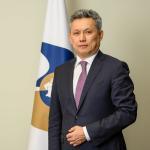
H.E. Mr. Bakhyt Sultanov
Member of the Board – Minister in charge of Economy and Financial Policy, Eurasian Economic Commission
Know More

He was born on November 29, 1971 in Almaty, Republic of Kazakhstan.

In 1994, Bakhyt Sultanov graduated from Kazakh National Technical University as an electrical engineer; in 1995, he graduated from Kazakh State Academy of Public Administration with a degree in economics.

Bakhyt Sultanov started his employment in 1994 as a leading economist in the corporation and licensing section of the Financial Market Securities Directorate at the Ministry of Finance of the Republic of Kazakhstan.

In 1995, Bakhyt Sultanov was appointed the section head; then in 1996, he became Deputy Head of the Directorate; in 1997 – Deputy Director of Budget Department; in 1998 –Director of Public Procurement Department; in 1999 – Deputy Director of Treasury Department; in 2001 – Deputy Director of Budget Department; in 2002 – Director of State Budget Department at the Ministry of Finance of the Republic of Kazakhstan.

From September 2002 through June 2003, Bakhyt Sultanov was Director of the Department of Budget Policy and Planning at the Ministry of Economy and Budget Planning of the Republic of Kazakhstan.

From June 2003 through February 2006, he served as Vice Minister of Economy and Budget Planning of the Republic of Kazakhstan.

From February 2006 through January 2007, he was Chairman of the Statistical Agency of the Republic of Kazakhstan.

From January 2007 through August 10, 2007, he held the position of Vice Minister of Finance of the Republic of Kazakhstan.

On August 10, 2007, he became Minister of Economy and Budget Planning of the Republic of Kazakhstan.

On March 13, 2010, Bakhyt Sultanov was appointed by a presidential decree as Aide to the President of the Republic of Kazakhstan.

From January 21, 2012 through November 6, 2013, he served as Deputy Head of the Presidential Executive Office of the Republic of Kazakhstan.

From November 6, 2013 through September 11, 2018, Bakhyt Sultanov was Deputy Prime Minister of the Republic of Kazakhstan and Minister of Finance of the Republic of Kazakhstan.

From September 11, 2018 through June 13, 2019, he served as Akim of Astana.

On June 17, 2019, Bakhyt Sultanov was appointed Minister of Trade and Integration of the Republic of Kazakhstan.

From January 11 through August 15, 2022 he was Deputy Prime Minister – Minister of Trade and Integration of the Republic of Kazakhstan.

By the decision of the Supreme Eurasian Economic Council dated October 6, 2022 he was appointed Member of the Board — EEC Minister in charge of Competition and Antitrust Regulation.

By the decision of the Supreme Eurasian Economic Council, from February 1, 2024, he was appointed Member of the Board — EEC Minister of Economics and Financial Policy.

Bakhyt Sultanov was awarded letters of gratitude: by President of the Republic of Kazakhstan (2001) and by Prime Minister of the Republic of Kazakhstan (2005), as well as the following medals: 10 Years of Astana (2008), 10 Years of the Parliament of the Republic of Kazakhstan (2006), 20 Years of Independence of the Republic of Kazakhstan (2011), 20 Years of the Constitution of the Republic of Kazakhstan (2015), 20 Years of Astana (2018), Excellence in Financial Service (2014).

He is a recipient of the Order of Kurmet (2006), the Order of Parasat (2012), and the Order of Barys III class (2021).

H.E. Mr. San Lwin
H.E. Mr. San Lwin
Deputy Secretary-General for ASEAN Socio-Cultural Community, Association of Southeast Asian Nations
Know More

H.E. Mr. San Lwin is appointed as the Deputy Secretary-General (DSG) of ASEAN for ASEAN Socio-Cultural Community (ASCC) for the term 2024-2027. 

He supports the Secretary-General of ASEAN in realizing the ASCC Vision and implementing the ASCC Blueprint, ensuring clear prioritization and alignment to ASEAN Vision 2025, and leads the work of the ASCC Department of the ASEAN Secretariat. 

DSG San Lwin has served various appointments at the Myanmar Ministry of Foreign Affairs (MOFA) for forty-one years. His last appointment was as Ambassador of Myanmar in Austria, Ambassador of Myanmar Accredited to Holy See and Lithuania. Other than serving at bilateral Embassies, DSG San Lwin had also served as Permanent Representative of Myanmar to the United Nations Office in Vienna and Deputy Permanent Representative of Myanmar to the United Nations Office in New York. 

DSG San Lwin holds a Bachelor’s Degree in Science from the Rangoon Arts and Science University. 

Ms. Anacláudia Rossbach
Executive Director of UN-Habitat
Know More
 
Ms. Rabab Fatima
Ms. Rabab Fatima
Under-Secretary-General, High Representative for the Least Developed Countries, Landlocked Developing Countries and Small Island Developing States
Know More

Ms. Fatima brings to the position more than 30 years of experience in national and international Civil Service, encompassing bilateral and multilateral diplomacy, policymaking, advocacy, programme planning and implementation.   

She is the current Ambassador and Permanent Representative of Bangladesh to the United Nations in New York.  Prior to this position, she was the Ambassador of Bangladesh to Japan (2016-2019), Director-General of the Ministry of Foreign Affairs in Bangladesh (2015-2016), Regional Representative for South Asia (2007-2011) and Regional Adviser for South and Southwest Asia and Regional Adviser for Climate Change and Migration (2012-2015) of the International Organization for Migration (IOM), Geneva and Head of Human Rights at the Commonwealth Secretariat, London (2006-2007).  

Ms. Fatima joined her country’s Diplomatic Service in 1989 and served in various capacities in the Ministry of Foreign Affairs and in Bangladesh Missions in New York, Kolkata, Geneva and Beijing.  

She holds a Master’s degree in International Relations and Diplomacy from the Fletcher School of Law and Diplomacy, Tufts University and a Bachelor’s degree in Social Science from the University of Canberra, Australia. 

picture
Mr. Tevita Boseiwaqa
Chairman of Suva City Council
Know More
Ms. Shinta Widjaja Kamdani
Chair of the ESBN, Chief Executive Officer of Sintesa Group, and Chairman of the Indonesian Employers Association
Know More

As Owner and Chief Executive Officer of the Sintesa Group, Shinta is responsible for the Management and Expansion of the Group’s business interests in Indonesia. The Sintesa Group is an Indonesian group with 16 subsidiaries, which operates under four main pillars: Property, Energy, Industrial Products, and Consumer Products. 

As a businesswoman, Shinta is involved in numerous business and social activities, including as the Chairman of Employers’ Association of Indonesia (APINDO), Coordinating Vice Chairwoman III for Maritime, Investment and Foreign Affairs of Indonesian Chamber of Commerce and Industry (KADIN Indonesia), Vice Chair, Regional Coordinator for the Asia-Pacific, and Executive Board Member of International Chamber of Commerce (ICC), Chair of ESCAP Sustainable Business Network (ESBN), Founder of Indonesia Business Council for Sustainable Development (IBCSD), Indonesia Business Coalition for Women Empowerment (IBCWE), and Angel Investment Network Indonesia (ANGIN), Board of Trustees of Millennium Challenge Account (MCA) Indonesia II, Board of Trustees of the World Wide Fund for Nature (WWF), Member of APEC Business Advisory Council (ABAC) Indonesia, and Strategic Advisor for the Business for Nature (BfN). 

Shinta’s extensive role in advancing sustainable investment in Indonesia and her strong engagement with the private sector have led to her selection as one of 30 global corporate leaders who are members of the United Nations Global Investors for Sustainable Development (GISD Alliance). In October 2023, she was appointed as the Co-chair of the Alliance for a period of two years. Prior to that, she was also elected to serve as Chair of B20 Indonesia during the Indonesian Presidency at the 2022 G20 Summit. 

Shinta graduated from Barnard College of Columbia University New York in 1989 and Executive Education at Harvard Business School, Boston, Massachusetts, USA in 2002.  

As part of her achievement, she was named SWA Magazine’s Indonesia Most Powerful Women 2023, Fortune Indonesia’s 20 Most Powerful Women 2022, The Asia Corporate Excellence & Sustainability (ACES) Woman Entrepreneur Of The Year 2019, FORBES Asia’s 50 Powerful Businesswomen (2012, 2013,  2016 and 2025), Bisnis Indonesia Award’s 30 Best CEOs 2015, Asia Pacific Entrepreneurship Awards’ Women Entrepreneur of the Year 2014, Asia’s Leading Businesswoman of the Year Award 2013 by Women in Leadership Forum, Asian Business Leadership Forum (ABLF) Abu Dhabi  Women of Power 2012, among many others. In 2013, she was decorated l’Ordine della Stella d’Italia from the Government of the Republic of Italy and in 2017, as the Commander of the Polar Star by King Carl XVI Gustaf of Sweden and the Commander of the Order of Leopold of Belgium.  

Ms. Lajana Manandhar
Coordinator, Asian Coalition for Housing Rights
Know More

Lajana Manandhar is the founder and Executive Director of Lumanti Support Group for Shelter based in Kathmandu, Nepal.  She holds M.Phil degree in Agriculture Economics.  She has a working experience of 30 years in the areas of housing, water and sanitation, governance and economic empowerment of women. The activities that she had initiated in these areas have left a mark in transformation of the lives of the marginalised people in Nepal particularly the grassroot women with enhanced leadership at political and social areas.   She believes in community led mechanisms and strengthening collective voices for policy influencing and sustainable urban development.  She is also the General Secretary of Asian Coalition of Housing Rights (ACHR) and Regional Convenor of Freshwater Action Network South Asia (FANSA).   

List of participants (as of 24 April 2025)

Members

Armenia

  • H.E. Mr. Robert ABISOGHOMONYAN, Deputy Minister of Foreign Affairs of the Republic of Armenia (Head of Delegation) 
  • Mr. Davit GRIGORYAN, Head, Multilateral Economic Cooperation Division, Department for Multilateral Policy and Development Cooperation, Ministry of Foreign Affairs of the Republic of Armenia  

Australia

  • Ms. Julia Feeney, Minister and Deputy Head of Mission and Permanent Representative of Australia to ESCAP 
  • Ms. Jacqueline Gu, Deputy Permanent Representative of Australia to ESCAP 

Azerbaijan

  • His Excellency Mr. Samir Sharifov, Deputy Minister of Foreign Affairs of the Republic of Azerbaijan 
  • Mr. Elmar Mammadov, Head of Economic Cooperation Department, Ministry of Foreign Affairs of the Republic of Azerbaijan 
  • His Excellency Mr. Elchin Bashirov, Ambassador of the Republic of Azerbaijan to the Kingdom of Thailand and Permanent Representative to ESCAP 
  • Mr. Adil Suleymanov, Counsellor of the Embassy 
  • Mr. Emil Ahmadov, First Secretary of the Embassy and Deputy Permanent Representative to ESCAP 
  • Mrs. Lala Mehdiyeva, Second Secretary, Economic Cooperation Department, Ministry of Foreign Affairs of the Republic of Azerbaijan 
  • Mr. Lutvi Aliyev, Administrative and Technical Staff of the Embassy 
  • Mr. Yusif Shirinzade, Administrative and Technical Staff of the Embassy 

Bangladesh

  • H.E. Professor Muhammad Yunus, Honorable Chief Adviser of the People's Republic of Bangladesh (pre-recorded video message) 
  • Dr. Anisuzzaman Chowdhury, Hon'ble Special Assistant (State Minister Rank), Economic Relations Divisions, Ministry of Finance (Head of Delegation) 
  • Mr. Md. Shahriar Kader Siddiky, Secretary, Economic Relations Division, Ministry of Finance  
  • Shish Haider Chowdhury, ndc, Secretary, Information and Communication Technology Division 
  • Md. Abdur Rahim Khan, Additional Secretary, Ministry of Finance 
  • Mr. A. H. M. Jahangir, Additional Secretary, Economic Relations Division, Ministry of Finance 
  • Mr. MD. Zakir Hossain, Joint Secretary, Energy and Mineral Resources Division, Ministry of Power, Energy and Mineral Resources 
  • Mr. Anarul Kabir, Joint Secretary, Finance Division, Ministry of Finance 
  • Mr. Abul Kalam Azad, Joint Secretary, Economic Relations Division, Ministry of Finance 
  • Ms. Ishrat Jahan, Joint Secretary, Economic Relations Division, Ministry of Finance 
  • Ms. Sharmin Sultana, Deputy Secretary, Economic Relations Division, Ministry of Finance 
  • H.E. Mr. Faiyaz Murshid Kazi, Ambassador and Permanent Representative to ESCAP, Embassy of the People's Republic of Bangladesh, Bangkok 
  • Ms. Maleka Parveen, ndc., Minister and DCM, Embassy of the People's Republic of Bangladesh, Bangkok and Alternate Permanent Representative to ESCAP 
  • Mr. Saroar Ahmed Saleheen, Economic Counsellor and Alternate Permanent Representative to ESCAP, Embassy of the People's Republic of Bangladesh, Bangkok 
  • Ms. Nayeem Rubaiyet, Counsellor (Political), Embassy of the People's Republic of Bangladesh, Bangkok 
  • Mr. Md. Fahad Pervez Bosunia, Counsellor (Labour Welfare), Embassy of the People's Republic of Bangladesh, Bangkok 
  • Ms. Dayamayee Chakraborty, Counsellor (Political) and Head of Chancery, Embassy of the People's Republic of Bangladesh, Bangkok 
  • Mr. Nirjhar Adhikary, Counsellor (Political) and Deputy Permanent Representative of Bangladesh to ESCAP, Embassy of the People's Republic of Bangladesh, Bangkok 
  • Mr. Md. Abdul Kader Bhuiyan, Administrative Officer, Embassy of the People's Republic of Bangladesh, Bangkok 
  • Ms. Chokhong Woiyue, Receptionist, Embassy of the People's Republic of Bangladesh, Bangkok 
  • Dr. Md. Rezaul Basher Siddique, Component Manager-2, Support to Sustainable Graduation Project (SSGP) 
  • Mr. Mehdi Mushrraf Bhuiyan, Communication Specialist, Support to Sustainable Graduation Project (SSGP) 
  • Dr. Mohammad Akter Mahmud, Professor, Department of Urban and Regional Planning, Jahangirnagar University, Savar, Dhaka 
  • Mr. Iftekhar Ahmed, Professor, School of Architecture and Design, BRAC University 
  • Mr. Muhammad Ferdaus, St. Lecturer and Coordinator, Postgraduate Program in Disaster Management (PPDM), School of Architecture and Design, BRAC University 

Bhutan

  • H.E. D.N Dhungyel, Minister for Foreign Affairs and External Trade (video)
  • Mr. Karma S. Tshosar, Chargé d'affaires and Alternate Permanent Representative to ESCAP, Royal Bhutanese Embassy, Bangkok (Head of delegation)
  • Ms. Rinchen Dema, Chief, Social and Development Division, Department of Multilateral Affairs, Ministry of Foreign Affairs and External Trade 
  • Mr. Tandin Dorji, Counsellor, Royal Bhutanese Embassy, Bangkok  
  • Mr. Tshering Wangdi, First Secretary, Royal Bhutanese Embassy, Bangkok  
  • Mr. Sonam Palden, Second Secretary, Royal Bhutanese Embassy, Bangkok  
  • Ms. Jigme Wangmo, Assistant Desk Officer, Department of Multilateral Affairs, Ministry of Foreign Affairs and External Trade 

Brunei Darussalam

  • Mr. Ajman bin Haji Meludin, Permanent Secretary (Civil Service Governance), Prime Minister’s Office  
  • Ms. Mazinawati binti Haji Abdul Majid, Special Duties Officer Grade I, Prime Minister’s Office 
  • Ms. Nur Dalila binti Awang Moslim, Special Duties Officer Grade II, Prime Minister’s Office 

Cambodia

  • H.E. Dr. LY Thuch, Senior Minister, President of National Committee for ESCAP and First Vice President of the Cambodian Mine Action and Victim Assistance Authority (Head of Delegation) 
  • H.E. Dr. KORM Ribaun, Secretary-General of National Committee for ESCAP (with the rank of Minister)
  • H.E. Dr. ING Kantha Phavi, Minister, Ministry of Women's Affairs
  • H.E. Ms. SOK Chan Chhorvy, Secretary of State, Ministry of Women's Affairs
  • H.E. Mr. ROS Salin, Secretary of State, Ministry of Land Management, Urban Planning and Construction
  • H.E. Mr. KE Sovann, Under Secretary of State, Ministry of Foreign Affairs and International Cooperation 
  • H.E. Mr. MEAS Po, Under Secretary of State, Ministry of Post and Telecommunications
  • H.E. Mr. HUN Saroeun, Ambassador Extraordinary and Plenipotentiary of the Kingdom of Cambodia to the Kingdom of Thailand and Permanent Representative to ESCAP
  • H.E. Mr. KIM Veara, Deputy Secretary-General of National Committee for ESCAP
  • H.E. Dr. PHIM Runsinarith, Senior Researcher of National University of Management and Advisor to National Committee for ESCAP
  • H.E. Mr. Salah A Essa, Advisor to the Cambodian Mine Action and Victim Assistance Authority
  • H.E. Mr. KLEUNG Sinet, Advisor to the Cambodian Mine Action and Victim Assistance Authority
  • H.E. Mr. THE Chhun Hak, Director-General of Gender Equality and Economic Development, Ministry of Women's Affairs
  • H.E. Mr. BENGHONG Socheat Khemro, Director-General of General Department of Land Management and Urban Planning, Ministry of Land Management, Urban Planning and Construction
  • Dr. CHHAU Somethea, Deputy Director General, General Department of Policy, Ministry of Economy and Finance
  • Mrs. KEO Sony, Deputy Director General of the General Department of Planning, Ministry of Planning
  • Mr. SOK Vuthea, Minister Counsellor and Deputy Permanent Representative of Cambodia to ESCAP
  • Mr. EN Sovann, Director of the Digital Government Transformation Department, Ministry of Post and Telecommunications
  • Mrs. LAING Bolin, Acting Director of Department International Cooperation, Ministry of Planning
  • Mr. LY Chandara, Acting Director of Administration Department, National Committee for ESCAP
  • Ms. SUONG Leakhena, First Secretary and Alternate Deputy Permanent Representative to ESCAP
  • Mrs. SIM Sokneang, Deputy Chief of Bureau of United Nations Organization Department, Ministry of Foreign Affairs and International Cooperation
  • Mr. CHOY Reach, Assistant to H.E. Senior Minister Dr. LY Thuch
  • Ms. CHANDAVIN David, Planning Technical Assistant, Ministry of Land Management, Urban Planning and Construction
  • Mr. TAING Bunhong, Director for Policy and Legal Affairs, General Secretariat of the Digital Government Committee, Ministry of Post and Telecommunications 

China

  • H.E. Mr. Ma Zhaoxu, Deputy Foreign Minister (ministerial level) (Head of Delegation) 
  • H.E. Mr. HAN Zhiqiang, Ambassador Extraordinary and Plenipotentiary of China to Thailand, Deputy Head of the Delegation 
  • Mr. WU Zhiwu, Minister and Deputy Chief of Mission, Embassy of China in Thailand 
  • Mr. YE Xuenong, Permanent Representative of China to ESCAP 
  • Mr. WANG Qi, Counsellor, Department of International Economic Affairs, Ministry of Foreign Affairs 
  • Mr. XU Jinsong, Counsellor, Embassy of China in Thailand 
  • Ms. ZHAO Mengtao, Counsellor, Embassy of China in Thailand 
  • Ms. HOU Pei, Counsellor, Embassy of China in Thailand 
  • Mr. ZHANG Guoqiang, Director, Department of International Economic Affairs, Ministry of Foreign Affairs 
  • Ms. YU Miao, Deputy Director, Department of International Economic Affairs, Ministry of Foreign Affairs 
  • Mr. LI Jian, First Secretary, General Office, Ministry of Foreign Affairs  
  • Ms. WANG Nanlin, First Secretary, Permanent Mission of China to ESCAP 
  • Mr. LU Zhiwei, First Secretary, Permanent Mission of China to ESCAP 
  • Mr. SHI Yun, Second Secretary, Embassy of China in Thailand 
  • Mr. ZHOU Xuezhou, Second Secretary, Embassy of China in Thailand 
  • Ms. FU Shuning, Third Secretary, Department of Translation and Interpretation, Ministry of Foreign Affairs 
  • Ms. LIU Jianxiu, Third Secretary, Permanent Mission of China to ESCAP 
  • Mr. YANG Jun, Attaché, Permanent Mission of China to ESCAP 
  • Ms. LI Xiaomeng, Attaché, Embassy of China in Thailand 
  • Ms. HUANG Meng, Attaché, Embassy of China in Thailand
  • Ms. HU Bowen, Third Secretary, Embassy of China in Thailand 

Democratic People's Republic of Korea

  • H.E. Mr. Han Jae Song, Ambassador Extraordinary and Plenipotentiary of the Democratic People’s Republic of Korea to the Kingdom of Thailand (Head of Delegation) 
  • Mr. Ri Nam Song, Permanent Representative to ESCAP and Counsellor of the Democratic People’s Republic of Korea to the Kingdom of Thailand 
  • Mr. Han Yong, Counsellor of the Democratic People’s Republic of Korea to the Kingdom of Thailand 

Fiji

  • Honourable Mr. Maciu Katamotu Nalumisa, Minister for Housing and Local Government, Republic of Fiji (Head of Delegation) 
  • Honourable Mr. Viliame Naupoto, Minister for Immigration, Republic of Fiji (Alternate Head of Delegation) 
  • Dr. Leba Ulita Salusalu, First Secretary, High Commissioner of the Republic of Fiji in Malaysia 
  • Ms. Reijieli Sivo, Principal Research and Policy Officer, Ministry of Housing and Local Government  
  • Ms. Alitiana Naitoko, Principal Research and Policy Officer, Ministry of Housing and Local Government  
  • Ms. Rasieli Rabukawaqa, Manager Policy and Planning, Ministry of Immigration 
  • Ms. Vasiti Nayatu Bavou Cirikiyasawa, Second Secretary, High Commissioner of the Republic of Fiji, Jakarta  
  • Ms. Anasilini Leniwasa, Senior Foreign Service Officer, Ministry of Foreign Affairs 

France

  • H.E. Mr. Jean-Claude POIMBOEUF, Ambassador of France to Thailand, Permanent Representative to ESCAP  
  • Mr. Marc-Alexandre PANTERIS, First Secretary, Deputy Permanent Representative to ESCAP, Embassy of France to Thailand  
  • Mr. Philippe ULLMANN, Second Counsellor, Deputy Permanent Representative to ESCAP, Embassy of France to Thailand  
  • Mr. Jean-Pierre MARCELLI, Director of the Southeast Asia Office of the French Development Agency (AFD)  
  • Mr. Paul BOULET-DESBAREAU, Expertise France regional representative for South and Southeast Asia  
  • Mr. Ludovic ANDRES, Science and Higher Education Attache, Cultural and Scientific Service, Embassy of France to Thailand  
  • Mr. Johan BROC, Cooperation Officer for Scientific, Academic and Climate Affairs, Embassy of France to Thailand  
  • Mr. Oskar LECUYER, Economist, researcher, French Development Agency (AFD)  
  • Ms. Charlotte LE LAYO, International Communications Specialist, French Development Agency (AFD)  
  • Ms. Romane DELCOURT, Regional projects and partnership officer, French Development Agency (AFD) 

Georgia

  • Mr. George Shoshitashvili, Counselor, Multilateral and Regional Economic Cooperation Division, International Economic Relations Department of the Ministry of Foreign Affairs of Georgia 

India

  • H.E. Mr. Nagesh Singh, Ambassador and Permanent Representative to ESCAP 
  • Ms. Paulomi Tripathi, Deputy Chief of Mission and Deputy Permanent Representative to ESCAP 
  • Dr. Sivaguru Muthuswamy, Counsellor and Alternate Deputy Permanent Representative to ESCAP, Embassy of India, Bangkok 
  • Mr. Manjesh Porwal, Deputy Secretary, Ministry of Housing and Urban Affairs, Government of India 
  • Mr. Ashish Kumar Singh, Under Secretary, Department of Commerce, Government of India 
  • Ms. Jagpreet Kaur, Second Secretary, Embassy of India 
  • Mr. Bhaskar Kalra, Assistant Permanent Representative to ESCAP, Embassy of India, Bangkok 

Indonesia

  • H.E. Mr. Arrmanatha Nasir,Vice Minister of Foreign Affairs (Head of Delegation) 

  • Mr. Tri Purnajaya, Director for Development, Economy, and Environment, Ministry of Foreign Affairs (Alternate Head of Delegation) 

  • H.E. Mr. Cecep Herawan, Secretary General, Ministry of Foreign Affairs 

  • H.E. Mr. Rachmat Budiman, Ambassador of the Republic of Indonesia to the Kingdom of Thailand and Permanent Representative of the Republic of Indonesia to ESCAP 

  • Mr. Fuad Adriansyah, Minister, Deputy Chief of Mission of the Embassy of the Republic of Indonesia and Deputy Permanent Representative of the Republic of Indonesia to ESCAP 

  • Ms. Angela Anggraeni Soewono, Minister Counsellor and Alternate Permanent Representative of the Republic of Indonesia to ESCAP 

  • Ms. Barbara Noira Solani, Minister Counsellor and Alternate Permanent Representative of the Republic of Indonesia to ESCAP 

  • Mr. Rayanul Munah Sangadji, Minister Counsellor, Ministry of Foreign Affairs 

  • Ms. Agustina Dian Kartika Dharmawati, First Secretary, Ministry of Foreign Affairs 

  • Mr. Arief Rachmat Hidayat, First Secretary and Alternate Permanent Representative of the Republic of Indonesia to ESCAP 

  • Mr. Krisnandi Widyantika, First Policy Analyst, Coordinating Ministry for Infrastructure and Regional Development 

  • Ms. Puteri Kintan Pratiwi, First Planner, Ministry of National Development Planning (Bappenas) 

  • Mr. Andreas Wisnu Dewanto, Third Secretary, Ministry of Foreign Affairs 

Islamic Republic of Iran

  • H.E. Dr. Nassereddin Heidari, Ambassador Extraordinary and Plenipotentiary of the Islamic Republic of Iran to the Kingdom of Thailand and Permanent Representative to ESCAP and other internationa organizations in Bangkok (Head of Delegation) 
  • Mr. Alaeddin Azouji, Director of Macroeconomic Affairs, Plan and Budget Organization, Tehran, Iran 
  • Mr. Mahdi Rouzeh Gir Qaleh Noei, Third Counsellor, Permanent Representation of the I.R.Iran to ESCAP, Embassy of the Islamic Republic of Iran, Bangkok 
  • Mr. Mohammad Hadi Daryaee, Deputy Head for International Affairs, Plan and Budget Organization,Tehran, Iran 
  • Mr. Mahdi Hajimohamadi, Expert, Environment and Sustainable Development Department, Ministry of Foreign Affairs, Tehran, Iran 
  • Ms. Khatereh Feyzbakhsh, Expert, Department of Environment, Tehran, Iran 

Japan

  • H.E. Mr. IWAYA Takashi, Minister for Foreign Affairs (video message) 
  • H.E. Mr. OTAKA Masato, Ambassador Extraordinary and Plenipotentiary of Japan to the Kingdom of Thailand 
  • Mr. NISHIOKA Tatsushi, Permanent Representative of Japan to ESCAP, Minister and Deputy Chief of Mission, Embassy of Japan in Thailand 
  • Ms. MOTOYAMA Yoshiko, Deputy Permanent Representative of Japan to ESCAP, Embassy of Japan in Thailand 
  • Mr. KOBAYASHI Yamato, Deputy Director, Global Issues Cooperation Division, International Cooperation Bureau, Ministry of Foreign Affairs of Japan 
  • Ms. MURAI (OSAWA) Yurie, Alternate Permanent Representative of Japan to ESCAP, Embassy of Japan in Thailand 
  • Mr. IGUMA Shingo, Director for International and Digital Policy, International and Digital Policy Division, City Bureau, Ministry of Land, Infrastructure, Transport and Tourism of Japan 
  • Mr. YAMASAKI Minoru, Director for International Training Cooperation, Office of the Director-General for Policy Planning on Statistical Policy, Ministry of lnternal Affairs and Communications of Japan 
  • Mr. YAMADA Takayuki, Deputy Director for International Statistical Affairs, Office of Director-General for Policy Planning on Statistical Policy, Ministry of lnternal Affairs and Communications of Japan 
  • Mr. SAKAMOTO Takuto, Chief Official, International and Digital Policy Division, City Bureau, Ministry of Land, Infrastructure, Transport and Tourism of Japan 
  • Ms. HIJIKATA(NAKATA) Ami, Section Chief for International Training Cooperation, Office of the Director-General for Policy Planning on Statistical Policy, Ministry of Internal Affairs and Communications of Japan 
  • Ms. YASUDA Yumi, Deputy Director, Environmental Management Bureau, Ministry of the Environment of Japan 
  • Mr. ORII Ryoichiro, Director General, International Affairs Bureau, City of Yokohama 
  • Mr. MIKAMI Yutaka, Chief Representative, Office of the City of Yokohama, Representative to Southeast and South Asia, City of Yokohama 
  • Ms. YAMAKOSHI (SUZUKI) Akiko, Director of Administration, CityNet Yokohama Project Office, City of Yokohama 
  • Mr. SAKUDO Shunsuke, Chief Representative, Japan International Cooperation Agency, Thailand Office 
  • Mr. KAWABE Ryoichi, Senior Representative, Japan International Cooperation Agency, Thailand Office 
  • Ms. OKI (ICHIGI) Akari, Representative, Japan International Cooperation Agency, Thailand Office 
  • Mr. KAJIWARA Toru, Minister (Economic Affairs), Embassy of Japan in Thailand 
  • Mr. YAMAKAWA Tsuyoshi, First Secretary, Economics Section, Embassy of Japan in Thailand 
  • Mr. NAGAI Kentaro, First Secretary, Economics Section, Embassy of Japan in Thailand 
  • Mr. OZAWA Haruka, Second Secretary, Economics Section, Embassy of Japan in Thailand 
  • Mr. AOYAGI Yudai, Researcher/Adviser for Economic Affairs and Assistant Permanent Representative of Japan to ESCAP, Embassy of Japan in Thailand 

Kazakhstan

  • H.E. Mr. Arman Issetov, Ambassador Extraordinary and Plenipotentiary of the Republic of Kazakhstan to the Kingdom of Thailand and Permanent Representative of the Republic of Kazakhstan to ESCAP 
  • Mr. Daniyar Turgambayev, Chairman of the Forestry and Wildlife Committee, Ministry of Ecology, Geology and Natural Resources of the Republic of Kazakhstan 
  • Ms. Ayazhan Mukanova, Director of International Cooperation Department and Investments, Ministry of Digital Development, Innovations and Aerospace Industry of the Republic of Kazakhstan
  • Ms. Saule Kozyke, Deputy Chairman of the Board of the International Center for Green Technologies and Investment Projects JSC, Ministry of Ecology, Geology and Natural Resources of the Republic of Kazakhstan
  • Mr. Aibol Bizhanov, Deputy Chairman, National Information Technologies JSC, Ministry of Digital Development, Innovations and Aerospace Industry of the Republic of Kazakhstan
  • Mr. Alisher Shomanov, Deputy Director of International Cooperation Department and Investments, Ministry of Digital Development, Innovations and Aerospace Industry of the Republic of Kazakhstan 
  • Mr. Amanbek Kaiyrbayev, Head of International Relations Division, Ministry of Digital Development, Innovations and Aerospace Industry of the Republic of Kazakhstan 
  • Mr. Azamat Abuov, Head of the Division of Forestry, Forest Management and Flora, Ministry of Ecology, Geology and Natural Resources of the Republic of Kazakhstan 
  • Mr. Vitaliy Alexandrov, First Secretary and Deputy Permanent Representative of the Republic of Kazakhstan to ESCAP 
  • Ms. Marzhan Kamasheva, Interpreter, Ministry of Ecology, Geology and Natural Resources of the Republic of Kazakhstan 

Lao People's Democratic Republic

  • H.E. Mr. Maythong T HAMMAVONGSA, Deputy Minister of Foreign Affairs (Head of Delegation) 
  • H.E. Mr. Khamphan UNLAVAN, Ambassador Extraordinary and Plenipotentiary of the Lao People's Democratic Republic to the Royal Kingdom of Thailand and Permanent Representative to ESCAP (Deputy Head of Delegation) 
  • Ms. Moukdavanh SISOULITH, Director General, Department of International Organizations, Ministry of Foreign Affairs 
  • Mr. Nalongxay MYV APADITH, Deputy Director General, Department of Housing and Urban Planning, Ministry of Public Works and Transport 
  • Mr. Sengsoulivanh NHOTLUSAY, Deputy Permanent Representative to the ESCAP, Embassy of the Lao PDR to the Royal Kingdom of Thailand 
  • Mr. Soulikone SAMOUNTY, First Secretary and Assistant Permanent Representative to the ESCAP, Embassy of the Lao PDR to the Royal Kingdom of Thailand 
  • Mr. Thavisith HOMSOMBATH, Deputy Director of UN Economic-Social Affairs Division, Department of lnternational Organizations, Ministry of Foreign Affairs 
  • Ms. Soutsada DOUANGSAVANH, Officer of UN Economic-Social Affairs Division, Department of International Organizations, Ministry of Foreign Affairs 
  • Mr. Soulivanh SAYAVONGS, Officer of UN Economic-Social Affairs Division, Department of lnternational Organizations, Ministry of Foreign Affairs 

Malaysia

  • The Honourable Mr. NGA KOR MING, Minister of Housing and Local Government, Malaysia (Head of Delegation) 
  • Dr. NEIL KHOR, Advisor, Multilateral Affairs, Ministry of Housing and Local Government, Malaysia 
  • Mr. BONG YIK JUI , Permanent Representative of Malaysia to ESCAP, Embassy of Malaysia in Bangkok, Thailand 
  • Ms. KU AZZUANITH KU AZMI , Alternate Permanent Representative of Malaysia to ESCAP, Embassy of Malaysia in Bangkok, Thailand 
  • Ms. DINATRA MOHD SAAT, Special Duties Officer to the Honourable Minister, Ministry of Housing and Local Government, Malaysia   
  • Ms. SITI NORRAIFANA HAMIDON , Senior Assistant Secretary, International and Strategic Planning Division, Ministry of Housing and Local Government, Malaysia 
  • TPr. Ts. NORLIZA HASHIM, Chief Executive, URBANICE Malaysia 
  • Dr. AZMIZAM ABD. RASHID , Deputy Chief Executive, URBANICE Malaysia 
  • TPr. Hj. CHE RASID CHE SEMAN, Director of Special Project, URBANICE Malaysia
  • Ms. JAYAGOWRI PINDAYA , Minister Counsellor and Deputy Permanent Representative of Malaysia to ESCAP, Embassy of Malaysia in Bangkok, Thailand
  • Ms. NUR LIYANA ALWI, First Secretary and Alternate Permanent Representative to ESCAP, Embassy of Malaysia in Bangkok, Thailand
  • Ms. NURAJIRAH ABD MAJID , First Secretary and Alternate Permanent Representative to ESCAP, Embassy of Malaysia in Bangkok, Thailand 

Maldives

  • His Excellency Mr. Mohamed Fahmy Hassan, Ambassador-at-Large (State Minister Rank), Ministry of Foreign Affairs, Republic of Maldives (Head of Delegation) 
  • His Excellency Mr. Fuwad Thowfeek, Ambassador of the Republic of Maldives to the Kingdom of Thailand 
  • Her Excellency Ms. Huda Ali Shareef, Ambassador at Large-Deputy Head of Mission, Embassy of Maldives in Thailand 
  • Ms. Shajna Ibrahim Iqbal, Counsellor, Embassy of Maldives in Thailand 
  • Ms. Fathimath Zidhna Ali, Assistant Director, Ministry of Foreign Affairs, Republic of Maldives 
  • Ms. Hanan Rasheed, First Secretary, Embassy of Maldives in Thailand 
  • Ms. Aishath Almas, First Secretary, Embassy of Maldives in Thailand 
  • Ms. Siyana Shiyam, Second Secretary, Embassy of Maldives in Thailand 

Marshall Islands

  • Hon. Bremity Lakjohn, Minister in Assistance to the President and Environment, Republic of the Marshall Islands  
  • Mr. Catalino Kijiner, Deputy Chief Secretary, Office of the Chief Secretary of the Marshall Islands
  • Ms. Kenye Mike, Advisor, Ministry in Assistance to the President and Environment, Republic of the Marshall Islands 

Mongolia

  • H.E. Mr. Munkhtushig Lkhanaajav, State Secretary, Ministry of Foreign Affairs of Mongolia (Head of Delegation) 
  • H.E. Mr. Tumur Amarsanaa, Ambassador Extraordinary and Plenipotentiary and Permanent Representative of Mongolia to ESCAP
  • Ms. Guamaral Altangerel, Deputy Permanent Representative of Mongolia to ESCAP
  • Ms. Ariuntuya Dorjsuren, Head of Unit of Preparatory Office for COP17 of UNCCD 

Nepal

  • Hon. Dr. Arzu Rana Deuba, Minister for Foreign Affairs of Nepal (Head of the Delegation) 
  • Mr. Krishna Prasad Dhakal, Joint Secretary, Ministry of Foreign Affairs of Nepal 
  • Mr. Khom Raj Koirala, Joint Secretary, National Planning Commission of Nepal 
  • Mr. Kamal Rawal, Private Secretary to Hon. Minister for Foreign Affairs 
  • Ms. Tara Gautam, Section Officer, Ministry of Foreign Affairs of Nepal 
  • Ms. Anita Singh, Valet to Hon. Minister for Foreign Affairs  
  • H.E. Mr. Dhan Bahadur Oli, Ambassador of Nepal to Thailand, Permanent Representative of Nepal to ESCAP, Embassy of NePal, Banghok 
  • Mr. Khaga Raj Pandeya, First Secretary, Embassy of Nepal, Bangkok 
  • Mr. Kumar Bikram Regmi, First Secretary, Embassy of Nepal, Bangkok 
  • Mr. Aakash Adhikari, Third Secretary, Embassy of Nepal, Bangkok 

Netherlands

  • H.E. Mr. Remco van Wijngaarden, Ambassador Extraordinary and Plenipotentiary and Permanent Representative to ESCAP 
  • Ms. Miriam Otto, Head of the Political and Economic Department and Deputy Permanent Representative to ESCAP 
  • Mr. Christiaan Bergwerff, Deputy Head of the Political and Economic Department and Alternate Permanent Representative to ESCAP 
  • Mr. Jeroen Boonzaaijer, Second Secretary and Alternate Permanent Representative to ESCAP 
  • Mr. Pheaktra Doung, Policy Officer and Assistant Permanent Representative to ESCAP 

New Zealand

  • H.E. Mr. Jonathan Kings, New Zealand Ambassador to Thailand
  • Ms. Abigail Poole, Permanent Representative to ESCAP and Deputy Head of Mission, New Zealand Embassy
  • Ms. Dana Avram, Pacific and Development Group Manager, New Zealand Embassy 

Pakistan

  • H.E. Ms. Rukhsana Afzaal, Ambassador Extraordinary and Plenipotentiary and Permanent Representative to ESCAP 
  • Ms. Faiza Haseeb, Counsellor and Deputy Permanent Representative to ESCAP 

Papua New Guinea

  • Hon. Powes Parkop, LLB, LLM, MP, Governor for National Capital District 
  • Mr. Koney Samuel, Secretary for National Planning and Monitoring (Alternate Head of Delegation) 
  • Mr. Peter Mirino, First Secretary, Kundu Kuala Lumpur, Malaysia, Permanent Mission of Papua New Guinea to ESCAP 
  • Mr. Lawrence Duguman, FAS, Policy and Budgets Division, Department of National Planning and Monitoring 
  • Mr. Wilson Gusamo, A/Secretary, Infrastructure Policy Branch, Department of National Planning and Monitoring 
  • Mr. Dennis Kulanawi, Executive Officer, Office of the Secretary, Department of National Planning and Monitoring 
  • Mr. Bobby Akunaii Jr., Research Officer, Office of the Secretary, Department of National Planning and Monitoring 
  • Ms. Jerominah Mugau, Foreign Service Officer, Department of Foreign Affairs 
  • Ms. Delly Davara Waigeno, Media Officer, Office of the Secretary, Department of National Planning and Monitoring 

Philippines

  • H.E. Ms. Millicent Cruz Paredes, Ambassador and Permanent Representative to the United Nations Economic and Social Commission for Asia and the Pacific, Philippine Embassy in Bangkok (Head of Delegation) 
  • Ms. Beatriz Ines L. Herrera-Davila, First Secretary and Alternate Permanent Representative, Philippine Embassy in Bangkok 
  • Mr. Jonathan Andrew D. Chua, Second Secretary and Alternate Permanent Representative, Philippine Embassy in Bangkok 
  • Mr. Von Ryan Ferrera, Special Assistant, Office of the Undersecretary for Multilateral Affairs and International Economic Relations, Department of Foreign Affairs 
  • Ms. Nathalie E. Angeles, Attaché and Assistant Permanent Representative, Philippine Embassy in Bangkok 

Republic of Korea

  • H.E. Mr. KIM Heesang, Deputy Minister, Ministry of Foreign Affairs
  • H.E. Mr. PARK Yong Min, Ambassador, Embassy of the Republic of Korea to the Kingdom of Thailand
  • Mr. HAHM Jeong Han, Permanent Representative to ESCAP, Embassy of the Republic of Korea to the Kingdom of Thailand
  • Mr. LEE Sang Hoon, Deputy Permanent Representative to ESCAP, Embassy of the Republic of Korea to the Kingdom of Thailand
  • Mr. SEO Young-min, Director, Multilateral Economic Organization Division, Ministry of Foreign Affairs
  • Mr. KIM Hae Bin, Second Secretary, Embassy of the Republic of Korea to the Kingdom of Thailand
  • Ms. PACK Miran, Second Secretary, Multilateral Economic Organization Division, Ministry of Foreign Affairs
  • Mr. BAE Sung Hoo, Assistant Permanent Representative to ESCAP, Embassy of the Republic of Korea to the Kingdom of Thailand
  • Ms. KWON U-jung, Director, International Cooperation and Trade Division, Ministry of Land, Infrastructure and Transport
  • Mr. LEE Junghun, Deputy Director, International Cooperation and Trade Division, Ministry of Land, Infrastructure and Transport
  • Mr. LEE Kangmin, Senior Officer, International Cooperation and Trade Division, Ministry of Land, Infrastructure and Transport
  • Mr. SHIN Yeon, Senior Deputy Director, Urban Vitality Division, Ministry of Land, Infrastructure and Transport
  • Ms. MOON Seongyoon, Interpreter, International Cooperation and Trade Division, Ministry of Land, Infrastructure and Transport
  • Ms. KANG Jayoung, Director, International Cooperation and Informatization Team, National Agency for Administrative City Construction
  • Ms. LEE Hanna, Deputy Director, International Cooperation and Informatization Team, National Agency for Administrative City Construction
  • Ms. YUN Aram, Assistant Deputy Director, Urban Policy Division, National Agency for Administrative City Construction
  • Ms. KIM Sooyoung, Director, International Cooperation Division, Statistics Korea
  • Ms. CHIN Youkang, Deputy Director, International Cooperation Division, Statistics Korea
  • Ms. JIN Seonmin, Assistant Director, International Cooperation Division, Statistics Korea
  • Ms. CHOI Eunjung, Researcher, International Technology Cooperation Center, Rural Development Administration
  • Mr. KIM Byounggap, Senior Researcher, Field Farming Mechanization Division, National Institute of Agricultural Science Rural Development Administration
  • Mr. NAM Sang-yirl, Senior Research Fellow, Center for International Cooperation Research, Korea Information Society Development Institute (KISDI)
  • Mr. YANG Jongmin, Associate Fellow, Center for International Cooperation Research, Korea Information Society Development Institute (KISDI)
  • Ms. KIM Nayeon, Researcher Fellow, Center for International Cooperation Research, Korea Information Society Development Institute (KISDI
  • Ms. KIM Eunjoo, Principal Researcher, Science and Technology Policy Institute (STEPI)
  • Ms. KIM Ji Sun, Senior Researcher, Science and Technology Policy Institute (STEPI) 

Russian Federation

  • Mr. Kirill Logvinov, Director, Department of International Organizations, Ministry of Foreign Affairs of the Russian Federation (Head of the Delegation)
  • Mr. Evgeny Tomikhin, Ambassador Extraordinary and Plenipotentiary of the Russian Federation to the Kingdom of Thailand and Permanent Representative of the Russian Federation to ESCAP
  • Mr. Oleg Shamanov, Deputy Permanent Representative of the Russian Federation to ESCAP
  • Mr. Taras Pronin, Head of ECOSOC and Regional Commissions Section, Department of International Organizations, Ministry of Foreign Affairs of the Russian Federation
  • Mr. Stanislav Aleksaev, Head of UN Security Council and Political Affairs Section, Department of International Organizations, Ministry of Foreign Affairs of the Russian Federation
  • Ms. Elena Vikulova, Head of Section of International Organizations, Department of International Cooperation, Ministry of Natural Resources and Environment of the Russian Federation
  • Ms. Olesya Sapozhnikova, Lead Consultant, Section of International Organizations, Department of International Cooperation, Ministry of Natural Resources and Environment of the Russian Federation
  • Mr. Timofey Shtakhov, Attaché, Assistant Permanent Representative of the Russian Federation to ESCAP
  • Ms. Viktoriia Timofeeva, Attaché, Assistant Permanent Representative of the Russian Federation to ESCAP
  • Mr. Rashid Ismailov, Chairman, Russian Ecological Society
  • Mr. Azat Ziganshin, Deputy of the State Council of the Republic of Tatarstan
  • Mr. Ivan Serebritskiy, Deputy Chairman of the Committee on the Environmental Management, Administration of St. Petersburg 

Singapore

  • Mr. Thaddaeus HOO Kai Yuen, Deputy Director-General, International Organizations Directorate, Ministry of Foreign Affairs 

Solomon Islands

  • Hon. Rexson Ramofafia, Minister of National Planning and Development Coordination, Solomon Islands Government (Head of Delegation) 
  • Mr. Roy Mae, Deputy Secretary, Ministry of National Planning and Development Coordination, Solomon Islands Government 

Sri Lanka

  • Her Excellency E.A.S. Wijayanthi Edirisinghe, Ambassador Extraordinary and Plenipotentiary and Permanent Representative of Sri Lanka to ESCAP (Head of Delegation) 
  • Mrs. A. W. S. Samanmali, First Secretary and Deputy Permanent Representative of Sri Lanka to ESCAP 
  • Mrs. Vireshika Bandara, Minister Counsellor and Deputy Permanent Representative of Sri Lanka to ESCAP 
  • Mrs. H.J.P. Thushari Dissanayake, Deputy Director (Planning), Urban Development Authority  

Tajikistan

  • H.E. Mr. Ardasher Qodiri, Permanent Representative of the Republic of Tajikistan to the United Nations Economic and Social Commission for Asia and Pacific (Head of Delegation) 
  • Mr. Jamshed Homidzoda, Head of International Organizations Department of the Ministry of Foreign Affairs of the Republic of Tajikistan 
  • Mr. Najmuddin Bekov, Deputy Permanent Representative of the Republic of Tajikistan to the United Nations Economic and Social Commission for Asia and Pacific 

Thailand

  • H.E. Mr. Maris Sangiampongsa, Minister of Foreign Affairs (Head of Delegation) 
  • H.E. Mr. Russ Jalichandra,Vice Minister of Foreign Affairs 
  • H.E. Mr. Chutintorn Gongsakdi, Secretary to the Minister of Foreign Affairs 
  • H.E. Mrs. Eksiri Pintaruchi, Permanent Secretary, Office of the Permanent Secretary, Ministry of Foreign Affairs 
  • Mr. Paisan Rupanichkij, Deputy Permanent Secretary, Office of the Permanent Secretary, Ministry of Foreign Affairs 
  • Mr. Sorawut Norapoompipat, Counsellor, Office of the Permanent Secretary, Ministry of Foreign Affairs 
  • Ms. Lucksika Udomsrisumran, Second Secretary, Office of the Permanent Secretary, Ministry of Foreign Affairs
  • Ms. Chayika Wongnapachant, Advisor to the Minister, Office of the Minister, Ministry of Foreign Affairs 
  • Mr. Chakrienorrathip Sevikul, Chief of Staff, Office of the Minister, Ministry of Foreign Affairs 
  • Ms. Wichulee Chotbenjakul, Counsellor, Office of the Minister, Ministry of Foreign Affairs 
  • Mr. Kasidit Jantarasombat, Second Secretary, Office of the Minister, Ministry of Foreign Affairs 
  • Ms. Pinsuda Jayanama, Director-General, Department of International Organizations, Ministry of Foreign Affairs 
  • Mr. Phuchphop Mongkolnavin, Deputy Director-General, Department of International Organizations, Ministry of Foreign Affairs 
  • Ms. Cataleya Phatoomros, Deputy Director-General, Department of International Organizations, Ministry of Foreign Affairs 
  • Mrs. Chomquan Pinyowit, Director, Development Affairs Division, Department of International Organizations, Ministry of Foreign Affairs 
  • Ms. Duangporn Darongsuwan, Counsellor, Development Affairs Division, Department of International Organizations, Ministry of Foreign Affairs 
  • Ms. Atipha Vadhanapong, Counsellor, Development Affairs Division, Department of International Organizations, Ministry of Foreign Affairs 
  • Ms. Sasiyada Naowanondha, First Secretary, Development Affairs Division, Department of International Organizations, Ministry of Foreign Affairs 
  • Ms. Pornrawe Poenateetai, First Secretary, Development Affairs Division, Department of International Organizations, Ministry of Foreign Affairs 
  • Mr. Chayanin Sriviseth, First Secretary, Development Affairs Division, Department of International Organizations, Ministry of Foreign Affairs 
  • Ms. Natasha Isarabhakdi, Third Secretary, Development Affairs Division, Department of International Organizations, Ministry of Foreign Affairs 
  • Ms. Somreuthai Pollasen, Project Coordinator, Development Affairs Division, Department of International Organizations, Ministry of Foreign Affairs 
  • Ms. Napasorn Ratsamee, Project Coordinator, Development Affairs Division, Department of International Organizations, Ministry of Foreign Affairs
  • Ms. Laphatrada Chongbunwatana, Development Affairs Division, Department of International Organizations, Ministry of Foreign Affairs 
  • Mrs. Chatvadee Chindawongse, Deputy Director-General, Department of ASEAN Affairs, Ministry of Foreign Affairs  
  • Ms. Urawat Sukseangdow, Director, Strategy and Cooperation Division, Department of ASEAN Affairs, Ministry of Foreign Affairs  
  • Ms. Wanpiti Champasri, First Secretary, Strategy and Cooperation Division, Department of ASEAN Affairs, Ministry of Foreign Affairs  
  • Mr. Kittiphon Chotichiranan, Attaché, Strategy and Cooperation Division, Department of ASEAN Affairs, Ministry of Foreign Affairs  
  • Mr. Chulvat Narinthrangura, Director-General, Thailand International Cooperation Agency, Ministry of Foreign Affairs 
  • Mrs. Arunee Hiam, Deputy Director-General, Thailand International Cooperation Agency, Ministry of Foreign Affairs 
  • Mrs. Pimwadee Sovaratanapong, Deputy Director-General, Thailand International Cooperation Agency, Ministry of Foreign Affairs 
  • Ms. Chidchanok Malayawong, Director, Development Promotion and Coordination Division, Thailand International Cooperation Agency, Ministry of Foreign Affairs 
  • Mr. Phongpob Methakullawat, Counsellor, Development Promotion and Coordination Division, Thailand International Cooperation Agency, Ministry of Foreign Affairs 
  • Ms. Chananchida Maliwan, Development Cooperation Officer, Development Promotion and Coordination Division, Thailand International Cooperation Agency, Ministry of Foreign Affairs 
  • Mr. Piamsook Tippraja, Development Cooperation Officer, Development Promotion and Coordination Division, Thailand International Cooperation Agency, Ministry of Foreign Affairs
  • Mrs. Penpitcha Thammasith Boonloy, First Secretary, Development Promotion and Coordination Division, Thailand International Cooperation Agency, Ministry of Foreign Affairs 
  • Judge Kriangsak Kittichaisaree, Judge of the International Tribunal for the Law of the Sea, Department of Treaties and Legal Affairs, Ministry of Foreign Affairs
  • Mr. Charlie Garnjana-Goonchorn, Director, Legal Affairs Division, Department of Treaties and Legal Affairs, Ministry of Foreign Affairs
  • Mr. Varapol Chensavasdijai, Minister Counsellor, Legal Affairs Division, Department of Treaties and Legal Affairs, Ministry of Foreign Affairs
  • Ms. Sisira Kitmanee, Attaché, Legal Affairs Division, Department of Treaties and Legal Affairs, Ministry of Foreign Affairs
  • Ms. Kakana Trosapuntee, Researcher, Legal Affairs Division, Department of Treaties and Legal Affairs, Ministry of Foreign Affairs 
  • Ms. Supisara Choopakdee, Legal Officer, Legal Affairs Division, Department of Treaties and Legal Affairs, Ministry of Foreign Affairs 
  • Ms. Panpasa Jongsakul, Researcher, Legal Affairs Division, Department of Treaties and Legal Affairs, Ministry of Foreign Affairs 
  • Mr. Jeerasak Pomsuwan, Director, Press Division, Department of Information, Ministry of Foreign Affairs 
  • Ms. Napamas Panyatrong, Minister Counsellor, Press Division, Department of Information, Ministry of Foreign Affairs 
  • Ms. Nattasuda Mettaprasert, Counsellor, Press Division, Department of Information, Ministry of Foreign Affairs 
  • Ms. Sudkanueng Nivesratana, Counsellor, Public Diplomacy Information Division, Department of Information, Ministry of Foreign Affairs 
  •  Mr. Pavikkorn Phuangketkeow, First Secretary, Press Division, Department of Information, Ministry of Foreign Affairs 
  • Ms. Nareekarn Srichainak, First Secretary, Secretariat of the Department, Department of Information, Ministry of Foreign Affairs 
  • Mr. Rapeepat Sanguanphan, Attaché, Public Diplomacy Information Division, Department of Information, Ministry of Foreign Affairs 
  • Ms. Patitta Praraksa, Attaché, Public Diplomacy Information Division, Department of Information, Ministry of Foreign Affairs 
  • Mr. Yothin Boonla, Official Photographer, Public Diplomacy Information Division, Department of Information, Ministry of Foreign Affairs 
  • Mr. Arnon Jangsawang, Official Photographer, Press Division, Department of Information, Ministry of Foreign Affairs 
  • Mr. Athiphon Konhkhunchat, Official Photographer, Press Division, Department of Information, Ministry of Foreign Affairs 
  • Ms. Louis Sidhakornbhakdi, Official Photographer, Press Division, Department of Information, Ministry of Foreign Affairs 
  • Mr. Parinya Anantakan, Public Relations Officer, Public Diplomacy Information Division, Department of Information, Ministry of Foreign Affairs 
  • Mr. Hirun Suvarnadesa, Public Relations Officer, Public Diplomacy Information Division, Department of Information, Ministry of Foreign Affairs 
  • Mrs. Ahporn Timmanop, Public Relations Officer, Public Diplomacy Information Division, Department of Information, Ministry of Foreign Affairs 
  • Ms. Nisagorn Jaiyen, Public Relations Officer, Public Diplomacy Information Division, Department of Information, Ministry of Foreign Affairs 
  •  Ms. Monsaran Wongchareon, Public Relations Officer, Public Diplomacy Information Division, Department of Information, Ministry of Foreign Affairs  
  • Mr. Kittisak Raidee, Public Relations Officer, Public Diplomacy Information Division, Department of Information, Ministry of Foreign Affairs 
  • Mr. Thanik Mongkornrat, Public Relations Officer, Public Diplomacy Information Division, Department of Information, Ministry of Foreign Affairs 
  • Ms. Chanoknan Sawaengkarn, Public Relations Officer, Public Diplomacy Information Division, Department of Information, Ministry of Foreign Affairs 
  • Ms. Supisara Lertvijitsakul, Public Relations Officer, Public Diplomacy Information Division, Department of Information, Ministry of Foreign Affairs 
  • Mr. Kantat Suwanachuen, Public Relations Officer, Public Diplomacy Information Division, Department of Information, Ministry of Foreign Affairs 
  • Ms. Chamsai Menasveta, Director, International Organizations Administrative Affairs Division, Department of International Organizations, Ministry of Foreign Affairs 
  • Ms. Jiranut Pitakannop, Minister Counsellor,  International Organizations Administrative Affairs Division, Department of International Organizations, Ministry of Foreign Affairs 
  • Ms. Morakot Weerawongphrom, Counsellor, International Organizations Administrative Affairs Division, Department of International Organizations, Ministry of Foreign Affairs 
  • Ms. Natchayavalai Limjitti, Attaché, International Organizations Administrative Affairs Division, Department of International Organizations, Ministry of Foreign Affairs 
  • Ms. Panpasa Bunrod, Intern,  Development Affairs Division, Department of International Organizations, Ministry of Foreign Affairs
  • Mr. Narat Vidyananda, Minister Counsellor, Devawongse Varopakarn Institute of Foreign Affairs, Ministry of Foreign Affairs
  • Mr. Kritapas Sajjapala, First Secretary, Devawongse Varopakarn Institute of Foreign Affairs, Ministry of Foreign Affairs
  • Ms. Thanaporn Li, Human Resource Officer, Professional Level, Devawongse Varopakarn Institute of Foreign Affairs, Ministry of Foreign Affairs
  • Ms. Thipsuda Bunthip, Human Resource Officer, Practitioner Level, Devawongse Varopakarn Institute of Foreign Affairs, Ministry of Foreign Affairs
  • Ms. Somvida Keyuraphan, Investment Promotion Officer, Professional Level, International Affairs Division, Office of the Board of Investment, Office of the Prime Minister 
  • Ms. Duangkamon Teanmanee, Investment Promotion Officer, Professional Level, International Affairs Division, Office of the Board of Investment, Office of the Prime Minister 
  • Mr. Wuttipun Supina, Investment Promotion Officer, Professional Level, International Affairs Division, Office of the Board of Investment, Office of the Prime Minister 
  • Ms. Thitika Booncharoen, Investment Promotion Officer, Professional Level, International Affairs Division, Office of the Board of Investment, Office of the Prime Minister 
  • Mr. Thuttai Keeratipongpaiboon, Director, International Strategy and Coordination Division, Office of the National Economic and Social Development Council, Office of the Prime Minister 
  • Ms. Chanakod Chasidpon, Director, Urban Development Strategy Division, Office of the National Economic and Social Development Council, Office of the Prime Minister 
  • Ms. Supaporn Wongwattanasiri, Plan and Policy Analyst, Senior Professional Level, Urban Development Strategy Division, Office of the National Economic and Social Development Council, Office of the Prime Minister 
  • Ms. Chidabha Chitsamphandhvej, Plan and Policy Analyst, Professional Level, International Strategy and Coordination Division, Office of the National Economic and Social Development Council, Office of the Prime Minister 
  • Ms. Thippaya Suwanmanee, Plan and Policy Analyst, Practitioner Level, International Strategy and Coordination Division, Office of the National Economic and Social Development Council, Office of the Prime Minister 
  • Mrs. Bawornrat Sukrakanchana, Director, Policy and Master Plan Division, Office of the National Water Resources, Office of the Prime Minister 
  • Ms. Nilobol Aranyabhaga, Expert on Hydrology, National Water Command Center, Office of the National Water Resources, Office of the Prime Minister 
  • Ms. Phannarai Aksornthueng, Director, Monitoring and Evaluation Sub-Division, Policy and Master Plan Division, Office of the National Water Resources, Office of the Prime Minister 
  • Ms. Piyachanok Isro, Director, Multilateral Cooperation Development Sub-Division, Foreign Affairs Division, Office of the National Water Resources, Office of the Prime Minister 
  • Ms. Nirobon Rojanathanakorn, Irrigation Engineer, Professional Level, River Basin Management Division, Office of the National Water Resources, Office of the Prime Minister 
  • Mr. Sarun Hutakorn, Civil Engineer, Professional Level, Policy and Master Plan Division, Office of the National Water Resources, Office of the Prime Minister 
  • Mr. Tawatchai Na-u-dom, Plan and Policy Analyst, Professional Level, Policy and Master Plan Division, Office of the National Water Resources, Office of the Prime Minister 
  • Ms. Peerada Phaosuwan, Plan and Policy Analyst, Professional Level, Policy and Master Plan Division, Office of the National Water Resources, Office of the Prime Minister 
  • Ms. Monthakarn Ritthirak, Plan and Policy Analyst, Professional Level, Foreign Affairs Division, Office of the National Water Resources, Office of the Prime Minister 
  • Ms. Thanasawan Janjaided, Foreign Relations Officer, Foreign Affairs Division, Office of the National Water Resources, Office of the Prime Minister 
  • Ms. Praiya Savetjinda, Director, Bureau of Foreign Agricultural Affairs, Office of the Permanent Secretary, Ministry of Agriculture and Cooperatives 
  • Mr. Krit Hansaward, Plan and Policy Analyst, Senior Professional Level, Bureau of Foreign Agricultural Affairs, Office of the Permanent Secretary, Ministry of Agriculture and Cooperatives 
  • Ms. Wannika Wutthi, Plan and Policy Analyst, Professional Level, Bureau of Foreign Agricultural Affairs, Office of the Permanent Secretary, Ministry of Agriculture and Cooperatives 
  • Ms. Natcha Lueang-iam, Plan and Policy Analyst, Practitioner Level, Bureau of Foreign Agricultural Affairs, Office of the Permanent Secretary, Ministry of Agriculture and Cooperatives 
  • Mr. Anuchit Chamsing, Director, Post-Harvest Engineering Research Group, Agricultural Engineering Research Institute, Department of Agriculture, Ministry of Agriculture and Cooperatives 
  • Mr. Sanong Amaroek, Director, Chiang Mai Agricultural Engineering Research Center, Agricultural Engineering Research Institute, Ministry of Agriculture and Cooperatives 
  • Ms. Phakwipha Sutthiwaree, Director, Chantaburi Agricultural Engineering Research Center, Agricultural Engineering Research Institute, Ministry of Agriculture and Cooperatives 
  • Ms. Pachirarat Pechcho, Director, Foreign Relations Group, Planning Division, Department of Agriculture Extension, Ministry of Agriculture and Cooperatives 
  • Ms. Wichanee Sriurai, Foreign Relations Officer, Professional Level, Planning Division, Department of Agriculture Extension, Ministry of Agriculture and Cooperatives 
  • Ms. Kunla Thinvilai, Plan and Policy Analyst, Practitioner Level, International Agricultural Economics Division, Office of Agricultural Economics, Ministry of Agriculture and Cooperatives 
  • Ms. Apisara Chupan,Economist, Practitioner Level, International Agricultural Economics Division, Office of Agricultural Economics, Ministry of Agriculture and Cooperatives 
  • Ms. Chanunya Bandhukul, Director, Bureau of America, Pacific, and International Organizations, Department of Trade Negotiations, Ministry of Commerce 
  • Mr. Sarig Ubolbarn,Trade Officer, Senior Professional Level, Bureau of America, Pacific, and International Organizations, Department of Trade Negotiations, Ministry of Commerce 
  • Ms. Somrudee Kosanan, Trade Officer, Professional Level, Bureau of America, Pacific, and International Organizations, Department of Trade Negotiations, Ministry of Commerce 
  • Ms. Punyatorn Manosudprasit,Trade Officer, Practitioner Level, Bureau of America, Pacific, and International Organizations, Department of Trade Negotiations, Ministry of Commerce 
  • Ms. Thasawan Samorwong, Executive Director, International Affairs Division, Office of the Permanent Secretary, Ministry of Digital Economy and Society 
  • Ms. Natthaleeya Narash, Foreign Relations Officer, Senior Professional Level, Office of the Permanent Secretary, Ministry of Digital Economy and Society 
  • Mr. Pathomdanai Ponjan, Plan and Policy Analyst, Professional Level, Office of the Permanent Secretary, Ministry of Digital Economy and Society 
  • Ms. Samatchaya Thonglert, Foreign Relations Officer, Professional Level, Office of the Permanent Secretary, Ministry of Digital Economy and Society 
  • Ms. Yanisa Intaraphun, Foreign Relations Officer, Practitioner Level, Office of the Permanent Secretary, Ministry of Digital Economy and Society 
  • Mr. Pittaya Siriwat, Computer Technical Officer, Practitioner Level, Office of the Permanent Secretary, Ministry of Digital Economy and Society 
  • Mrs. Hataichanok Chinauparwat, Director, Statistical Forecasting Division, National Statistical Office, Ministry of Digital Economy and Society 
  • Ms. Salisa Rittimanomai, Statistician, Practitioner Level, Statistical Policy and Techniques Division, National Statistical Office, Ministry of Digital Economy and Society 
  • Mr. Taran Osiri, Plan and Policy Analyst, Senior Professional Level, Office of the National Board of Digital Economy and Society, Ministry of Digital Economy and Society 
  • Mr. Pongsakorn Banjongjit, Plan and Policy Analyst, Office of the National Board of Digital Economy and Society, Ministry of Digital Economy and Society 
  • Mr. Chalump Oonariya, Director, Climate Center, Meteorological Development Division, Thai Meteorological Department, Ministry of Digital Economy and Society 
  • Mr. Nuthakit Singhaphet, Meteorologist, Weather Forecast Division, Thai Meteorological Department, Ministry of Digital Economy and Society 
  • Ms. Pailin Sangkhao, Foreign Relations Officer, Meteorological Development Division, Thai Meteorological Department, Ministry of Digital Economy and Society 
  • Dr. Non Arkaraprasertkul, Senior Expert, Smart City Promotion Department, Digital Economy Promotion Agency, Ministry of Digital Economy and Society 
  • Ms. Usanisa Khun-ekanan,Expert, International Cooperation Division, the Electronic Transactions Development Agency (ETDA), Ministry of Digital Economy and Society 
  • Mr. Napat Srithongperng, Senior Officer,  International Cooperation Division, the Electronic Transactions Development Agency (ETDA), Ministry of Digital Economy and Society 
  • Ms. Natpakhan Thiangtham,Plan and Policy Analyst, Professional Level, the National Board of Digital Economy and Society Office, Ministry of Digital Economy and Society 
  • Mr. Borisut Padungpokkasoon, Computer Technical Officer, Practitioner Level, the National Board of Digital Economy and Society Office, Ministry of Digital Economy and Society 
  • Ms. Nuchanat Pakpleenok, Plan and Policy Analyst, Senior Professional Level, International Affairs Division, Office of the Permanent Secretary, Ministry of Energy 
  • Ms. Peeraya Rakudomchock, Foreign Relations Officer, International Affairs Division, Office of the Permanent Secretary, Ministry of Energy
  • Ms. Onvara Vadhanavisala, Plan and Policy Analyst, Professional Level, International Affairs Division, Office of Permanent Secretary, Ministry of Energy 
  • Mr. Pisit Puapan, Director, Macroeconomic Policy Division, Fiscal Policy Office, Ministry of Finance 
  • Mr. Panithan Suksamran, Director, International Organizations Cooperation Section, International Economic Policy Division, Fiscal Policy Office, Ministry of Finance 
  • Ms. Parichat Klingthong,Director, International Economic and Financial Analysis Subdivision, Macroeconomic Analysis Division, Fiscal Policy Office, Ministry of Finance 
  • Ms. Siwaphon Phromwong, Senior Economist, Macroeconomic Analysis Division, Fiscal Policy Office, Ministry of Finance 
  • Ms. Phanida Pruchayakul, Senior Economist, International Economic Policy Division, Fiscal Policy Office, Ministry of Finance 
  • Mrs. Nongnuch Chunbandhit, Director, International Cooperation Strategy Group, International Affairs Division, Office of the Permanent Secretary, Ministry of Higher Education, Science, Research and Innovation  
  • Ms. Isaree Chotputiphan, Plan and Policy Analyst, Professional Level, International Affairs Division, Office of the Permanent Secretary, Ministry of Higher Education, Science, Research and Innovation  
  • Mrs. Pranpreya Sriwannawit Lundberg, Director, Division of International Policy Partnership, Office of National Higher Education, Science, Research and Innovation Policy Council, Ministry of Higher Education, Science, Research and Innovation  
  • Ms. Soontharee Namliwal, Senior Policy Specialist, Division of International Policy Partnership, Office of National Higher Education, Science, Research and Innovation Policy Council, Ministry of Higher Education, Science, Research and Innovation  
  • Mr. Parinand Varnasavang,Policy Specialist, Division of International Policy Partnership, Office of National Higher Education, Science, Research and Innovation Policy Council, Ministry of Higher Education, Science, Research and Innovation 
  • Ms. Sirikul Hutasavi,Head, Agricultural Economic and Geo-Social Division, Geo-Informatics and Space Technology Development Agency, Ministry of Higher Education, Science, Research and Innovation  
  • Mr. Peerapat Akarakupt, International Relations Specialist,International Affairs Division, Geo-Informatics and Space Technology Development Agency, Ministry of Higher Education, Science, Research and Innovation  
  • Mr. Poramet Thuwakham, International Relations Officer, International Affairs Division, Geo-Informatics and Space Technology Development Agency, Ministry of Higher Education, Science, Research and Innovation 
  • Mr. Chalee Khansiri, Director, Division of International Industrial Economics, Office of Industrial Economics, Ministry of Industry 
  • Mr. Chanchai Chalokkongtavorn, Plan and Policy Analyst, Senior Professional Level, Office of Industrial Economics, Ministry of Industry 
  • Ms. Aphissada Boonklin, Plan and Policy Analyst, Practitioner Level, Office of Industrial Economics, Ministry of Industry 
  • Ms. Kitsiri Kaewpipat, Director, Strategy and Planning Division, Department of Primary Industries and Mines, Ministry of Industry 
  • Ms. Jaruwat Puangsuk, Environmentalist, Senior Professional Level, Department of Primary Industries and Mines, Ministry of Industry 
  • Mr. Boonyawat Khunintara, Plan and Policy Analyst, Senior Professional Level, Department of Primary Industries and Mines, Ministry of Industry 
  • Ms. Siriwan Chainarong, Industrial Technical Officer, Senior Professional Level, Department of Primary Industries and Mines, Ministry of Industry 
  • Ms. Orapin Udomthanatheera, Plan and Policy Analyst, Expert Level, Strategy and Planning Division, Department of Industrial Promotion, Ministry of Industry 
  • Mr. Witawat Jainontee, Director, International Cooperation Group, Strategy and Planning Division, Department of Industrial Promotion, Ministry of Industry 
  • Ms. Yatawee Kovitlavakul, Industrial Technical Officer, Strategy and Planning Division, Department of Industrial Promotion, Ministry of Industry 
  • Ms. Tippawan Kaewsuwan, Scientist, Senior Professional Level, Hazardous Substance Management Division, Department of Industrial Works, Ministry of Industry 
  • Ms. Pattarapohn Tangphutthiuransakul, Scientist, Practitioner Level, Eco Industrial Development Division, Department of Industrial Works, Ministry of Industry 
  • Mrs. Kanokkarn Suksuntichai, Director, ASEAN Unit, International Cooperation Bureau, Office of the Permanent Secretary, Ministry of Labour  
  • Mr. Navin Tharaswang, Policy and Strategy Expert, Strategy and Planning Division, Office of the Permanent Secretary, Ministry of Labour 
  • Ms. Unchuleekorn Grouysawad, Plan and Policy Analyst, Professional Level, Strategy and Planning Division, Office of the Permanent Secretary, Ministry of Labour 
  • Ms. Mukdamanee Charoencheep, Foreign Relations Officer, International Cooperation Bureau, Office of the Permanent Secretary, Ministry of Labour 
  • Ms. Sujittra Kiatsutthakorn, Environmentalist, Senior Professional Level, Office of the Permanent Secretary, Ministry of Natural Resources and Environment    
  • Ms. Arunee Srivilai, Environmentalist, Practitioner Level, Office of the Permanent Secretary, Ministry of Natural Resources and Environment    
  • Ms. Uma Srisuk, Director, Participation promotion in Climate Change and Environment Division, Department of Climate Change and Environment, Ministry of Natural Resources and Environment    
  • Mrs. Pakarat Phengsawat, Environmentalist, Senior Professional Level, Participation promotion in Climate Change and Environment Division, Department of Climate Change and Environment, Ministry of Natural Resources and Environment    
  • Mr. Sanya Chongchit, Dissemination Technical Officer, Professional Level, Office of International Strategy and Cooperation, Department of Climate Change and Environment, Ministry of Natural Resources and Environment    
  • Ms. Anchalee Maliwan, Environmentalist, Professional Level, Participation promotion in Climate Change and Environment Division, Department of Climate Change and Environment, Ministry of Natural Resources and Environment    
  • Mr. Phongphasit Juntalee, Environmentalist, Practitioner Level, Participation promotion in Climate Change and Environment Division, Department of Climate Change and Environment, Ministry of Natural Resources and Environment    
  • Ms. Suppatida Rittidet, Environmentalist, Practitioner Level, Participation promotion in Climate Change and Environment Division, Department of Climate Change and Environment, Ministry of Natural Resources and Environment  
  • Ms. Ratchaporn Singkarotai, Senior Technical Expert, Thailand Greenhouse Gas Management Organization, Ministry of Natural Resources and Environment 
  • Ms. Morakot Tossabanyad, Technical Expert, Thailand Greenhouse Gas Management Organization, Ministry of Natural Resources and Environment 
  • Ms. Sirinet Ubol, Technical Officer, Thailand Greenhouse Gas Management Organization, Ministry of Natural Resources and Environment 
  • Mrs. Thitipat Kuha, Plan and Policy Analyst, Expert Level, Strategy and Planning Division, Office of the Permanent Secretary, Ministry of Public Health 
  • Ms. Ubonwan Niyomjan, Plan and Policy Analyst, Senior Professional Level, Strategy and Planning Division, Office of the Permanent Secretary, Ministry of Public Health 
  • Mr. Banlu Supaaksorn, Foreign Relations Officer, Professional Level, Global Health Division, Office of the Permanent Secretary, Ministry of Public Health 
  • Ms. Thitichaya Thongkumfoo, Plan and Policy Analyst, Practitioner Level, Strategy and Planning Division, Office of the Permanent Secretary, Ministry of Public Health 
  • Mrs. Napaphat Maithap, Public Health Technical Officer, Practitioner Level, Division of Public Health Emergency Management, Office of the Permanent Secretary, Ministry of Public Health 
  • Ms. Krongkan Pumvises, Director, Bureau of Strategy, National Institute for Emergency Medicine, Ministry of Public Health 
  • Mr. Anukul Peedkaew, Permanent Secretary, Office of the Permanent Secretary, Ministry of Social Development and Human Security 
  • Mrs. Jatuporn Rojanaparnich, Deputy Permanent Secretary, Office of the Permanent Secretary, Ministry of Social Development and Human Security
  • Mr. Pathompong Pongburanakit, Director, ASEAN Cooperation Group, Foreign Affairs Division, Office of the Permanent Secretary, Ministry of Social Development and Human Security 
  • Mr. Siripong Sriarkha, Director, Foreign Affairs Division, Office of the Permanent Secretary, Ministry of Social Development and Human Security 
  •  Ms. Jenjeera Boonsombat, Acting Foreign Relations Officer, Senior Professional Level, Foreign Affairs Division, Office of the Permanent Secretary, Ministry of Social Development and Human Security 
  • Ms. Woranut On-ubol, Foreign Relations Officer, Professional Level, Foreign Affairs Division, Office of the Permanent Secretary, Ministry of Social Development and Human Security 
  • Ms. Aungkana Inuooy, Foreign Relations Officer, Practitioner Level, Foreign Affairs Division, Office of the Permanent Secretary, Ministry of Social Development and Human Security
  • Mr. Jinnawatr Chaiwanichya, Foreign Relations Officer, Practitioner Level, Foreign Affairs Division, Office of the Permanent Secretary, Ministry of Social Development and Human Security
  • Ms. Sirinan Asingsamanan, Foreign Relations Officer, Practitioner Level, Office of the Permanent Secretary, Ministry of Social Development and Human Security 
  • Mrs. Apinya Chompumas, Director-General, Strategy and Plan Division, Department of Children and Youth, Ministry of Social Development and Human Security 
  • Mr. Trin Sriwong, Director,Strategy and Plan Division, Department of Children and Youth, Ministry of Social Development and Human Security 
  • Ms. Kamonchanok Saelao, Social Development Worker, Senior Professional Level, Strategy and Plan Division, Department of Children and Youth, Ministry of Social Development and Human Security 
  • Ms. Suchittra Khotchai,Social Development Worker, Strategy and Plan Division, Department of Children and Youth, Ministry of Social Development and Human Security 
  • Ms. Chayaporn Thatakian, Plan and Policy Analyst, Professional Level, Strategy and Planning Division, Department of Older Persons, Ministry of Social Development and Human Security 
  • Flying Officer Suthida Konglertmongkol, Social Development Worker, Practitioner Level, Strategy and Planning Division, Department of Older Persons, Ministry of Social Development and Human Security 
  • Ms. Atchima Aree, Social Development Worker, Professional Level, Strategy and Planning Division, Department of Social Development and Welfare, Ministry of Social Development and Human Security 
  • Ms. Pichaya Sarleephol, Foreign Relations Officer, Strategy and Planning Division, Department of Social Development and Welfare, Ministry of Social Development and Human Security 
  • Mr. Jeraja Jenjobkhett, Plan and Policy Analyst, Strategy and Planning Division, Department of Social Development and Welfare, Ministry of Social Development and Human Security 
  • Ms. Nantanoot Suwannawut, Director,International Cooperation Section, Strategies and Plans Division, Department of Empowerment of Persons with Disabilities, Ministry of Social Development and Human Security 
  • Ms. Prim Kaewpradub, Foreign Relations Officer, Strategies and Plans Division, Department of Empowerment of Persons with Disabilities, Ministry of Social Development and Human Security 
  • Mr. Warit Payaksiri, Foreign Relations Officer, Strategies and Plans Division, Department of Empowerment of Persons with Disabilities, Ministry of Social Development and Human Security 
  • Mr. Torphong Jamjod, Assistant Governor, National Housing Authority, Ministry of Social Development and Human Security 
  • Ms. Khanitta Kolaka, Director, Housing Studies and Innovation Development Division, National Housing Authority, Ministry of Social Development and Human Security 
  • Mrs. Oranee Boonphun, Director, International Relations and Technical Cooperation of Housing Division, National Housing Authority, Ministry of Social Development and Human Security 
  • Ms. Nittaya Lealai, Plan and Policy Analyst, National Housing Authority, Ministry of Social Development and Human Security 
  • Ms. Angkana Vichit,Plan and Policy Analyst, National Housing Authority, Ministry of Social Development and Human Security 
  • Ms. Somporn Sublaima, Plan and Policy Analyst, National Housing Authority, Ministry of Social Development and Human Security 
  • Ms. Nitchakan Punchasuthaod, Plan and Policy Analyst, National Housing Authority, Ministry of Social Development and Human Security 
  • Mr. Yuthaphon Sophonchuensuwan, Plan and Policy Analyst, National Housing Authority, Ministry of Social Development and Human Security 
  • Ms. Chantima Thawornnan,Plan and Policy Analyst, National Housing Authority, Ministry of Social Development and Human Security 
  • Ms. Chalermsri Radakool, Deputy Director, Community Organizations Development Institute, Ministry of Social Development and Human Security 
  • Mr. Suriyabud Sodseangjan, Chief, Design and Construction, Community Organizations Development Institute, Ministry of Social Development and Human Security 
  • Ms. Pimpilai Sribua, Chief, Community Development, Community Organizations Development Institute, Ministry of Social Development and Human Security 
  • Ms. Rewadee Ulit, Chief, Academic, Community Organizations Development Institute, Ministry of Social Development and Human Security 
  • Mrs. Thipparat Noppaladarom, Advisor, Community Organizations Development Institute, Ministry of Social Development and Human Security 
  • Ms. Ormmas Rathayaanunt, International Relations Officer, Community Organizations Development Institute, Ministry of Social Development and Human Security
  • Ms. Sonthariya Netirungsiwatchara, Social Development Worker, Senior Professional Level, Division of Strategy and Planning, Department of Women's Affairs and Family Development, Ministry of Social Development and Human Security
  • Ms. Nanthakarn Sayvaew, Social Development Worker, Senior Professional Level, Department of Women's Affairs and Family Development, Ministry of Social Development and Human Security 
  • Mr. Prapatpaow Awakul, Director, International Affairs Division, Office of the Permanent Secretary, Ministry of Transport 
  • Ms. Ilada Pongpattanagorn, Transport Technical Officer, Professional Level, International Affairs Division, Office of the Permanent Secretary, Ministry of Transport 
  • Mr. Satsavas Sukyu,Transport Technical Officer, Professional Level, International Affairs Division, Office of the Permanent Secretary, Ministry of Transport 
  • Ms. Krittika Buranadis, Director, Bureau of Regional Transport and Traffic System Promotion, Acting on Transport Technical Officer, Expert Level and, Director of Bureau of Safety Planning, Office of Transport and Traffic Policy and Planning, Ministry of Transport 
  • Mrs. Chutinthorn Mankhong, Chief, Sustainable Transport Promotion Group, Office of Transport and Traffic Policy and Planning, Ministry of Transport 
  • Mr. Popponpat Yamwan, Plan and Policy Analyst, Practitioner Level, Office of Transport and Traffic Policy and Planning, Ministry of Transport 
  •  Ms. Pavarisa Chaipet, Plan and Policy Analyst, Practitioner Level, Office of Transport and Traffic Policy and Planning, Ministry of Transport 
  • Mr. Watchara Chiemanukulkit, Chief, International Affairs Division, Planning Bureau, Marine Department, Ministry of Transport 
  • Mr. Natdanai Juangpanich, Transport Technical Officer, Practitioner Level, International Affairs Division, Marine Department, Ministry of Transport 
  • Mr. Chat Phaikaew, Chief, International Transport Affairs Group, Department of Land Transport, Ministry of Transport 
  • Mr. Sarat Nitiwongvorakul, Transport Technical Officer, Practitioner Level, Department of Land Transport, Ministry of Transport 
  • Mr. Bhanitiz Aursudkij, Civil Engineer, Expert Level, Bureau of International Highways Cooperation, Department of Highways, Ministry of Transport 
  • Ms. Natnaree Sutheesophon, Plan and Policy Analyst, Professional Level, Bureau of International Highways Cooperation, Department of Highways, Ministry of Transport 
  • Mr. Pana Supatitipong,Transport Technical Officer, Professional Level, Department of Rail Transport, Ministry of Transport 
  • Mr. Pannaphat Somwang, Electrical Engineer, Rail Transport Regulation Division, Department of Rail Transport, Ministry of Transport 
  • Mr. Paskorn Boonyalug, Director-General, Department of Disaster Prevention and Mitigation, Ministry of Interior  
  • Ms. Chatchadaporn Boonpreeranat, Deputy Director-General, Department of Disaster Prevention and Mitigation, Ministry of Interior  
  • ACM Somneuk Swatteuk, Specialist Disaster Warning, National Disaster Warning Center, Department of Disaster Prevention and Mitigation, Ministry of Interior  
  • Ms. Duangnapa Uttamangkapong, Director, Research and International Cooperation Bureau, Department of Disaster Prevention and Mitigation, Ministry of Interior 
  • Ms. Korakot Potisat, Director of International Cooperation Section, Research and International Cooperation Bureau, Department of Disaster Prevention and Mitigation, Ministry of Interior 
  • Ms. Kornisnan Wilawan, Foreign Relations Officer, Senior Professional Level, Research and International Cooperation Bureau, Department of Disaster Prevention and Mitigation, Ministry of Interior 
  • Ms. Suthathip Dejchaisri, Foreign Relations Officer, Senior Professional Level, Research and International Cooperation Bureau, Department of Disaster Prevention and Mitigation, Ministry of Interior 
  • Ms. Sophita Thanyalakmetha, Plan and Policy Analyst, Professional Level, Disaster Prevention and Mitigation Policy Division, Department of Disaster Prevention and Mitigation, Ministry of Interior 
  • Ms. Thanchanok Nuntatikul, Plan and Policy Analyst, Professional Level, Research and International Cooperation Bureau, Department of Disaster Prevention and Mitigation, Ministry of Interior 
  • Ms. Chawisa Thamnimitchok, Plan and Policy Analyst, Practitioner Level, Disaster Prevention and Mitigation Policy Division, Department of Disaster Prevention and Mitigation, Ministry of Interior 
  • Mr. Witoon Apisitpuvakul, Director-General, Strategy and Evaluation Department, Bangkok Metropolitan Administration 
  • Ms. Pannarai Chingchitr, Deputy Director-General, Strategy and Evaluation Department, Bangkok Metropolitan Administration 
  • Mr. Nitjakaln Ngamwong, Director, Strategic Management Office,Strategy and Evaluation Department, Bangkok Metropolitan Administration 
  • Mr. Jarupong Pengglieng, Director, Planning and City Capacity Promotion Division, International Affairs Office, Bangkok Metropolitan Administration 
  • Mrs. Rossucone Chartprasert, Chief, Policy and Strategy Section, Strategic Management Office, Strategy and Evaluation Department, Bangkok Metropolitan Administration 
  • Ms. Sureerat Naruniranat, Chief, City Capacity Promotion Section, Planning and City Capacity Promotion Division, International Affairs Office, Bangkok Metropolitan Administration 
  • Mr. Thanaphon Nukuea, Foreign Relations Officer, Professional Level, Planning and City Capacity Promotion Division, International Affairs Office, Bangkok Metropolitan Administration 

Timor-Leste

  • H.E. Mr. Francisco Tilman Cepeda, Ambassador of the Democratic Republic of Timor-Leste to the Kingdom of Thailand (Head of Delegation) 
  • Mr. Armindo Pedro Simões, Counsellor, Embassy of the Democratic Republic of Timor-Leste to the Kingdom of Thailand  
  • Ms. Gabriela Gusmão, Third Secretary, Embassy of the Democratic Republic of Timor-Leste to the Kingdom of Thailand  

Türkiye

  • H.E. Ms. Serap Ersoy, Ambassador of the Republic of Türkiye to Thailand and Permanent Representative to ESCAP 
  • Mr. Gökhan BİLGİN, Unit Head, Directorate General of Geographic Information Systems, Ministry of Environment, Urbanization and Climate Change of the Republic of Türkiye 
  • Mr. Harun Badem, Expert, Directorate General of Geographic Information Systems, Ministry of Environment, Urbanization and Climate Change of the Republic of Türkiye 
  • Mr. Melihcan Ersen, Deputy Chief of Mission, Embassy of the Republic of Türkiye in Bangkok, Deputy Permanent Representative to ESCAP 
  • Ms. Mehlika Yildiz Ersen, Second Secretary, Embassy of the Republic of Türkiye in Bangkok, Deputy Permanent Representative to ESCAP
  • Mr. Fatih Ertan, Transport and Communications Expert, Directorate General for the European Union and Foreign Relations, Ministry of Transport  

Turkmenistan

  • H.E. Mr. Allakbayev Begmyrat, Deputy Minister of Finance and Economy of Turkmenistan  
  • Mr. Chapayev Ata, Head of the Department of Development and Finance of Economic Sectors, Ministry of Finance and Economy of Turkmenistan
  • Mr. Sahedov Yslam, Second Secretary of the Embassy of Turkmenistan in Malaysia 

Tuvalu

  • Honourable Panapasi Nelesone, Deputy Prime Minister and Minister of Finance and Economic Development (Head of Delegation) 
  • Mrs. Loisi Seluka Kenieti, Deputy Secretary, Ministry of Finance and Economic Development 

United Kingdom of Great Britain and Northern Ireland (the)

  • H.E. Ms. Catherine West MP, Parliamentary Under-Secretary of State for the lndo-Pacific at the Foreign, Commonwealth and Development Office (Vice Foreign Minister and Head of Delegation) 
  • Mr. Mark Gooding OBE, HM Ambassador to Thailand, British Embassy Bangkok 
  • Ms. Nabila Suria, Permanent Representative of the United Kingdom to ESCAP 
  • Ms. Sophia Nayak-Luke, Deputy Permanent Representative of the United Kingdom to ESCAP 
  • Ms. Sarah Tiffin, HM Ambassador to the Association of South East Asian Nations (ASEAN) 
  • Ms. Katie Shortt, Assistant Private Secretary to the Minister for Inda-Pacific 
  • Ms. Anna Pearson, Economic and Sustainable Development Counsellor, British Embassy Bangkok 
  • Mr. Matthew Phillips, First Secretary Mekong Regional 
  • Mr. Joseph Davies, Deputy Head of Economic and Sustainable Development Section, British Embassy Bangkok 
  • Mr. John Warburton, lndo-Pacific Climate Advisor, Inda-Pacific Regional Department, FCDO 
  • Ms Kullwadee Sumalnop ,Head of Communications, British Embassy Bangkok 
  • Mr Bhumrapee Siriban, Communications & Digital Officer, British Embassy Bangkok 
  • Ms. Onwara Kamonsumlitichai, Economic and Sustainable Development Regional Support Officer, British Embassy Bangkok 

United States of America

  • Mr. Andrew Shaw, Permanent Representative to ESCAP, U.S. Embassy, Bangkok 
  • Mr. Nathan Doyel, Deputy Permanent Representative to ESCAP, U.S. Embassy, Bangkok 
  • Mr. Gideon French, Alternate Deputy Permanent Representative to ESCAP, U.S. Embassy, Bangkok 

Uzbekistan

  • Мr. Fakhriddin Sultanov, Consul-General and Permanent Representative of Uzbekistan to ESCAP 

Vanuatu

  • Mr. James TARI, First Political Advisor, Ministry of Foreign Affairs, International Cooperation and External Trade (Head of Delegation) 
  • Mr. Mathieu Hervillard LE PEILLET, Permanent Representative of Vanuatu to ESCAP, Government of Vanuatu
  • Mr. Eddison TASO, Advisor, Ministry of Foreign Affairs, International Cooperation and External Trade 

Viet Nam

  • H.E. Mr. Pham Viet Hung, Ambassador Extraordinary and Plenipotentiary, Embassy of the Socialist Republic of Viet Nam (Head of Delegation)
  • Mrs. Bui Thi Hue, Minister Counselor, Embassy of the Socialist Republic of Viet Nam 
  • Mrs. Hoang Thi Thanh Nga, Deputy Director-General, Department of International Organizations, Ministry of Foreign Affairs of Viet Nam 
  • Mr. Le Thanh Tung, Deputy Director-General, Department of International Organizations, Ministry of Foreign Affairs of Viet Nam 
  • Ms. Nguyen Thu Thuy, Third Secretary, Deputy Permanent Representative of Viet Nam to ESCAP, Embassy of the Socialist Republic of Viet Nam 
  • Ms. Nguyen Thi Linh Quyen, Official, Department of International Organizations, Ministry of Foreign Affair of Viet Nam 
  • Mr. Nguyen Duy Phuong, Official, Department of International Organizations, Ministry of Foreign Affairs of Viet Nam 

Associate Members

Cook Islands

  • Honourable Tingika Elikana, Minister of Foreign Affairs and Immigration, Government of the Cook Islands (Head of Delegation) 
  • Ms. Tatryanna Utanga, Foreign Service Officer, Ministry of Foreign Affairs and Immigration, Government of the Cook Islands 

Hong Kong, China

  • Mr. LAM Chun Wah, Parson, Director, Hong Kong Economic and Trade Office in Bangkok (Head of Delegation) 
  • Ms. HO Pui Yi, Polly, Deputy Director, Hong Kong Economic and Trade Office in Bangkok 
  • Ms. Boonyawee THITIBORDIN, Associate, Hong Kong Economic and Trade Office in Bangkok 

Macao, China

  • Mr. YAU Yun Wah, Director of the Economic and Technological Development Bureau (Head of Delegation) 
  • Ms. CHAN Hoi Si, Head of Industry and Commerce Support Division of the Economic and Technological Development Bureau 
  • Mr. CHEUNG Chon Kit, Senior Officer of the Economic and Technological Development Bureau 

Permanent Observers

Germany

  • Mr. Johannes Kerner, Deputy Permanent Observer to ESCAP, Embassy of the Federal Republic of Germany  
  • Mr. Heinrich Gudenus, Project Head and Project Urban Act, GIZ 
  • Ms. Marie-Lena Hutfils, Advisor Urban-Act, GIZ 
  • Ms. Jarukan Rassiri, Cluster Coordinator for Environment, Energy and Mobility, GIZ  
  • Dr. Dominika Kalinowska, Director Transport Projects Thailand, GIZ 

Mexico

  • H.E. Mrs. Ilse Lilian Ferrer Silva, Ambassador, Embassy of Mexico, Bangkok 
  • Ms. Ajshara Phannaroj, Assistant to Deputy Chief of Mission, Embassy of Mexico, Bangkok 

Morocco

  • Mr. El Mostafa Trifaia, Deputy Chief of Mission, Embassy of the Kingdom of Morocco 

Romania

  • H.E. Mrs. Daniela-Brînduşa Băzăvan, Ambassador Extraordinary and Plenipotentiary and Permanent Observer to ESCAP, Embassy of Romania to the Kingdom of Thailand 

South Africa

  • H.E. Mr. Darkey Ephraim Africa, Ambassador Extraordinary and Plenipotentiary and Permanent Observer to ESCAP, Embassy of the Republic of South Africa, Bangkok 

Spain

  • Miss Diana Blanco Ortega, Technical Adviser of the Embassy of Spain 
  • Miss Laura Pinyot Ara, Technical Adviser of the Embassy of Spain 

Switzerland

  • Mr. Brunet, Philippe, Head of SDC Regional Thematic Hub in Bangkok and Thematic Regional Advisor for Climate and Environment, Swiss Agency for Development and Cooperation  (SDC), Embassy of Switzerland 

Others (Observers to the UN)

Holy See

  • H.E. Archbishop Peter B. Wells, Apostolic Nuncio
  • Rev. Fr. Wirach Amonpattana, Attaché
  • Ms. Kamolnate Maleenont, Ph.D, Political Attaché
  • Mr. Annop Peungchuer, Ph.D, Political Attaché

Intergovernmental Organizations

Asia Cooperation Dialogue (ACD) 

  • H.E. Mr. Mohammad Taghi Hosseini, Deputy Secretary General
  • Ms. Daraka Sapito, Economic Analyst 

Asian Disaster Preparedness Center (ADPC) 

  • Mr. Aslam Perwaiz, Executive Director  
  • Mr. Irfan Maqbool, Director  
  • Dr. Sisira Madurapperuma, Director  
  • Dr. Senaka Basnayake, Program Lead, Climate Services  
  • Dr. Rishiraj Dutta, Capacity Development Lead  
  • Mr. Aekkapol Aekakkararungroj, Geospatial Manager, Air Quality & Health  
  • Ms. Shivani Gupta, Project Management Specialist  
  • Ms. Ogulgerek Annayeva, Communications Officer  
  • Ms. Bhawana Upadhyay, Gender Coordinator  
  • Dr. Homolata Borah, TROSA Focal Person, KM and Strategy Consultant  
  • Mr. Weerapon Sripongchai, Manager – Office of the Executive Director  
  • Ms. Apitsada Wetchakit, Partnership and Stakeholder Engagement Coordinator  
  • Ms. Katevilai Nil-on, Senior Program Administrative Coordinator 
  • Mr. Suchakrey Kongpila, Coordinator - Information Technology Services 

Asia-Pacific Telecommunity (APT)

  • Mr. Forhadul Parvez, Programme Officer

Bay of Bengal Initiative for Multi-Sectoral Technical and Economic Cooperation (BIMSTEC) 

  • H.E. Mr. Indra Mani Pandey, Secretary General 
  • Dr. A. Saj U. Mendis, PhD, Director of Science, Technology and Innovation Division 

Conference on Interaction and Confidence-building Measures in Asia (CICA) 

  • H.E. Ambassador Kairat Sarybay, CICA Secretary General 
  • Mr. Arkadii Koshcheev, Senior officer of the Secretariat 

Coordinating Committee for Geoscience Programmes in East and Southeast Asia (CCOP)

  • Dr. Songyang WU, Regional Expert 

ESCAP/WMO Typhoon Committee 

  • Dr. Duan Yihong, Secretary of the Typhoon Committee 

Eurasian Economic Commission (EEC) 

  • Mr. Bakyt Sultanov, Member of the Board - Minister in charge of Economy and Financial Policy 
  • Mr. Ilyas Ibrayev, Head of the Secretary of the Member of the Board - Minister in charge of Economy and Financial Policy 
  • Mr. Bakzharas Jolamanov, Assistant to the Member of the Board - Minister in charge of Economy and Financial Policy 
  • Ms. Lusine Tumyan, Deputy Director of the Department of Entrepreneurship Development 
  • Mr. Stanislav Sarafinov, Adviser of the Sector of Entrepreneurship, Services and Investment at the Department of Entrepreneurship Development 

Greater Tumen Initiative (GTI) Secretariat 

  • Mr. Lee Lawrence Hoomyung, Director 

International Coconut Community (ICC) 

  • Dr. Jelfina C. Alouw, Director General, ICC 
  • Mr. A.H.N. Chinthaka, Deputy Director General, ICC 
  • Mr. Alit Pirmansah, Market and Statistics Director, ICC 
  • Mr. Klaudio D. Hosang, Admin and Finance Director, ICC 
  • Mr. Otniel Sintoro, Information and Publication Director, ICC
  • Ms. Maria Widiastuti, Secretary to ICC

International Pepper Community (IPC) 

  • Mrs. Firna Azura Ekaputri Haji Marzuki, Executive Director 
  • Mr. Galih Perwara, Information Officer 
  • Mr. Budiman Munggaran, Statistical Officer 
  • Mr. Yadi Suryadi, IT Officer 
  • Mr. Edi Purwanto, IT Staff 
  • Ms. Pebria Shilvi, Finance cum Administrative Officer 

International Transport Forum (ITF)  

  • Dr. Young Tae KIM, Secretary-General 
  • Mr. Guineng Chen, Team Lead 
  • Mr. Nick Caros, Policy Analyst / Modeller 

Mekong Institute (MI) 

  • Mr. Suriyan Vichitlekarn, Executive Director 

Pacific Islands Forum Secretariat (PIFS) 

  • Ms. Virginia Dawson, Director, Policy 

  • Ms. Marina Pene Illingworth, Engagement Adviser – Multilaterals 

  • Mr. Viliame Cativakalakeba, A/g Sustainable Development Officer 

South Asian Association for Regional Cooperation (SAARC)  

  • His Excellency Mr. Md. Golam Sarwar, Secretary General 

Shanghai Cooperation Organization (SCO) 

  • Mr. Sohail Khan, Deputy Secretary-General in-charge of Economic Cooperation (Head of Delegation) 

  • Ms. Elizaveta Chernysheva, Expert from International Cooperation Department 

Trilateral Cooperation Secretariat (TCS) 

  • H.E. Mr. Lee Hee-sup, Secretary-General  

  • Mr. XU Hongda, Director 

  • Ms. Kang Prum, Programme Officer 

  • Mr. XIE Tianyi, Programme Officer 


UN Specialized Agencies and Bodies

International Labour Organization (ILO) 

  • Mr. Ken Chamuva SHAWA, Senior Economist, Regional Economic and Social Analysis Unit, ROAP-Bangkok
  • Mr. Steven Tobin, Labour Economist 

International Telecommunication Union (ITU) 

  • Ms. Atsuko Okuda, ITU Regional Director for Asia and the Pacific 
  • Mr. Ashish Narayan, Programme Coordinator, ITU Telecommunication Development Bureau (BDT) 
  • Mr. Sean Doral, Programme Officer, ITU Telecommunication Development Bureau (BDT) 

World Meteorological Organization (WMO) 

  • Mr. Ben Churchill, Director, Regional Office for Asia and the South-West Pacific 
  • Mr. Jun Yu, Regional Officer, Regional Office for Asia and the South-West Pacific 

United Nations Industrial Development Organization (UNIDO) 

  • Ms. Sooksiri Chamsuk, National Programme Officer and Deputy Representative, UNIDO Regional Office in Thailand 


Funds and Progammes 

United Nations Environment Programme (UNEP) 

  • Ms. Dechen Tsering, Regional Director and Representative, UNEP Asia and the Pacific Office 
  • Ms. Marlene Nilsson, Deputy Regional Director, UNEP Asia and the Pacific Office 
  • Mr. Jonathan Gilman, Regional Development Coordination Officer, UNEP Asia and the Pacific Office 
  • Mr. Subrata Sinha, Regional Environmental Affairs Officer, UNEP Asia and the Pacific Office 
  • Ms. Makiko Yashiro, Regional Coordinator – Nature Action, UNEP Asia and the Pacific Office 
  • Mr. Mozaharul Alam, Regional Coordinator - Climate Action, UNEP Asia and the Pacific Office 
  • Mr. Mushtaq Memon, Regional Coordinator – Chemical and Pollution Action, UNEP Asia and the Pacific Office 
  • Ms. Georgina Lloyd, Regional Coordinator - Environmental Law and Governance, UNEP Asia and the Pacific Office 
  • Ms. Yujeong Kim, Regional Coordinator – Science, UNEP Asia and the Pacific Office 
  • Ms. Ji Hyun Lee, Senior Programme Management Officer, UNEP Asia and the Pacific Office 
  • Mr. Sudhir Sharma, Programme Officer, GEF Climate Change Mitigation Unit, UNEP Asia and the Pacific Office 
  • Mr. Mahesh Pradhan, COBSEA Coordinator, UNEP Asia and the Pacific Office 
  • Ms. Yeonju Jeong, Programme Management Officer, Sustainable Mobility Unit, UNEP Asia and the Pacific Office
  • Ms. Parimita Mohanty, Programme Officer, EMPOWER, UNEP Asia and the Pacific Office 


United Nations Human Settlements Programme (UN-Habitat) 

  • Anacláudia Rossbach, Executive Director of UN Habitat 
  • Kazuko Ishigaki, Regional Representative of the Regional Office for Asia and the Pacific, UN-Habitat 
  • Srinivasa Popuri, Chief, UN Habitat Bangkok Programme Office 
  • Salem Karimzada, Programme Management Officer 
  • Phannisa Nirattiwongsakorn, National Technical Expert, UN Habitat Bangkok Programme Office 
  • Patthiya Gitpot, Local Project Coordinator, UN Habitat Bangkok Programme Office 
  • Ornvibha Viryasiri, Administrative Assistant 
  • Riccardo Maroso, Project Manager, UN Habitat Bangkok Programme Office 
  • Sandy Kumar, Urban Climate Change Expert, UN Habitat Bangkok Programme Office 
  • Sovanarith Sieng, Urban Development Expert 
  • Tam Hoang, Sustainable Urbanisation Specialist 
  • Carmen Fleitas, Advocacy and Communications Expert 
  • Elena Boni, Urban Development & Knowledge Managment Coordinator 
  • Vidusha Annalamada, Project Management Intern 
  • Farhat Lamia, Project Management Intern 


United Nations Population Fund (UNFPA) 

  • Mr. Pio Smith, Regional Director  
  • Mr. Aleksandar Bodiroza, Deputy Regional Director 
  • Mr. Davide De Beni, Health Economist  
  • Ms. Madusha Dissanayake, Regional Programme and Intergovernmental 


Other United Nations Entities 

United Nations Entity for Gender Equality and the Empowerment of Women (UN-Women) 

  • Ms. Christine Arab, Regional Director of UN Women Asia and the Pacific and UN Women Representative to the Kingdom of Thailand 


United Nations Secretariat

Secretariat of the Special Envoy for Road Safety 

  • Mr. Jean Todt, the Secretary-General’s Special Envoy for Road Safety 
  • Mr. Carlo Felice Orlandi, United Nations Economic Commission for Europe

United Nations Office of the High Representative for the Least Developed Countries, Landlocked Developing Countries and Small Island Developing States (OHRLLS) 

  • Ms. Rabab Fatima, Under Secretary-General and High Representative for the Least Developed Countries, Landlocked Developing Countries and Small Island Developing States 
  • Mr. Roland Mollerus, Acting Director, the United Nations Office of the High Representative for the Least Developed Countries, Landlocked Developing Countries and Small Island Developing States  
  • Mr. MD Abdul Alim, Senior Economic Affairs Officer (LDC Team Lead), the United Nations Office of the High Representative for the Least Developed Countries, Landlocked Developing Countries and Small Island Developing States  

United Nations Resident Coordinator's Office in India

  • Mr. Shombi Sharp, United Nations Resident Coordinator in India 

United Nations Resident Coordinator's Office in Thailand 

  • Ms. Michaela Friberg-Storey, Resident Coordinator in Thailand
  • Ms. Marisa Panyachiva, Partnership and Development Finance Officer  


Related Organizations 

International Atomic Energy Agency (IAEA) 

  • Mr. Deng Ge, Director, Division of the Asia and the Pacific Division, Department of Technical Cooperation  
  • Mr. Gashaw Gebeyehu Wolde, Head of the Asia and the Pacific Section, Department of Technical Cooperation 

International Organization for Migration (IOM)  

  • Mr. Iori Kato, Regional Director, IOM Regional Office for Asia and the Pacific 
  • Mr. Charles Stuart Simpson, Deputy Regional Director, IOM Regional Office for Asia and the Pacific 
  • Ms. Phumza Manqindi, Senior Regional Policy and Liaison Officer, IOM Regional Office for Asia and the Pacific 
  • Ms. Alexandra Bonnie, Regional Sustainable Development Specialist, IOM Regional Office for Asia and the Pacific 
  • Mr. Bradley D Mellicker, Head of Climate Mobility Innovation Lab, IOM Regional Office for Asia and the Pacific 
  • Mr. Christopher Robert Richter, Regional Migration, Environment and Climate Change Specialist, IOM Regional Office for Asia and the Pacific 

United Nations Framework Convention on Climate Change (UNFCCC) 

  • Ms. Julie Amoroso-Garbin, Regional Lead, UNFCCC/IGES - Regional Collaboration Centre for Asia 


Non-Governmental Organizations 

Centre for Environment and Sustainable Development India (CESDI)  

  • Mr. George Cheriyan, Hon. Secretary and Director 

Conference of NGOs in Consultative Relationship with the United Nations (CoNGO)   

  • Mr. Liberato Bautista, President of CoNGO 2018-2025 
  • Mr.  Cyril Ritchie, First Vice President of CoNGO 2018-2025 (and President of CoNGO 2011-2018) 
  • Ms. Sheila Bordier, Senior Associate of CoNGO 

Habitat for Humanity International 

  • Enid Kathleen Madarcos, Associate Director
  • Paulene Santos, Advocacy Manager
  • Tripti Mahaseth, UHPH Manager
  • Trinnah Marie Caracho, Volunteer Programs Specialist
  • Gregg Byron Mcdonald, National Director
  • Nikhil Gehlot, Youth Leader
  • Abhishek Dhar, Youth Leader
  • Soumya Pathak, Youth Leader
  • Pramesh Bhatarrai, Youth Leader
  • Augustus Bas, Youth Leader 

International Federation of Business and Professional Women (IFBPW) 

  • Dr. Narudee Kiengsiri  
  • Ms. Chularat (Toyting) Israngkool Na Ayutthaya  
  • Dr. M.L. Preeyapun Sridhavat  
  • Ms. Pratimaya Pun  
  • Ms. Yaba Laxmi Shrestha  
  • Ms. Lisa Fong  
  • Ms. Fiyatri Widuri  
  • Ms. Neelima Basnet
  • Ms. Penpitcha Pattanajakra
  • Mrs. Dzikri Triannisa Noor Syabani
  • Ms. Andi Maqhfirah Nurul Fitri 

King Abdullah Bin Abdulaziz International Centre for Interreligious and Intercultural Dialogue 

  • Ms. Mitra Modaressi, Senior Programme Manager- Asia Programme 


Malaysian Medical Relief Society (MERCY Malaysia) 

  • Mr. Ahmad Faezal Bin Mohamed, Executive Director 
  • Mr. Mohd Hafiz Bin Mohd Amirrol, Deputy Executive Director 
  • Mr. Prabu A/L Daymudoo, Country Manager, Myanmar 
  • Ms. Nusrah Rabiha Binti Yunus, Senior Programme Officer 
  • Ms. Cristina Nadia Fernandez, Senior Programme Officer 
  • Ms. Atiqah Binti Alias, Senior Programme Officer 
  • Mr. Muhammad Akmal Afif Bin Ahmad Subki, Programme Officer 

Pan Pacific and South East Asia Women's Association – International (PPSEAWA) 

  • Ms. Mondhiya Bhangsbha, President, PPSEAWA International   
  • Dr. Chaiskran Hiranpruk PPSEAWA International   
  • Ms. Chavali Pamela Osathanugrah, President, PPSEAWA Thailand 
  • Miss Pakchanun Rernprasertvita, PPSEAWA of Thailand 
  • Ms. Prapa Kijjana, PPSEAWA of Thailand 

Sacred Military Constantinian Order of Saint George  

  • Miss Paola Benaglia, Designate Representative 

Soroptimist International 

  • Ms. Theresa Devasahayam, Representative

The Ocean Cleanup

  • Mr. Christian Offermanns 

The Buddhist Tzu Chi Foundation 

  • Ms. Lee Huey Yi  

Young Naturalist Network (YNN) 

  • Mr. Amit Dutta, General Secretary Mr. Amit Dutta, General Secretary  


Other Entities

Bloomberg Philanthropies 

  • Mr. Luo Rui, Director, International Environment and Climate Program 

International Federation of Red Cross and Red Crescent Societies (IFRC) 

  • Mr. Alexander Matheou, Regional Director, Asia Pacific, International Federation of Red Cross and Red Crescent Societies (IFRC) 
  • Ms. Kathryn Clarkson, Head of IFRC Country Cluster Delegation for Thailand, Cambodia, Laos, and Vietnam and Permanent Observer of IFRC to ESCAP, International Federation of Red Cross and Red Crescent Societies (IFRC) 
  • Ms. Cindy Le Ky Huong, Coordinator, Corporate Services and Partnerships, Country Cluster Delegation for Thailand, Cambodia, Laos, and Vietnam, International Federation of Red Cross and Red Crescent Societies (IFRC) 

Pacific Catastrophe Risk Insurance Company 

  • Mr. Aholotu Palu, Chief Executive Officer 
  • Mr. Henry Cocker, Finance and Planning Manager 

Sovereign Military Order of Malta  

  • Dr. Jean-Pierre A. Verbiest, Counsellor and Deputy Permanent Observer, Embassy of the Sovereign Military Order of Malta  

Thammasat University 

  • Mr. Bharat Dahiya, Director, Research Center for Sustainable Development and Innovation, School of Global Studies, Office of Graduate Studies 
  • Dr. Adrian Yat Wai Lo, Director of the Urban Design and Development International (UDDI) Master’s Program, Faculty of Architecture and Planning  


Civil Society Organizations 

Asian Coalition for Housing Rights (ACHR)  

  • Ms. Lajana Manandhar, Coordinator 


Local authorities 

Local Government Network (APLG Representatives) 

  • Dr. Bernadia Irawati Tjandradewi, Secretary General of UCLG ASPAC 
  • Mr. Aldrin Chandra Rusdiyanto, Executive Assistant of UCLG ASPAC 
  • Ms. Ramona Lissa Villegas, Policy Advocacy Specialist of UCLG ASPAC 
  • Mr. Agung Zulhatta, Research and Learning Officer of UCLG ASPAC 
  • Mr. Victorino Aquitania, Regional Director of ICLEI Southeast Asia 
  • Mr. Emani Kumar, Regional Director of ICLEI South Asia 
  • Mr. Jae-bok Chang, CEO and Under Secretary General of CityNet 
  • Mr. Jaime Paulo Mora, Deputy Director of Programs of CityNet 
  • Mr. Christopher John Di Gennaro, Senior Program Officer of CityNet  

Local Governments 

  • Dr. Ani Ahmad, Mayor of Ampang Jaya Municipal Council 
  • Mr. Tevita Boseiwaqa, Chairman of Suva City Council 
  • Mr. Mohd Yushanizar bin Md Yusoff, Deputy Director of City Planning Department of Kuala Lumpur City Hall (KLCH) 
  • Mr. Muhd Hafiez bin Muhd Yusof, Senior Assistant Director of KLCH Training Institute 
  • Mr. Bhoop Dev Shah, Secretary to the Mayor of Kathmandu Metropolitan City 
  • Ms. Joyce Sy, Planning Officer of the City Government of Makati 
  • Ms. Susmita Sarkar, Urban Infrastructure Expert of Barrackpore Municipality 
  • Mr. Bhupender Kumar Attri, Commissioner of Shimla Municipality 
  • Mr. Thiru Sivaguru Prabakaran, Commissioner of Coimbatore City 
  • Mr. Shri Clen Madeira, Commissioner of Panaji Goa City 
  • Mr. Boonyalit Phanichrungruong, Deputy Mayor of Khon Kaen City
  • Ms. Siti Nur Aishah binti Mohd Zain, Councillor of Shah Alam City Council 

Think Tanks 

  • Mr. Ravi Ranjan Guru, Deputy Director General of All India Institute of Local Self-Government
  • Mr. Anshul Abbasi, Lead of Policy and Planning of National Institute of Urban Affairs (NIUA) India  


Note: This page is for delegates, government officials and other members of government delegations participating in the 81st session of the Economic and Social Commission for Asia and the Pacific (ESCAP). For general information concerning all participants please refer to the Information Note Section. 

  • PART I: Guide to participation
  • PART II: Side events and Urban Innovations Fair
  • PART III: Contributions to ESCAP Programme of Work and Regional Institutions
  • PART IV: Transportation arrangement
  • PART V: Protocol arrangement
  • Part VI: Detailed guide to participation by agenda item 

PART I: GUIDE TO PARTICIPATION

This guide includes information to assist delegates attending the Commission session with their preparations and to facilitate their participation. The document includes useful information on the meetings, order of speakers, and the discussions conducted under each agenda item. 

The eighty-first session of the Commission will take place from 21 to 25 April 2025 at the United Nations Conference Centre in Bangkok. 

Letter of credentials and online registration 

All delegations are kindly requested to submit to the secretariat the credentials of their delegations, duly signed by the appropriate authorities of their respective Governments/agencies/organizations, at their earliest convenience, preferably by Friday, 4 April 2025. Only delegates who appear on the letter of credentials will be able to participate and be recognized in the list of participants. 

Letters of credentials can be sent via email to the Office of the Executive Secretary at [email protected] with copy to the team of the Secretary of the Commission (Mr. Lorenzo Santucci, Secretary of the Commission at [email protected], Ms. Caridad Canales Davila, Deputy Secretary of the Commission at [email protected] and Ms. Wilasluck Aurtaveekul, Senior Meetings Services Assistant at [email protected]).

All participants who appear on the letters of credentials are requested to register online well in advance, but no later than Friday, 4 April 2025, to facilitate the issuance of name badges and ensure the accuracy of the list of participants. Online registration will be open at https://indico.un.org/e/CS81. Please note that registering online prior to the meeting is mandatory in accordance with standard United Nations security procedures to facilitate security clearance and entrance to the premises. Please also note that all participants, including members of the Advisory Committee, are required to register online and obtain a meeting badge. Holding a valid grounds pass allows access to the ESCAP premises but not the meeting.

Country interventions 

Country statements during the general debate under agenda item 2 on the current and emerging policy issues for inclusive and sustainable development in Asia and the Pacific (morning and afternoon of 21 April 2025) will be limited to five minutes maximum. For all other agenda items, the delivery time will be limited to three minutes maximum. Prepared texts of longer statements may be circulated. Delegations are requested to inscribe on the speakers list for country statements at the general debate on Monday 21 April 2025 and for country interventions on Tuesday 22 April 2025 by Tuesday, 1 April 2025, at the latest by submitting the speaker request form.

Delegations are also encouraged to provide statements to the secretariat prior to delivery in electronic format. Statements will be used to facilitate interpretation and drafting of the proceedings of the Commission. Statements will be posted to the Commission website after delivery unless requested otherwise.

Documents and interpretation 

Pre-session documents are available in the four official languages of the Commission (Chinese, English, French and Russian) and will be posted on the official documents page of the Commission website (under agenda and official documents) when they are issued. The annual report will be available on the Commission website in all languages following the session. 

The session will be conducted in the four official languages of ESCAP – Chinese, English, French and Russian – with live simultaneous interpretation available in the conference room. Participants following the proceedings via the live webcast on YouTube may also be able to choose among the four official languages of ESCAP. 

International sign-language interpretation and live captioning services in the four official languages of ESCAP will also be available simultaneously throughout the session in the secretariat’s continuous efforts to improve accessibility of the Commission. 

Paperless meetings 

As part of the efforts by the Commission to reduce the usage of paper, pre-session documents will not be distributed to each member and associate member delegation; rather, one set of documents per delegation will be issued only upon request. Delegates are requested to contact the Document Distribution Centre located in the United Nations Conference Centre to request their printed copy. Participants are requested to bring with them any additional copies they may require at the meeting.

Decisions and resolutions 

Delegations wishing to submit draft resolutions are requested to submit the proposed text to the Executive Secretary in writing as early as possible and at least six weeks before the start of the Commission session (Friday, 7 March 2025). Delegations wishing to submit draft resolutions are kindly requested to inform the secretariat well in advance of the official submission of the text.

The draft resolutions, as well as the draft decisions to be adopted by the Commission, will be negotiated and agreed upon ahead of the session through the Informal Working Group on Draft Resolutions to be convened prior to the Commission session to facilitate discussions. Meetings of the Informal Working Group will be held in a hybrid mode to allow the participation of all member States. Representatives based in Bangkok are strongly encouraged to attend in person.

The silence procedure will be used to validate consensus on the draft resolutions and decisions that will be agreed upon by the Informal Working Group.

After the silence procedure, the secretariat will process the draft resolutions and decisions and issue them for formal adoption by the Commission during the adoption of the report, on Friday, 25 April 2025.

The texts of draft resolutions are uploaded to the website of the Advisory Committee when ready for circulation. The schedule of meetings of the Informal Working Group on Draft Resolutions will be communicated to the Advisory Committee in due course.

Liaison officers  

The liaison officers are secretariat staff members who shall be assisting members and associate members of the Commission in addition to their regular duties in the substantive servicing of the Commission session. Delegations may contact the liaison officers should they need assistance. The staff members whose names appear in the list of liaison officers shall serve as liaison officers to members and associate members of the Commission.

PART II: SIDE EVENTS AND URBAN INNOVATIONS FAIR 

Side events 

All delegations are invited to organize side events during the session on topics of their interest closely related with the theme of the session, “regional cooperation for resilient and sustainable urban development in Asia and the Pacific”. As slots for side events are limited, these will be allocated on a first-come, first-served basis.

Delegations wishing to submit proposals are requested to follow the guidelines for organizers and to complete the side event proposal form at https://forms.office.com/e/dRKkuaeKaW.  The proposals should be submitted via the online form before Friday, 7 March 2025. Confirmation and meeting room assignments, based on technical and logistic requirements, will be communicated to the organizers.

Information on any other events that will be held at the United Nations Conference Centre concurrently with the eighty-first session will be uploaded to the Commission website at: https://www.unescap.org/events/commission81.

Urban Innovations Fair 

The Urban Innovations Fair will provide an opportunity for members, associate members, observers and stakeholders to share successful examples, perspectives, insights, and lessons learnt on how resilient and sustainable urban development can contribute to the region’s social, economic and environmental transitions to support the implementation of the 2030 Agenda in the last stretch of its implementation.

The fair will be held from 21 to 25 April 2025, while on Wednesday 23 April 2025 in the afternoon, participants will have the opportunity to interact with the exhibitors at the fair who will be able to present or showcase their solutions.

All delegations and stakeholders wishing to submit proposals are requested to follow the guidelines for organizers and to complete the proposal form for exhibition booths at https://forms.office.com/e/49MnwRLSdp. The proposals should be submitted via the online form before Friday, 7 March 2025. Further information and updates will be made available on the Commission website at: www.unescap.org/events/commission81.

PART III: CONTRIBUTIONS TO ESCAP PROGRAMME OF WORK AND REGIONAL INSTITUTIONS

With the support of member State donors and partners, ESCAP has, over the years, contributed considerably to the development of Asia and the Pacific by establishing several key regional institutions; negotiating crucial agreements; undertaking quality normative and analytical work; advocating for policies to address critical and emerging issues; and building capacities of its members to address development challenges facing the region.

At the Commission session every year, members and associate members of ESCAP indicate their support, both in-kind and financial, to the ESCAP programme of work and the regional institutions.

The contributions to the ESCAP programme of work supplement regular budget resources and help us address development challenges facing the Asia-Pacific region.

ESCAP's regional institutions (APCICT, APCTT, APDIM, CSAM and SIAP) are hubs of capacity building in focused areas directly linked to the Sustainable Development Goals. They also act as a platform for exchanging good practices among member States, fostering South-South cooperation. The viability of these regional institutions is largely dependent on the financial and in-kind contributions provided by their host Governments as well as the voluntary contributions made by other donors. In its resolution 71/1, the Commission encouraged all members and associate members of ESCAP to make the necessary regular annual contributions to the regional institutions.

In this regard, all members and associate members are invited to consider making or increasing their pledge for financial support to the ESCAP programme of work and the regional institutions at the eightieth session of the Commission.

Please make your pledge by filling out the pledging form.

Please email the form to [email protected], with a copy to [email protected] or announce your pledge during the deliberations on Agenda item 6 (b): Overview of partnerships, extrabudgetary contributions and capacity development.

The ESCAP secretariat expresses its appreciation to members and associate members for the commitment and ongoing support to the work of ESCAP.

Further information can be obtained by contacting:

Ms. Zeynep Orhun Girard

Chief, Capacity Development and Partnerships Section

Strategy and Programme Management Division

United Nations Economic and Social Commission for Asia and the Pacific

Office: +66 22 88 1672

E-mail: [email protected]

PART IV: TRANSPORTATION ARRANGEMENT

ESCAP provides transportation services for delegates at the ministerial level and above of a member state, which does not have a diplomatic mission in Thailand. These arrangements include:  

  1. Airport transfers: Transportation upon arrival and departure for Minister and one accompanying person traveling on the same flight and staying at the same accommodation.
  2. Shuttle service: Transfers between the UNCC and the recommended hotels in the vicinity of UNCC as contained in the List of recommended hotels  for Minister and one accompanying person  (A shuttle van will leave the respective hotels at 08:00 hours (TBC) and leave UNCC at 17:30 hours (TBC) during the period of the session – a confirmed schedule will be shared with the respective delegation closer to the session.)  

Delegation requiring our support should duly fill the transportation arrangement form and send it to [email protected] , with copy to [email protected], by Friday, 4 April 2025, at the latest. Along with the request form, please provide:  


(a) A copy of the flight ticket; and 
(b) A copy of the hotel booking confirmation. 

Please kindly note that all delegates are responsible for arranging their accommodation and covering any related costs. 

PART V: PROTOCOL ARRANGEMENT

ESCAP provides protocol arrangements for Head of State or Head of Government from a member state, which does not have a diplomatic mission in Thailand. These arrangements include:

  1. One protocol officer at the airport to facilitate the arrival and departure of the Head of State/Government and one accompanying person, including immigration procedures, through airport VIP Lounge.
  2. A sedan car for the Head of State/Government and one accompanying person while the Head of State/Government attends the session.
  3. An appropriate motorcade and police protection attached to the Head of State/Government while s/he attends the session
  4. Firearm clearance (if any)
  5. Radio communication equipment clearance (if any)

Delegations are encouraged to coordinate with the Ministry of Foreign Affairs of the Royal Thai Government for additional protocol courtesies and necessary arrangements for Head of State/Government. 

Delegation requiring our support should duly fill the protocol arrangement form and send it to [email protected] with a copy to [email protected] and [email protected], by Friday, 4 April 2025, at the latest. Along with the request form, please provide:


(a) A copy of the flight ticket; and
(b) A copy of the cover and bio page of the passport showing a validity of more than six months of the Head of State/Government and one accompanying person traveling on the same flight and staying at the same accommodation.

Note: Due to limited resources, protocol arrangements will only be offered to the Head of State or Head of Government level and one accompanying person. If the request form is submitted beyond the above-mentioned timeline, we kindly ask for your understanding that the secretariat may not be able to make these arrangements.

Part VI: Detailed guide to participation by agenda item 

Agenda item 1: Opening of the session 

Supporting documents: 

  1. Provisional agenda (ESCAP/81/1) 

  1. Annotated provisional agenda (ESCAP/81/1/Add.1/Rev.1) 

Agenda item 1 of the provisional agenda includes (a) opening addresses; (b) election of officers; and (c) adoption of the agenda. 

Scheduled to begin at 09:00 hours on Monday, 21 April 2025, the session will be opened by the Chair of the eightieth session of the Commission, who will also deliver a statement in that capacity, highlighting key work of ESCAP since the Commission last met in April 2024. 

The Chair will also preside over the election of officers of the eighty-first session. In line with its rules of procedure and usual practice, the Commission will elect, from among its members, a Chair and two Vice-Chairs of the session. 

If the plenary so decides, the rule may be applied differently to enable the Commission to elect more than two Vice-Chairs, as has been the practice at previous sessions, in which case the Commission may elect a bureau of officers composed of a Chair and several Vice-Chairs. 

Following the election of officers, the Chair of the eighty-first session will present the provisional agenda of the session before the Commission for adoption. 

After the agenda is adopted, other high-level dignitaries will be invited to address the Commission. 

The Chair will then invite special remarks by Heads of State/Government of ESCAP member States on the theme of the session. These special remarks will set the scene for the deliberations of the session and provide an opportunity to foster inclusive urban growth and promote steadfast action for the implementation of 2030 Agenda for Sustainable Development at all levels.  

All deliberations will be webcast live and statements delivered will be made available on the Commission website for download. 

Agenda item 2: “Current and emerging policy issues for inclusive and sustainable development in Asia and the Pacific” 

  1. General debate 

  1. Subregional perspectives 

Supporting documents: 

  1. Current and emerging policy issues for inclusive and sustainable development in Asia and the Pacific (ESCAP/81/2)  

  1. Subregional perspectives on current and emerging policy issues for inclusive and sustainable development in Asia and the Pacific (ESCAP/81/3) 

Consideration of agenda item 2 (a) will take place from 10:30 to 12:00 hours and from 14:30 to 17:30 hours on Monday, 21 April 2025, the Executive Secretary will deliver a policy statement followed by the general debate or “country statements”.  

Ministers and Heads of Delegations may wish to focus their country statements on current and emerging policy issues for inclusive and sustainable development in Asia and the Pacific, particularly focusing on those policies that can bolster resilient and inclusive economic development and ensure that no one is left behind.  Country statements may focus on sharing good experiences, approaches and policies that countries in the region have adopted to protect people amid shocks, emerging challenges and transitions for sustainable development.  

In view of time constraints, country statements may need to be summarized, as the delivery time will be limited to five (5) minutes. Prepared texts of longer statements may be circulated and will be posted to the Commission website unless requested otherwise. 

Delegations wishing to deliver country statements under agenda item 2 (a) are requested to inscribe on the speakers list by Tuesday, 1 April 2025, using the speaker request form. 

Delegations are also encouraged to provide statements to the secretariat at <[email protected]> prior to delivery in electronic format, if possible. Statements will be used to facilitate interpretation and drafting of the report of the Commission. Statements will be posted to the Commission website after delivery unless requested otherwise. 

Countries and observer organizations invited to the session will be able to deliver statements during the general debate, if time permits.  

The consideration of agenda item 2 (b) of the provisional agenda will take place in the morning of Wednesday, 23 April 2025 and will feature a high-level dialogue with the Heads of subregional organizations. The dialogue with the Heads of selected subregional organizations will take stock of their collaboration with ESCAP and achievements in recent years. Heads of subregional organizations will be invited to share their future strategic priorities and cooperation with ESCAP to accelerate the implementation of the 2030 Agenda in their respective subregions.  

In addition, the dialogue will allow heads of subregional organizations to identify areas of cooperation among subregions and to discuss key priorities. 

The Chair will then open the floor to delegations for brief country interventions (three minutes maximum). 

Under agenda item 11, the Commission is expected to adopt decisions to: 

Take note of the following documents: 

(a) Current and emerging policy issues for inclusive and sustainable development in Asia and the Pacific (ESCAP/81/2) 

(b) Subregional perspectives on current and emerging policy issues for inclusive and sustainable development in Asia and the Pacific (ESCAP/81/3) 

Agenda item 3: Theme: “Regional cooperation for resilient and sustainable urban development in Asia and the Pacific” 

Supporting document: 

  1. Summary of the theme study on regional cooperation for resilient and sustainable urban development in Asia and the Pacific (ESCAP/81/4)  

Agenda item 3 will be considered from 09:00 to 12:00 hours, and from 16:00 to 17:00 hours on Tuesday, 22 April 2025. The secretariat will present key findings and recommendations of the theme study on regional cooperation for resilient and sustainable urban development in Asia and the Pacific, to be followed by a thematic roundtable. 

The roundtable will introduce the context of the urbanization megatrend in the region and will identify some of the challenges and opportunities that cities and communities confront as they develop and implement urban solutions. It will also suggest recommendations to enhance regional cooperation to effectively address these challenges and opportunities. The discussion will help to frame the deliberations of the Commission focusing on issues related to urban development and will highlight recommendations proposed by the secretariat in its theme study, Urban Transformation: From growth to resilience. Guest keynote speakers will be invited to provide brief remarks on specific dimensions of the theme for the session.  

The Chair will then open the floor to delegations for brief country interventions (three minutes maximum). 

Delegations may wish to focus their country statements on the recommendations of the theme study which explores the cross-cutting opportunities for resilient and sustainable urban development to contribute to the region’s social, economic and environmental transitions. The theme study examines the role of localization in achievement of the Sustainable Development Goals.  

Country interventions may focus on sharing good experiences and initiatives on how the megatrend of urbanization and its implications can be leveraged to foster regional cooperation for sustainable urban development.  

Delegations wishing to deliver country interventions under agenda item 3 are requested to inscribe on the speakers list by 1 April 2025, using the speaker request form.    

Under agenda item 11, the Commission is expected to adopt a resolution on the theme of the session and adopt a decision to: 

Take note of the following document: 

Summary of the theme study on regional cooperation for resilient and sustainable urban development in Asia and the Pacific (ESCAP/81/4)  

Agenda item 4: Special Body on Least Developed, Landlocked Developing and Small Island Developing States 

Supporting document: 

  1. Summary of the Asia-Pacific Countries with Special Needs Development Report 2025: Harnessing a New Generation of Programmes of Action for Sustainable Development Ambitions (ESCAP/81/5) 

  1. Summary of progress made in the implementation of the resolutions of the Economic and Social Commission for Asia and the Pacific (ESCAP/81/6, resolution 79/3) 

Agenda item 4 will be considered from 14:00 to 16:00 hours on Tuesday, 22 April 2025. The Special Body will consider the progress made, challenges faced, and lessons learned from the previous Programmes of Action, discuss its planned implementation strategies, and articulate specific areas where the role of the international community, including development partners, transit partners, and the United Nations system, will be critical to complement these implementation efforts.  

The secretariat will present the findings and recommendations of the summary of the Asia and the Pacific Countries with Special Needs Development Report 2025: Harnessing a New Generation of Programmes of Action for Sustainable Development Ambitions. The report focuses on new international programmes of action designed to support the sustainable development of least developed countries, landlocked developing countries, and small island developing States. It also provides a comprehensive understanding of the new programmes, their alignments with the Sustainable Development Goals, lessons from previous programmes, and available support mechanisms. By establishing a baseline for tracking progress and proposing strategic actions, the report seeks to assist these countries in special situations in integrating programme principles into their national policies and effectively addressing their unique development challenges.    

The consideration of the agenda item will include opening remarks from a high-level representative of a least developed country, a landlocked developing country and a small island developing State in Asia and the Pacific. The Chair will then open the floor for brief country interventions (three minutes maximum). 

Delegations wishing to deliver country interventions under agenda item 4 are requested to inscribe on the speakers list by 1 April 2025, using the speaker request form.    

Under agenda item 11, it is anticipated the Commission will adopt a decision to: 

Take note of the following document: 

Summary of the Asia-Pacific Countries with Special Needs Development Report 2025: Harnessing a New Generation of Programmes of Action for Sustainable Development Ambitions (ESCAP/81/5).

Agenda item 5: Review of the implementation of the 2030 Agenda for Sustainable Development in Asia and the Pacific and issues pertinent to the subsidiary structure of the Commission: 

Supporting documents: 

  1. Decisions taken by the Governing Council of the United Nations Special Programme for the Economies of Central Asia (ESCAP/81/7) 

  1. Annual reports of international and intergovernmental organizations provided to the Commission (ESCAP/81/8) 

  1. Summary of progress made in the implementation of the resolutions of the Economic and Social Commission for Asia and the Pacific (ESCAP/81/6)  

  1. Report on the Twelfth Asia-Pacific Forum on Sustainable Development (ESCAP/RFSD/2025/6)  

  1. Summary of round-table discussions (ESCAP/RFSD/2025/6/Add.1) 

  1. Report of the Committee on Social Development on its eighth session (ESCAP/CSD(8)/6) 

  1. Report of the Asia-Pacific Ministerial Conference on the Beijing+30 Review (ESCAP/MCBR/2024/5)  

  1. Chair’s summary (ESCAP/MCBR/2024/5/Add.1)  

  1. Report of the Second Asia-Pacific Regional Review of Implementation of the Global Compact for Safe, Orderly and Regular Migration (ESCAP/GCM/2025/5)  

  1. Key priorities on social development for Asia and the Pacific in the context of the Second World Summit for Social Development (ESCAP/81/9) 

  1. Report of the Committee on Environment and Development on its eighth session (ESCAP/CED(8)/6) 

  1. Report of the Governing Council of the Centre for Sustainable Agricultural Mechanization on its twentieth session (ESCAP/81/10) 

  1. Regional cooperation to enhance multi-level actions and raise climate ambitions (ESCAP/81/11)  

  1. Report of the Governing Council of the Asian and Pacific Centre for the Development of Disaster Information Management on its ninth session (ESCAP/81/12) 

  1. Advancing multi-hazard early warnings for all through regional cooperation (ESCAP/81/13)  

  2. Promoting just energy transitions to support sustainable urban development (ESCAP/81/14) 

  3. Report of the Committee on Transport on its eighth session (ESCAP/CTR(8)/9) 

  1. Enhancing the resilience and sustainability of urban public transport systems in Asia-Pacific cities (ESCAP/81/15) 

  1. Macroeconomic prospects, challenges and policy issues for the Asia-Pacific region (ESCAP/81/16) 

  2. Note verbale dated 13 February 2025 from the Embassy of Nepal in Bangkok addressed the secretariat of the Economic and Social Commission for Asia and the Pacific (ESCAP/81/31)

  1. Report of the Governing Council of the Asian and Pacific Centre for Transfer of Technology on its twentieth session (ESCAP/81/17) 

  1. Reimagining private sector engagement for urban development in Asia and the Pacific (ESCAP/81/18)  

  1. Report on the Asia-Pacific Ministerial Conference on Digital Inclusion and Transformation (ESCAP/MCDIT/5) 

  1. The Astana Ministerial Declaration on Digital Inclusion and Transformation in Asia and the Pacific on its session (ESCAP/MCDIT/5/Add.1) 

  1. Report of the Governing Council of the Asian and Pacific Training Centre for Information and Communication Technology for Development on its nineteenth session (ESCAP/81/19) 

  1. Strengthening cooperation on emerging digital technologies through the Asia-Pacific Information Superhighway initiative and the Astana Ministerial Declaration on Digital Inclusion and Transformation in Asia and the Pacific (ESCAP/81/20) 

  1. Report of the Committee on Statistics on its ninth session (ESCAP/CST(9)/6) 

  1. Report of the Governing Council of the Statistical Institute for Asia and the Pacific on its twentieth session (ESCAP/81/21) 

  1. Whole-of-society approach to building agile statistical systems (ESCAP/81/22)   

Consideration of agenda item 5, which will be considered on Thursday, 24 April 2025, will start with an overarching presentation by the secretariat on the progress of implementation of the 2030 Agenda for Sustainable Development in Asia and the Pacific. 

The Commission will then consider each sub-item in order. The Chairs of the subsidiary bodies of the Commission that have met in between sessions will present the outcomes of these meetings, highlight actions requested of the Commission as well as key discussions at the subsidiary body under the relevant sub-item.  

In their statements, member States may address the points for action in the reports of the subsidiary bodies and in the notes by the secretariat on the specific subitems, as well as provide further guidance.  

Under agenda item 11, it is anticipated the Commission will endorse through a resolution the following document: 

(a) Astana Ministerial Declaration on Digital Inclusion and Transformation in Asia and the Pacific (ESCAP/MCDIT/5/Add.1) 

Moreover, the Commission is expected to adopt decisions to: 

Endorse the following documents: 

(a) Report on the Twelfth Asia-Pacific Forum on Sustainable Development (ESCAP/RFSD/2025/6) 

(b) Report of the Committee on Social Development on its eighth session (ESCAP/CSD(8)/6) 

(c) Report on the Second Asia-Pacific Regional Review of Implementation of the Global Compact for Safe, Orderly and Regular Migration (ESCAP/GCM/2025/5) 

(d) Report of the Committee on Environment and Development on its eighth session (ESCAP/CED(8)/6) 

(e) Report of the Governing Council of the Centre for Sustainable Agricultural Mechanization on its twentieth session (ESCAP/81/10) 

(f) Report of the Governing Council of the Asian and Pacific Centre for the Development of Disaster Information Management on its ninth session (ESCAP/81/12) 

(g) Report of the Committee on Transport on its eighth session (ESCAP/CTR(8)/9) 

(h) Report of the Governing Council of the Asian and Pacific Centre for Transfer of Technology on its twentieth session (ESCAP/81/17) 

(i) Report on the Asia-Pacific Ministerial Conference on Digital Inclusion and Transformation (ESCAP/MCDIT/5) 

(j) Report of the Governing Council of the Asian and Pacific Training Centre for Information and Communication Technology for Development on its nineteenth session (ESCAP/81/19) 

(k) Report of the Committee on Statistics on its ninth session (ESCAP/CST(9)/6) 

(l) Report of the Governing Council of the Statistical Institute for Asia and the Pacific on its twentieth session (ESCAP/81/21). 

Take note of the following documents: 

(a) Summary of the round-table discussions (ESCAP/RFSD/2025/6/Add.1) 

(b) Key social development priorities for Asia and the Pacific in the context of the Second World Summit for Social Development (ESCAP/81/9) 

(c) Regional cooperation to enhance multi-level actions and raise climate ambitions (ESCAP/81/11) 

(d) Advancing multi-hazard early warnings for all through regional cooperation (ESCAP/81/13)  

(e) Promoting just energy transitions to support sustainable urban development (ESCAP/81/14)  

(f) Enhancing the resilience and sustainability of urban public transport systems in Asia-Pacific cities (ESCAP/81/15) 

(g) Macroeconomic prospects, challenges and policy issues for the Asia-Pacific region (ESCAP/81/16) 

(h) Reimagining private sector engagement for urban development in Asia and the Pacific (ESCAP/81/18) 

(i) Strengthening cooperation on emerging digital technologies through the Asia-Pacific Information Superhighway initiative and the Astana Ministerial Declaration on Digital Inclusion and Transformation in Asia and the Pacific (ESCAP/81/20) 

(j) Whole-of-society approach to building agile statistical systems (ESCAP/81/22) 

(k) Summary of progress made in the implementation of the resolutions of the Economic and Social Commission for Asia and the Pacific (ESCAP/81/6) 

(l) Annual reports of international and intergovernmental organizations provided to the Economic and Social Commission for Asia and the Pacific (ESCAP/81/8)  

(m) Note verbale dated 13 February 2025 from the Embassy of Nepal in Bangkok addressed the secretariat of the Economic and Social Commission for Asia and the Pacific (ESCAP/81/31). 

Additionally, the Commission is expected to adopt a decision to: 

Endorse the report on the Asia-Pacific Ministerial Conference on the Beijing+30 Review (ESCAP/MCBR/2024/5) and take note of the Chair’s summary of the Ministerial Conference (ESCAP/MCBR/2024/5/Add.1)

Agenda item 6: Management issues 

Supporting documents: 

  1. Proposed programme plan for 2026 (ESCAP/81/23) 

  1. Overview of partnerships, extrabudgetary contributions and capacity development (ESCAP/81/24) 

  1. Evaluation of the Asian and Pacific Centre for the Development of Disaster Information Management (ESCAP/81/25) 

  1. Evaluation of the Centre for Sustainable Agricultural Mechanization (ESCAP/81/26) 

  1. Evaluation of the Statistical Institute for Asia and the Pacific (ESCAP/81/27) 

Agenda item 6 of the provisional agenda, which will be considered on the morning of Friday, 25 April 2025, will review the work programme of ESCAP and begin with a presentation by the secretariat, followed by consideration by the Commission subitem-by-subitem. The Chair will open the floor for brief country interventions for each subitem. 

Under agenda item 6 (a), the Commission will review the proposed programme plan for 2026. 

Under agenda item 6 (b), members and associate members will have the opportunity to announce their intended voluntary extrabudgetary contributions for 2025. Delegations intending to pledge contributions are requested to complete and submit the pledging form available on the Commission website. 

Under agenda item 6 (c) Evaluation of the Asian and Pacific Centre for the Development of Disaster Information Management, the Commission will review the key findings and recommendations of this evaluation, and the secretariat’s response thereto, contained in document ESCAP/81/25. 

Under agenda item 6 (d) Evaluation of the Centre for Sustainable Agricultural Mechanization, the Commission will review the key findings and recommendations of this evaluation, and the secretariat’s response thereto, contained in document ESCAP/81/26. 

Under agenda item 6 (e) Evaluation of the Statistical Institute for Asia and the Pacific, the Commission will review the key findings and recommendations of this evaluation, and the secretariat’s response thereto, contained in document ESCAP/81/27. 

Under agenda item 6, it is anticipated the Commission will adopt decisions to: 

To endorse following documents: 

(a)        Proposed programme plan for 2026 (ESCAP/81/23) 

(b)       Recommendations contained in the evaluation of the Asian and Pacific Centre for the Development of Disaster Information Management (ESCAP/81/25) 

(c)   Recommendations contained in the evaluation of the Centre for Sustainable Agricultural Mechanization (ESCAP/81/26)  

(d)     Recommendations contained in the evaluation of the Statistical Institute for Asia and the Pacific (ESCAP/81/27). 

Take note of the following documents: 

(a) Note by the secretariat on the overview of partnerships, extrabudgetary contributions and capacity development (ESCAP/81/24) and thank members and associate members for their pledges for 2025. 

Agenda item 7: Midpoint review of the conference structure of the Economic and Social Commission for Asia and the Pacific  

Supporting document: 

Midpoint review of the conference structure of the Commission pursuant to resolution 78/2 (ESCAP/81/28)  

Agenda item 7 will be considered on the morning of Friday, 25 April 2025.  

In its resolution 78/2, the Commission decided to review its conference structure at its eighty-third session, in 2027, with a midpoint review at its eighty-first session, in 2025, and requested the Executive Secretary to submit a report in both cases, with a focus on the programme areas of the Commission, which would serve as a basis for the review. Under the agenda item 7, Commission will consider the recommendations contained in the documents and provide guidance on any changes to the conference structure that may be required.  

Under agenda item 7, it is anticipated the Commission will adopt a decision taking note of the midpoint review of the conference structure of the Economic and Social Commission for Asia and the Pacific (ESCAP/81/28). 

Additionally, the Commission is expected to adopt a decision clarifying the working methods of the committees subsidiary to the Economic and Social Commission for Asia and the Pacific; and a decision renaming the Special Body on Least Developed, Landlocked Developing and Small Island Developing States. 

Agenda item 8: Activities of the Advisory Committee of Permanent Representatives and Other Representatives Designated by Members of the Commission 

Supporting document: 

Report of the Advisory Committee of Permanent Representatives and Other Representatives Designated by Members of the Commission (ESCAP/81/29) 

Agenda item 8 will be considered on the morning of Friday, 25 April 2025.  

Agenda item 8 of the provisional agenda will review the intersessional activities of the Advisory Committee of Permanent Representatives and Other Representatives Designated by Members of the Commission as presented by the Rapporteur of the Advisory Committee. After the presentation, the floor will be opened for country interventions. 

Under agenda item 8, it is anticipated that the Commission will adopt a decision taking note of the report of the Advisory Committee of Permanent Representatives and Other Representatives Designated by Members of the Commission. 

Agenda item 9: Dates and venue of and theme topic for the eighty-second session of the Commission (2026) 

Supporting document: 

Dates and venue of and theme topic for the eighty-second session of the Commission (2026) (ESCAP/81/30) 

Agenda item 9 will be considered on the morning of Friday, 25 April 2025.  

Under agenda item 9 of the provisional agenda, the Commission will decide on the dates and venue of the eighty-second session of the Commission, to be held in 2026, as well as the theme to be considered by the Commission at that session. 

Following the presentation of the agenda item by the secretariat, the floor will be opened for country interventions. 

Under agenda item 11, it is anticipated the Commission will adopt a decision fixing the dates of its eighty-second session to be held in 2026. Through the same decision the Commission will determine the theme for its eighty-second session. 

Agenda item 10: Other matters 

Agenda item 10 will be considered on the morning of Friday, 25 April 2025.  

Agenda item 10 of the provisional agenda provides the opportunity for members and associate members to raise other matters not covered under the items above.  

Agenda item 11: Adoption of the report of the Commission on its eighty-first session 

Supporting documents: 

1)     Draft report to be adopted by the Commission: Organization of the eighty-first session of the Commission (ESCAP/81/L.1) 

2)     Draft report to be adopted by the Commission: Statement of programme budget implication of actions and proposals of the Commission (ESCAP/81/L.1/Add.1) 

3)     Draft resolutions to be adopted by the Commission 

4)      Draft decisions to be adopted by the Commission 

Under agenda item 11, the Commission will consider for adoption the report of its eighty-first session. 

Pursuant to paragraph 7 of the annex of Commission resolution 78/2 of 27 May 2022 on “A conference structure of the Commission to advance sustainable development”, the report of the Commission will be composed of its decisions and resolutions. 

The draft record of proceedings of the Commission session, prepared by the secretariat, will be circulated among members and associate members for comments within fifteen days of the conclusion of the session. 

Following the adoption of the report, the Executive Secretary will deliver a closing statement. The Chair may also deliver a closing statement before formally closing the session. 

GENERAL INFORMATION

At the eighty-first session of the Commission, the Commission will elect new members to the Governing Councils of the following regional institutions under the auspices of the Commission. The elections will take place on Tuesday, 22 April 2025 from 11:00 to 13:00 hours at the United Nations Conference Centre Bangkok.


Asian and Pacific Training Centre for Information and Communication Technology for Development (APCICT) 

The Statute of the Asian and Pacific Training Centre for Information and Communication Technology for Development (Commission resolution 61/6.) stipulates that “the Centre shall have a Governing Council consisting of a representative nominated by the Government of the Republic of Korea and eight representatives of members and associate members of ESCAP elected by the Commission. The Council shall be elected for a period of three years but shall be eligible for re-election.” In addition to the host country (Republic of Korea), the current members of the Governing Council are: Bangladesh; Cambodia; India; Indonesia; Kazakhstan; Philippines; Russian Federation and Thailand.


Asian and Pacific Centre for the Development of Disaster Information Management (APDIM)

The Statute of the Asian and Pacific Centre for the Development of Disaster Information Management (Commission resolution 71/11) stipulates that “The Centre shall have a Governing Council consisting of a representative designated by the Government of the Islamic Republic of Iran and eight representatives nominated by other members and associate members of the Commission. The members and associate members to be elected by the Commission shall be elected for a period of three years, but shall be eligible for re-election”. In addition to the host country (Islamic Republic of Iran), the current members of the Governing Council are: Bangladesh; Cambodia; India; Macao, China; Micronesia (Federated States of); Mongolia; Tajikistan and Türkiye.


Centre for Sustainable Agricultural Mechanization (CSAM)

The Statute of the Centre for Sustainable Agricultural Mechanization (Commission resolution 72/2) stipulates that “the Centre shall have a Governing Council consisting of a representative designated by the Government of China and eight representatives nominated by other members and associate members of ESCAP of relevant line ministries elected by the Commission. The members and associate members elected by the Commission shall be elected for a period of three years but shall be eligible for re-election.” In addition to the host country (China), the current members of the Governing Council are: Bangladesh; Cambodia; India; Malaysia; Pakistan; Sri Lanka; Thailand and Viet Nam. 


Statistical Institute for Asia and the Pacific (SIAP)

The Statue of the Statistical Institute for Asia and the Pacific (Commission resolution 67/13) stipulates that “the Institute shall have a Governing Council consisting of a representative designated by the Government of Japan and eight representatives nominated by other members and associate members of ESCAP elected by the Commission. The members and associate members to be elected by the Commission shall be elected for a period of three years but shall be eligible for re-election”. In addition to the host country (Japan), the current members of the Governing Council are:  Bangladesh; China; India; Malaysia; Philippines; Republic of Korea; Thailand and Viet Nam. 


Rule 41 of the rules of procedure of ESCAP stipulates that “all elections shall be decided by secret ballot.” The secretariat shall make arrangements for the elections to take place at the United Nations Conference Centre Bangkok. Only duly accredited and registered participants will be allowed to cast a vote. 


All members and associate members seeking election or re-election to the Governing Council are requested to complete a nomination form and submit it to the Secretary of the Commission at [email protected]. Please note that the deadline has been extended; nomination forms should be submitted by 16:00 hours Bangkok time (UTC+7) on Friday, 28 March 2025.


Nomination Forms

APCICT 

APDIM 

CSAM 

SIAP 


If they desire, members and associate members seeking election or re-election to the Governing Council may attach to the nomination form a brief statement (not exceeding two pages) outlining their aims, vision and/or commitments as members of the Governing Council of the respective regional institution, should they be elected. The document will be made public by the secretariat on the Commission website. 


Governing Council members are expected to participate in the Council meeting, to be held at least once a year, to provide guidance to the Centres as stated in the Statute. The cost of participation of the Governing Council members in all meetings of the Governing Councils will be borne by the Governments concerned.


To ensure continuity in the work of the Governing Councils, elected members are expected to designate one representative who would, as far as possible, serve on the Governing Councils throughout the period of such membership.


Second round for the remaining vacant seat of the Governing Councils of the Centre for Sustainable Agricultural Mechanization (CSAM) and the Statistical Institute for Asia and the Pacific (SIAP) 

A second round of balloting will be required to fill one remaining seat to the Governing Councils of: 

  • the Centre for Sustainable Agricultural Mechanization (CSAM) and 
  • the Statistical Institute for Asia and the Pacific (SIAP). 

First, a special ballot will be held to determine who, between Mongolia and Pakistan, will be competing in the second round, alongside Cambodia, for the remaining seat to the Governing Council of CSAM.  

The special ballot between Mongolia and Pakistan will take on Wednesday 23 April 2025 from 8:30 until 9:30 hours in Conference Room 1. 

The second round of elections for the remaining seat to the Governing Councils of CSAM and SIAP will be held Wednesday 23 April 2025 April between 11:00 and 13:00 hours in Conference Room 1. 

The second round of elections for the remaining seat to the Governing Council of SIAP will be between Georgia and Pakistan to determine who will fill the last remaining seat on the Governing Council.  

All members in attendance are kindly requested to cast their vote. 

Nominations received from members and associate members of the Commission will be listed in alphabetical order below as they are received.


Nominations received for APCICT Governing Council:

Nominations received for APDIM Governing Council:

Nominations received for CSAM Governing Council:

Nominations received for SIAP Governing Council:

FREQUENTLY ASKED QUESTIONS

Who can seek election/re-election to the Governing Council?

  • All ESCAP members and associate members can seek election or re-election to the Governing Council. 

Who runs for election or re-election to the Governing Council, the member or associate member or the individual assigned to represent the member or associate member/signing the nomination form?

  • Members and associate members of ESCAP run for election. If elected, that member or associate member will be invited to nominate a representative to the Governing Council of the respective regional institute.  

Can associate members of ESCAP vote in the elections at the Commission session?

  • As stipulated in paragraph 6 of the terms of reference of ESCAP, “representatives of associate members shall be entitled to participate without vote in all meetings of the Commission, whether sitting as Commission or as Committee of the Whole". This means associate members can seek election or re-election but may not vote in the elections. 

How to submit a nomination for election/re-election to the Governing Council?

  • All members and associate members seeking election or re-election to the Governing Council are requested to complete the nomination form and submit it to the Secretary of the Commission at [email protected].

  • If they desire, members and associate members seeking election or re-election may attach a brief statement (not exceeding two pages) indicating their aims, vision and/or commitments as members of the Governing Council, should they be elected to the Council. The document will be made public by the secretariat on the Commission website.

When is the deadline to submit a nomination for the Governing Council?

  • The nomination forms must be submitted in advance and at the latest by 16:00 hours, Bangkok time (UTC+7), on Friday, 28 March 2025. 
  • Nominations received for the Governing Councils will be published on the Commission website as well as displayed at the election venue.

When and where will the election to the Governing Council take place?

  • The casting of ballots will take place on Tuesday, 22 April 2025 from 11:00 to 13:00 hours at the United Nations Conference Centre Bangkok (UNCC). The exact meeting room will be confirmed in due course. 

How will the election to the Governing Council be conducted?

  • Only duly accredited delegates of ESCAP member States to the eighty-first session of the Commission will be allowed to cast votes.

  • The election will be conducted by secret ballot.

  • At the registration counter in front of the election venue, one representative from each delegation will be requested by the secretariat to:

    (1) present their Commission accreditation badge or confirmation of successful registration;

    (2) sign the registration sheet;

    (3) collect the ballot papers (one ballot paper per regional institution per one delegation).

  • The representative will then enter the election venue to complete the ballot paper, with a clear tick mark (as indicated in the instructions) in the space provided next to the candidate. Delegates can vote for as many candidates as they wish but not exceeding eight (8). 

  • In accordance with their respective statutes, each Governing Council is to consist of the host country and 8 representatives of members and associate members of the Commission. 

  • The representative will then drop the completed ballot paper in the designated ballot box, then depart the election venue.

  • The representative shall not take a photograph of the ballot paper. 

  • Corrections, overwriting, cross-out marks, or other such markings (other than the tick marks on the ballot) shall render the ballot invalid. If the representative made a mistake, they can return the ballot paper to the secretariat and request a new ballot. Returned ballots will be destroyed by the secretariat in front of the representative.

  • To ensure a smooth and transparent election, delegations are requested to:

    (1) depart the election venue immediately after casting the votes; and

    (2) refrain from waiting, sitting and/or conversing inside the election venue during the conduct of the election to prevent interruption to other delegations casting their votes.


Can elections be observed?

  • ESCAP members and associate members can observe the election process, provided they do not intervene, interfere or in any way disturb the election process. 

  • Participants at the session, other than accredited member and associate member delegations, will not be permitted into the election venue during the balloting process.

  • Cameras, including mobile phone cameras, are not to be used during the balloting process.


How will the votes counting be conducted?

  • The vote counting will be conducted by the secretariat inside the election venue immediately after the conclusion of the election at 13:00 hours on Tuesday, 22 April 2025. 

  • Members and associate members may observe the vote counting.

  • No official announcement of results will be made after the vote counting. 


When will the results of the election/re-election to the Governing Council be announced?

  • The results will be announced under agenda item 10 Other matters on Friday, 25 April 2025.


Who should I contact if I need to obtain more information on the election/re-election to the Governing Council?


The Urban Innovations Fair will provide an opportunity for members, associate members, observers and stakeholders to share successful examples, perspectives, insights, and lessons learnt on how resilient and sustainable urban development can contribute to the region’s social, economic and environmental transitions to support the implementation of the 2030 Agenda for Sustainable Development. 

The fair will be held from 21 to 25 April, while on Wednesday 23 April 2025 in the afternoon, participants will have the opportunity to interact with the exhibitors at the fair who will be able to present or showcase their solutions.

Confirmation will be communicated to the organizers in due course.

Detailed guidelines for organizers of Urban Innovations Fair at the eighty-first session of the Commission can be found here.

for more information, please contact

Office of the Executive Secretary +66 2288 1234 [email protected]