Sorry, you need to enable JavaScript to visit this website.
Skip to main content

Entrepreneurship

ESCAP's Work With Entrepreneurs

ESCAP is deeply committed to fostering entrepreneurship across diverse demographics in Asia and the Pacific, including women, youth, and individuals with disabilities. Through targeted programmes, ESCAP aims to contribute to economies where women, young people, and people with disabilities can thrive. To this end we have provided support tailored to the unique challenges faced by each group, including access to capital through innovative financing mechanisms, skills enhancement, and advocacy for an enabling policy environment. ESCAP has implemented several dedicated programmes focused on women's entrepreneurship. ESCAP also recognizes the potential of young people as drivers of sustainable economic growth and innovation, and therefore collaborates with partners to promote youth entrepreneurship through diverse initiatives. Moreover, ESCAP acknowledges the specific barriers faced by entrepreneurs with disabilities, particularly women, in accessing finance and support. Collaborative efforts with organizations focus on ecosystem mapping, analysis, and research to address funding disparities and challenge stereotypes, ultimately striving for inclusive entrepreneurship across the region. Through these multifaceted engagements, ESCAP plays a crucial role in nurturing entrepreneurial talent and fostering inclusive economic development.​

WOMEN ENTREPRENEURS

ESCAP has offered comprehensive support to woman entrepreneurs across the region, with targeted activities in Bangladesh, Cambodia, Fiji, Nepal, Samoa, Viet Nam and Mongolia, for example, through our Catalyzing Women’s Entrepreneurship programme, and the Women Enterprise Recovery Fund in Mongolia. The goal of our work in this area is to promote women’s economic empowerment, reduce poverty, and increase gender equality in the region, with support focused on enhancing women entrepreneurs’ access to capital through innovative financing mechanisms, and enhancing skills to grow their businesses, as well as supporting an enabling policy environment and a thriving ecosystem for woman entrepreneurs. This is achieved through convening key ecosystem players, connecting investors and women entrepreneurs, and supporting capacity development for policy makers.​

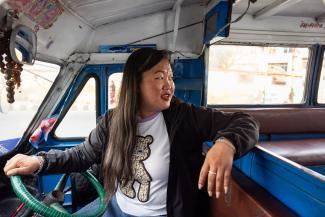
A woman driving a truck in Nepal

A woman driving a truck in Nepal

YOUTH ENTREPRENEURS

Over 60 per cent of Asia’s population is made up of young people, with the vast majority of opportunities for sustainable economic growth and innovation in the region likely to be led by youth. ESCAP has a strong track record on supporting young woman entrepreneurs and is also a proud member of the Strategic Intelligence Hub on youth entrepreneurship which aims to promote thought leadership, meaningful policy discussions and South-South collaboration in this space. ​

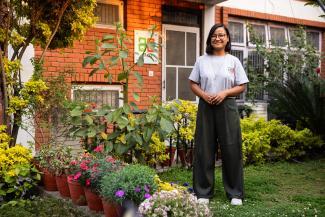
A young entrepreneur from Nepal

A young entrepreneur from Nepal

ENTREPRENEURS WITH DISABILITIES

In Asia, women entrepreneurs, particularly those with disabilities, face considerable challenges in accessing finance, which is a critical barrier to starting and growing their businesses. Persons with disability are 400 times less likely to receive venture capital funding compared to their counterparts. To address this and other barriers faced by women entrepreneurs with disabilities, ESCAP and Impact Hub are collaborating on a comprehensive ecosystem mapping and analysis. This initiative aims to identify specific obstacles and resources to diminish funding disparities. Additionally, in partnership with SheLovesTech, ESCAP is conducting research on the intersection of neurodiversity and women in technology. This study seeks to challenge stereotypes about neurodivergence and redefine perceptions of the strengths and opportunities for women tech founders.​

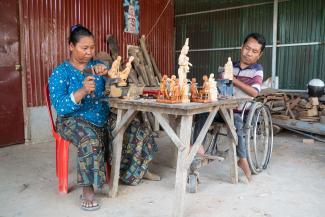
Entrepreneurs with disabilities carving wood sculptures in Bangladesh

Entrepreneurs with disabilities carving wooden sculptures in Cambodia