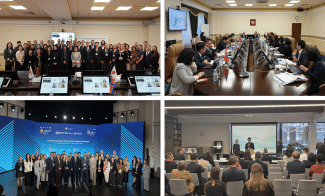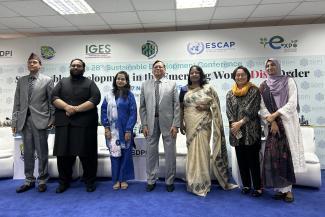
The Ninth South and South-West Asia Subregional Forum on Sustainable Development, convened by the ESCAP Subregional Office for South and South-West Asia in collaboration with the Government of Pakistan, the Sustainable Development Policy Institute (SDPI) and the UN Resident Coordinator’s Office, gathered policy leaders, regional organizations, youth, civil society and regional think tanks to accelerate progress on the 2030 Agenda for Sustainable Development.
“Across South and South-West Asia, inequalities and climate risks are deepening, yet innovation and youth engagement show our region’s capacity to adapt,” said UN Under-Secretary-General and ESCAP Executive Secretary Armida Salsiah Alisjahbana.
In the lead-up to the Forum, ESCAP convened a series of virtual multi-stakeholder consultations that brought together policymakers, researchers and civil society to identify collective priorities under SDGs 6, 7, 9, 11 and 17. Building on these preparatory discussions, a strategic roundtable dialogue was held during the Forum to present the outcomes and practical recommendations emerging from these consultations.
These outcomes set the stage for a forward-looking discussion, especially around SDG 7 (Affordable and Clean Energy) and SDG 11 (Sustainable Cities and Communities), which emerged as cross-cutting priorities for the subregion.
The discussions provided insights into how countries across the subregion are working to expand renewable energy access, strengthen urban resilience and enhance local–national coordination for more inclusive development. Participants from Pakistan, Bhutan and Nepal shared ongoing national efforts that reflect the region’s determination to pursue practical and climate-responsive pathways toward sustainable growth.
Regional organizations and civil society groups complemented these national perspectives by underscoring the importance of coherent policies, knowledge exchange and community engagement to address shared challenges.
Youth also contributed insights on renewable energy and urban inclusion, highlighting their role as both equal partners in shaping policy today and as the generation that will sustain these efforts into the future.
Dedicated sessions on Voluntary National Reviews (VNRs) and Voluntary Local Reviews (VLRs) explored how data coordination and subnational reporting can accelerate SDG implementation. Another discussion on Financing for Development complemented the Forum’s focus on energy and cities by addressing how innovative financing mechanisms such as social impact bonds and green investment platforms can help scale up local implementation and regional cooperation.
The Forum concluded with a clear message: accelerating SDG progress in South and South-West Asia requires transformative, equitable and coordinated action powered by partnerships that connect governments, regional organizations, youth, civil society and think-tanks.