The Asia-Pacific Stats Café Series on “Lessons learned from AI pilot initiatives: what worked, what didn’t work, and why” was held virtually on Monday, 30 March 2026, from 13:00 to 14:30 (Bangkok time, UTC+7).
Presentations:


The Asia-Pacific Stats Café Series on “Lessons learned from AI pilot initiatives: what worked, what didn’t work, and why” was held virtually on Monday, 30 March 2026, from 13:00 to 14:30 (Bangkok time, UTC+7).
Presentations:
Ms. Rachael Beaven, Director, Statistics Division, ESCAP
Mr. François Fonteneau, Senior Advisor, PARIS21 Secretariat, Statistics and Data Directorate, Organisation for Economic Co-operation and Development (OECD)
Mr. Tay Jun Wen, Deputy Director, Digital Services and Transformation Division, Singapore Department of Statistics, Singapore
Mr. Jason NG, Statistician, Census and Statistics Department, Hong Kong, China
Ms. Kudret Elif Berkman, Data Scientist, Turkish Statistical Institute (TURKSTAT), Türkiye
Moderator: Mr. Gary Dunnet, Chief Methodologist, Statistics New Zealand
Statistics Division, ESCAP

Rachael Beaven has over thirty years of experience in government statistics, in particular data preparation and analysis. She has also worked extensively with governments, multilateral agencies and the statistical community, most notably through the United Nations Statistics Division, ECA, ESCAP, World Bank and Paris21.
Ms. Beaven has provided a wide range of technical support, from improving economic and financial statistics to estimating local population using geospatial data. She is one of the founders of the Inclusive Data Charter, launched at the 2018 High-Level Political Forum, to mobilize political commitments and to advance inclusive and disaggregated data. Ms. Beaven also led a programme on monitoring the Sustainable Development Goals with the United Nations Statistics Division and established a data science hub with the Office for National Statistics of the United Kingdom to explore the use of data science, in particular geospatial as well as big data, to monitor progress.
Ms. Beaven holds Master’s degrees in Statistical Applications in Business and Government as well as Business Administration, and a Bachelor’s degree in Geography and Geology.

François Fonteneau has 20 years of international experience in innovation applied to the production and use of statistics.
François works at the Organisation for Economic Co-operation and Development (OECD). He currently holds a dual role as Senior Advisor on Artificial Intelligence (AI) and data quality to the OECD Chief Statistician, and as Coordinator of AI-focused projects with the Partnership in Statistics for Development in the 21st Century (PARIS21).
In 2024, François worked on measuring private and public investment in AI, publishing the OECD’s first methodology on the subject. Previously, he served as Deputy Head at PARIS21. He joined PARIS21 as Coordinator of the World Bank–funded Accelerated Data Program, which aimed to promote open data policies and practices, particularly for survey microdata. François also worked for the Food and Agriculture Organization of the United Nations (FAO) on the methodologies and implementation of agricultural surveys and censuses. At FAO, he also coordinated a G20 initiative to strengthen statistical capacity in Global South countries. He led the development of AGRIS, a survey programme designed to close data gaps related to the Sustainable Development Goals.
François holds a Masters Degree in Agriculture Economics from INA-PG, France and a Masters Degree in Econometrics from ENSAE, France.
François Fonteneau a 20 ans d’expérience internationale dans le domaine de l’innovation appliquée à la production et à l’utilisation des statistiques.
François travaille à l’Organisation de Coopération et Développement Économiques (OCDE). Il occupe actuellement un double rôle : Conseiller principal sur l’intelligence artificielle (IA) et la qualité des données auprès du Statisticien en chef de l’OCDE, et Coordonnateur de projets axés sur l’IA avec le Partenariat en statistique pour le développement au XXIᵉ siècle (PARIS21).
En 2024, François a travaillé sur la mesure des investissements privés et publics dans l’IA, publiant la première méthodologie de l’OCDE en la matière. Auparavant, il était Chef adjoint à PARIS21. Il a débuté à PARIS21 en tant que coordinateur du Programme accéléré de données financé par la Banque Mondiale, visant à promouvoir les politiques et pratiques de données ouvertes, notamment pour les microdonnées d’enquêtes. François a également travaillé pour l’Organisation des Nations Unies pour l’Alimentation et l’Agriculture (FAO/OAA) sur les méthodologies et la mise en œuvre des enquêtes et recensements agricoles. À la FAO, il a aussi coordonné une initiative du G20 visant à renforcer les capacités statistiques dans les pays du Sud. Il a dirigé le développement d’AGRIS, un programme d’enquêtes pour combler les lacunes de données relatives aux Objectifs de Développement Durable.
François est titulaire d’un Diplôme d’ingénieur agronome de l’INA-PG (Paris, France) ainsi que d’un Diplôme de statisticien économiste de l’ENSAE (Paris, France).

Jason has been with the Census and Statistics Department of Hong Kong, China for around four years. He is now in the Data Science Team as team lead, driving digital transformation by working on several AI initiatives. Additionally, he serves as an internal AI trainer, building technical capacity among his colleagues.
Prior to his role in official statistics, Jason worked as a Manager in the Data & Analytics team at a multinational bank.
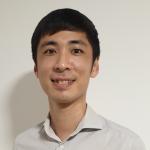
Jun Wen leads the Digital Transformation Unit (DTU) at the Singapore Department of Statistics, where he provides dedicated support for strategic initiatives and accelerates time-to-market for digital solutions. Prior to his current role, he contributed to National Accounts reconciliation work in the Input-Output Tables Division before participating in the 2020 Service Delivery Talent Attachment Programme with Grabtaxi Pte. Ltd.. This attachment enabled him to gain valuable industry experience and bring best practices back to DOS, helping the department benchmark against industry standards.
He played a key role in the formation of DTU that positioned itself as the central hub to drive and prioritise AI pilots across DOS, grooming them into strategic products. DTU contributed to establishing the DOS Community-of-Practice, uplifting officers' technical knowledge in the AI domain, and supporting the incubation of experimental AI pilots into established data services that deliver tangible value to the organisation.
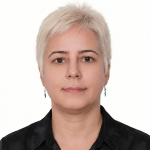
Kudret Elif Berkman works at the Turkish Statistical Institute (TURKSTAT) in the Artificial Intelligence and Data Analysis Group as a data scientist. Her work focuses on developing AI applications and tools for internal institutional use, including offline large language model solutions, speech-to-text, text-to-speech, and retrieval-augmented generation (RAG) systems. She has also worked on machine learning approaches for statistical classifications and is currently involved in developing a media monitoring system based on text classification to support the automated categorization of news content. Her work includes machine learning pipeline development, MLflow-based experiment tracking, AI infrastructure support, and research and development activities.

Gary Dunnet is currently Statistics New Zealand’s Interim Chief Methodologist and has over 35 years’ experience as an official statistician. Gary has primarily worked at Statistics NZ but has had stints in the NSIs of Ireland and Australia. While he has spent most of this time as a methodologist, he has worked in many parts of an NSI (incl. subject matter (National Accounts, Census), planning, IT, and dissemination). In recent times, Gary has been on the SingStat Strategic Advisory Panel and is currently on the Statistics Centre of Abu Dhabi equivalent committee.
Gary is very active in the international community, where he is currently on the IAOS Executive Board and coordinator of the IAOS Young Statistician Prize; he is also on the HLG-MOS Exec Board and chair of the HLG-MOS Applying Data Science and Modern Methods to Official Statistics work-stream; a member of the Chief Methodologists Network and an active participant in the UN ESCAP community and NZ statistical community. Gary is passionate about the development of technical staff and innovation within the statistical system and processes.
