Sorry, you need to enable JavaScript to visit this website.
Skip to main content

16 Nov 2026, 11:00 - 12:30 Indochina Time / Bangkok | Open meeting

Stats Cafe_16Nov2026

Background

Trust is a fundamental building block for official statistics and in an era where data are becoming increasingly available and transferred at rapid rates, trust has become even more essential. Building and maintaining trust require robust and visible quality assurance frameworks to systematically embed and clearly communicate quality from production to usage of official statistics.

In recognition of the importance of trust, the Asia-Pacific Statistics Week 2026 will take place from 30 November to 4 December under the theme “Building Trust in Official Statistics”. Central to the Asia-Pacific Statistics Week is the tenth session of the Committee on Statistics (CST10) of the Economic and Social Commission for Asia and the Pacific (ESCAP) which will be held from 2 to 4 December 2026 at the United Nations Conference Centre in Bangkok, Thailand.

The Week will commence with the twenty-second session of the Governing Council of the Statistical Institute for Asia and the Pacific (SIAP), from 30 November to 1 December, where SIAP’s activities and achievements throughout 2026 will be highlighted enabling discussion and decision on work plan for the following year.

On 1 December, the twenty-first SIAP Management Seminar for heads of national statistical offices will facilitate in-depth deliberation on building trust in official statistics in a digital society with the view to generating key insights for the tenth session of the Committee on Statistics.

The tenth session of the Committee on Statistics will bring together heads of national statistical offices and senior government officials to discuss progress made since the last session, share experiences on building trust in official statistics, and decide on the work of the Committee in the coming years. Several side events and associated events on a variety of topics such as AI, using official statistics in decision-making processes, and inclusive leadership across statistical systems will take place throughout the week.

Objectives

ESCAP is organizing an Asia-Pacific Stats Café session to showcase various aspects of the Asia-Pacific Statistics Week preparing potential participants for a week of deliberation and actions on building trust in official statistics. The Stats Café will:

  • Outline the programme of the Asia-Pacific Statistics Week 2026 with a focus on the official segments of the tenth session of the Committee on Statistics and events related to the theme of trust.
  • Introduce and discuss papers prepared for the Committee session on progress made since the ninth session of the Committee, building trust in official statistics in a digital era, and embedding quality assurance as a foundation for trust in official statistics.
  • Provide an overview of administrative and logistical processes for participating in the Asia-Pacific Statistics Week including letters of credentials, country statements, and registration.

16 Nov 2026
11:00
11:05
Opening session
  • Welcoming participants to the Asia-Pacific Stats Café session by Mr. Sovannaroth Tey, Associate Statistician, Statistics Division, ESCAP and Secretary of the 10th Session of the Committee on Statistics
11:05
11:15
Presentation on the programme of the Asia-Pacific Statistics Week 2026
  • Ms. Rachael Beaven, Director, Statistics Division, ESCAP
11:15
12:00
Panel Discussion on key papers for the 10th session of the Committee on Statistics
  • Moderator: Ms. Rachael Beaven, Director, Statistics Division, ESCAP

The panel enables discussion on the three key papers for the tenth session of the Committee on Statistics: 

  • ESCAP/CST(10)/2: Progress made in advancing official statistics for the 2030 Agenda for Sustainable Development and in implementing the decisions taken by the Committee at its ninth session (中文 | English | Français | Русский)
    • Presenter: Mr. Arman Bidarbakht Nia, Head, Statistical Data Management Unit, Statistics Division, ESCAP
  • ESCAP/CST(10)/4: Building trust in official statistics in a digital society (中文 | English | Français | Русский)
    • Presenter: Ms. Petra Nahmias, Chief, Population and Social Statistics Section, Statistics Division, ESCAP
  • ESCAP/CST(10)/5: Embedding quality assurance as a foundation for trust in official statistics (中文 | English | Français | Русский)
    • Presenter: Ms. Patricia Wong Bi Yi, Associate Statistician, Statistics Division, ESCAP

Discussants:

  • Mr. Koh Eng Chuan, Chief Statistician, Department of Statistics, Singapore
  • Mr. Ahmed Riyaz, Chief Statistician, Maldives Bureau of Statistics
  • Ms Aritita Tekaieti, Republic Statistician, Kiribati National Statistics Office, Ministry of Finance & Economic
  • Mr. Rustem Makhammadiev, Deputy Chairman, National Statistics Committee of the Republic of Uzbekistan
  • Mr. Maxat Turlubayev, Head of the Bureau of National Statistics of the Agency for Strategic Planning and Reforms of the Republic of Kazakhstan
12:00
12:10
Overview of logistical and administrative arrangements for CST10 participants
  • Mr. Sovannaroth Tey, Associate Statistician, Statistics Division, ESCAP and Secretary of the 10th Session of the Committee on Statistics and Secretary of the 10th Session of the Committee on Statistics
12:10
12:25
Q&A
  • Moderator: Mr. Sovannaroth Tey, Associate Statistician, Statistics Division, ESCAP and Secretary of the 10th Session of the Committee on Statistics
12:25
12:30
Wrap-up and closing
  • Mr. Sovannaroth Tey, Associate Statistician, Statistics Division, ESCAP

Speakers

Rachael Beaven
Rachael Beaven
Director, Statistics Division, ESCAP
Know More

Rachael Beaven has over thirty years of experience in government statistics, in particular data preparation and analysis. She has also worked extensively with governments, multilateral agencies and the statistical community, most notably through the United Nations Statistics Division, ECA, ESCAP, World Bank and Paris21.

Ms. Beaven has provided a wide range of technical support, from improving economic and financial statistics to estimating local population using geospatial data. She is one of the founders of the Inclusive Data Charter, launched at the 2018 High-Level Political Forum, to mobilize political commitments and to advance inclusive and disaggregated data. Ms. Beaven also led a programme on monitoring the Sustainable Development Goals with the United Nations Statistics Division and established a data science hub with the Office for National Statistics of the United Kingdom to explore the use of data science, in particular geospatial as well as big data, to monitor progress.

Ms. Beaven holds Master’s degrees in Statistical Applications in Business and Government as well as Business Administration, and a Bachelor’s degree in Geography and Geology.

Petra Nahmias
Petra Nahmias
Chief, Population and Social Statistics Section, Statistics Division, ESCAP
Know More

Petra Nahmias is Chief of the Population and Social Statistics Section at the United Nations Economic and Social Commission for Asia and the Pacific (ESCAP). She leads regional work on civil registration and vital statistics, census, migration statistics, citizen data, gender statistics, and data integration, with a focus on strengthening inclusive and effective statistical systems. Previously, she led the statistics team at UNHCR and worked at the UN Population Division, the UK Department for International Development and the Israel Central Bureau of Statistics. She holds a PhD in Sociology and Demography from Princeton University.

Arman Bidarbakht Nia
Head, Statistical Data Management Unit, Statistics Division, ESCAP
Know More

Arman Bidarbakhtnia leads SDG data analysis and progress assessment for Asia and the Pacific at the Statistics Division of the United Nations Economic and Social Commission for Asia and the Pacific (ESCAP). He previously served at the Statistical Institute for Asia and the Pacific (SIAP) and the Statistical Centre of Iran (SCI). His expertise spans human development measurement, poverty and consumer demand analysis, and survey methodology. He holds a PhD in Economics and an MSc in Applied Statistics.

Patricia Wong Bi Yi
Patricia Wong Bi Yi
Associate Statistician, Statistics Division, ESCAP
Know More

Patricia Wong Bi Yi is an Associate Statistician at United Nations ESCAP with a background in data and statistics, programme management and international economics. In her current role, she translates complex datasets into actionable insights and works with countries to implement data monitoring frameworks. She has extensive experience managing multi-country projects across different sectors in the Asia-Pacific region.

Discussants

Koh Eng Chuan
Koh Eng Chuan
Chief Statistician, Department of Statistics, Singapore
Know More

As Singapore’s Chief Statistician, Dr. Koh Eng Chuan has steered the Department of Statistics (DOS) on its transformation journey to be the first stop for data and data services for Whole-of-Government (WOG), national, and international users. DOS is the Capability Centre of Individual and Business Data, and continuously benchmarks against best practices of the advanced and reputable national statistical organizations, as well as leading companies in the private sector.

Under Dr. Koh’s guidance, DOS tailored demand-driven data products for specific user groups, including enabling data access through the Anonymised Microdata Access Programme for in-depth analyses of socio-economic issues by researchers, providing businesses with data tools with curated and contextualized content for data-driven decision-making, and enhancing DOS’s digital services for the general public. Dr. Koh has also established the Digital Transformation Unit to drive innovations in Artificial Intelligence/Machine Learning, scaling applications to benefit WOG. One such example is the development of the DOS Intelligent Classification Engine (DICE) for statistical classifications, which leverages large-language model.

To uplift the competency of the statistical community, Dr. Koh drives the establishment and growth of the DOS Academy. This serves to equip and upskill statisticians and WOG officers in statistical capabilities, and also to consolidate and recognize the technical and specialized data skills of government statisticians. At the international level, Dr. Koh is a Bureau member of the UN ESCAP’s Committee on Statistics.

Ahmed Riyaz, Maldives
Ahmed Riyaz
Chief Statistician of the Maldives Bureau of Statistics
Know More

Dr. Ahmed Riyaz is the Chief Statistician of the Maldives Bureau of Statistics, appointed on 23 August 2026. With over 20 years of experience in official statistics, education policy, research, and data analytics, he holds a PhD in Mathematics Education from Victoria University of Wellington, New Zealand, a Master of Assessment and Evaluation from The University of Melbourne, Australia, and a Bachelor of Science in Mathematics, Physics, and Computer Science from Bangalore University, India. Prior to his current role, he held senior leadership positions in the Ministry of Education, academia, and Aasandha Company Limited, Maldives, where he contributed to policy development, research, statistical analysis, and evidence-based decision-making.

Aritita Tekaieti
Aritita Tekaieti
Republic Statistician, Kiribati National Statistics Office
Know More
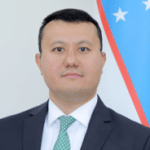
Rustem Makhammadiev
Rustem Makhammadiev
Deputy Chairman of the National Statistics Committee of the Republic of Uzbekistan
Know More

Rustem Makhammadiev is a financial sector and statistics specialist with more than a decade of professional experience in central banking, financial stability, and international economic governance. Since August 2025, he has served as Deputy Chairman of the National Statistics Committee of the Republic of Uzbekistan, where he contributes to the modernization of the national statistical system, strengthening institutional capacity, and advancing the integration of financial and macroeconomic statistics in line with international standards.

Before his current position, Mr. Makhammadiev served as Director of the Financial Stability Department at the Central Bank of Uzbekistan (2021–2025). In this role, he was responsible for monitoring and assessing risks to the financial system, leading the development of macroprudential policies, overseeing research on systemic risks, and directing the publication of the semi-annual Financial Stability Reports. His leadership enhanced the resilience of Uzbekistan’s financial sector and ensured timely communication of systemic risks to policymakers and stakeholders.

From 2019 to 2021, he worked as Advisor to the Executive Director at the International Monetary Fund (IMF) in Washington, D.C., where he participated in Executive Board meetings, provided analytical support, prepared back-to-office reports, and drafted speeches and statements. He represented the Executive Director in Board discussions and advocated for the interests of the IMF constituency countries, including Uzbekistan

Mr. Makhammadiev also held several leadership positions at the Central Bank of Uzbekistan. As Head of the Inflation Division (2018–2019) and Head of the Inflation Modelling and Forecasting Unit (2017–2018), he managed teams responsible for inflation forecasting, survey design, and monetary policy reporting. Earlier, he served as Senior Economist in the Monetary Policy Department (2017), Deputy Head of the Press Service (2014–2017), Senior Economist in the Payment Systems Department (2011–2014), and Lead Economist in the same department (2011). These roles gave him a strong foundation in macroeconomic analysis, policy communication, and payment system regulation

He holds a Master of Business Administration (MBA) in Finance from the Korea Advanced Institute of Science and Technology (2015–2017), and a Bachelor’s degree in Finance from the Tashkent Financial Institute (2006–2010).

Mr. Makhammadiev is fluent in Uzbek, Russian, and English. His main areas of expertise include financial stability, macroprudential policy, inflation analysis, monetary policy, economic statistics, and international cooperation. He has authored and contributed to publications including the Debt Service Ratio Analysis for Individuals and the Financial Stability Reports (2022, H1 2022).

Maxat Turlubayev, Kazakhstan
Maxat Turlubayev
Head of the Bureau of National Statistics of the Agency for Strategic Planning and Reforms of the Republic of Kazakhstan
Know More

Maxat Turlubayev is the Head of the Bureau of National Statistics of the Agency for Strategic Planning and Reforms of the Republic of Kazakhstan. Since 2022, he has led efforts to implement digital transformation and build a national data ecosystem, resulting in significant progress.

Key legislative amendments have been introduced, granting new mandates in managing the quality of administrative data and developing the data economy, the institution of data controllers has been established, access to microdata for international users has been expanded, and access to private-sector data has been secured. Agreements have been concluded with mobile network operators and commercial banks.

The “E-Statistics” Information System (version 3.0) is under development, digital solutions incorporating artificial intelligence being introduced for data processing and dissemination. A virtual laboratory has been established and new data sources are being integrated, including scanner data and fiscal data operator data (FDO), banking transactions and mobile positioning data.

Moderator

Rachael Beaven
Rachael Beaven
Director, Statistics Division, ESCAP
Know More

Rachael Beaven has over thirty years of experience in government statistics, in particular data preparation and analysis. She has also worked extensively with governments, multilateral agencies and the statistical community, most notably through the United Nations Statistics Division, ECA, ESCAP, World Bank and Paris21.

Ms. Beaven has provided a wide range of technical support, from improving economic and financial statistics to estimating local population using geospatial data. She is one of the founders of the Inclusive Data Charter, launched at the 2018 High-Level Political Forum, to mobilize political commitments and to advance inclusive and disaggregated data. Ms. Beaven also led a programme on monitoring the Sustainable Development Goals with the United Nations Statistics Division and established a data science hub with the Office for National Statistics of the United Kingdom to explore the use of data science, in particular geospatial as well as big data, to monitor progress.

Ms. Beaven holds Master’s degrees in Statistical Applications in Business and Government as well as Business Administration, and a Bachelor’s degree in Geography and Geology.

Sovannaroth Tey
Sovannaroth Tey
Associate Statistician, Economic and Environment Statistics Section, Statistics Division
Know More

Sovannaroth Tey is an Associate Statistician at the Statistics Division, ESCAP, where he contributes to the management and delivery of technical assistance and knowledge management programmes on geospatial data, big data, data integration, civil registration and vital statistics. Prior to joining ESCAP, he was a Senior Programme Manager at Australia's Department of Foreign Affairs and Trade managing Government of Australia's bilateral development programmes and budgets advancing renewable energy, clean water, climate-resilient roads, and public financial management improvements in Cambodia.

for more information, please contact

Statistics Division +66 2288 1234 [email protected]
Print this page