Sorry, you need to enable JavaScript to visit this website.
Skip to main content

22 Sep 2025, 12:00 - 13:30 Indochina Time / Bangkok | Open meeting

Stats Cafe_22Sep2025

Artificial Intelligence (AI) is transforming the way we live, work, and make decisions—redefining possibilities across every sector, including official statistics. As National Statistical Offices (NSOs) navigate this evolving landscape, AI offers powerful tools to enhance data production, analysis, and dissemination. But with great potential comes the need for thoughtful governance to ensure ethical, transparent, and responsible use. At the global level, the Fundamental Principles of Official Statistics provide a firm foundation for official statistics, ensuring professional standards, transparency, and accountability.

This session was tailored for Chief Statisticians and senior policymakers to explore real-world applications of AI in official statistics, share experiences from NSOs already integrating AI into their operations, and examine the key risks and considerations that came with this transformative technology. It considered how to harness AI’s potential while upholding the integrity and trust that official statistics demand.

This Stats Café was part of the ongoing work of the AI for Official Statistics DASH team and served as a gateway to a series of upcoming sessions exploring the role of AI in official statistics. It set the stage for deeper discussions and shared learning in future Stats Cafés dedicated to this topic.

  • Strategic adoption: What are the key strategic steps for integrating AI as a tool in national statistical offices?
  • Practical applications: In which areas can AI be applied to increase the quality of official statistics, the efficiency of the data lifecycle, and the potential for innovation?
  • Governance and ethics: How can national statistical offices identify and mitigate risks related to bias, ethical and legal concerns, and public trust in statistics?

22 Sep 2025
12:00
12:05
Welcome Remarks
  • Ms. Rachael Beaven, Director, Statistics Division, ESCAP
12:05
12:20
Keynote speaker
  • Mr. Osama Rahman, Director, Strategy, Planning, Innovation, Delivery, Assurance, and Support, UK Office for National Statistics
12:20
12:50
Country experiences
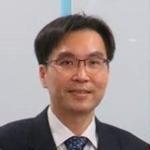
  • Singapore: Dr. Koh Eng Chuan, Chief Statistician, Department of Statistics, Singapore
  • New Zealand: Mr. Gary Dunnet, Chief Methodologist, Statistics New Zealand
  • China: Ms. Li Hui, Deputy Director-General, Statistical Library and Information Service, National Bureau of Statistics, China
  • India: Mr. Shri Rohit Bhardwaj, Deputy Director General, Ministry of Statistics & Programme Implementation, Government of India
12:50
13:00
Development partner perspectives
  • UNECE: InKyung Choi, High Level Group on Modernisation of Official Statistics
  • ESCAP: Richard Tonkin/ Dayyan Shayani, Statistician, Statistics Division, ESCAP
13:00
13:25
Open question and answer session
13:25
13:30
Wrap up and Closing

Welcome Remarks

Rachael Beaven
Rachael Beaven
Director, Statistics Division, ESCAP
Know More

Rachael Beaven has over thirty years of experience in government statistics, in particular data preparation and analysis. She has also worked extensively with governments, multilateral agencies and the statistical community, most notably through the United Nations Statistics Division, ECA, ESCAP, World Bank and Paris21.

Ms. Beaven has provided a wide range of technical support, from improving economic and financial statistics to estimating local population using geospatial data. She is one of the founders of the Inclusive Data Charter, launched at the 2018 High-Level Political Forum, to mobilize political commitments and to advance inclusive and disaggregated data. Ms. Beaven also led a programme on monitoring the Sustainable Development Goals with the United Nations Statistics Division and established a data science hub with the Office for National Statistics of the United Kingdom to explore the use of data science, in particular geospatial as well as big data, to monitor progress.

Ms. Beaven holds Master’s degrees in Statistical Applications in Business and Government as well as Business Administration, and a Bachelor’s degree in Geography and Geology.

Keynote Speaker

Osama Rahman
Osama Rahman
Director, Strategy, Planning, Innovation, Delivery, Assurance, and Support, UK Office for National Statistics
Know More

Osama is the Director of Strategy, Planning, Innovation, Delivery, Assurance, and Support in the Economic Statistics and Environment Group within the Office for National Statistics. Previously he was the Director of the Data Science Campus, the UK Office for National Statistics’ innovation Directorate.  He took over the Campus in September 2022, having previously been the Department for Education’s Chief Analyst and Chief Scientific Adviser for four and a half years.

He is also the first Chair of the United Nations Data Science Leaders Network, on the Bureau of the United Nations Committee of Experts on Big Data, and on the Executive Board of the United Nations Economic Commission for Europe’s High-Level Group on the Modernisation of Statistics under whose auspices he is leading international work on “The Future of NSOs”.

Before joining DfE, Osama spent fourteen and a half years at the Ministry of Justice, joining as an Economic Adviser, before becoming Chief Economist, and later becoming the MoJ’s Chief Analyst and Chief Scientific Adviser for three and a half years.

He also worked at the Civil Aviation Authority for a year on airports regulation, having spent 10 years as a lecturer and senior lecturer in economics at various UK universities.

Panelists

Koh Eng Chuan
Koh Eng Chuan
Chief Statistician, Department of Statistics, Singapore
Know More

As Singapore’s Chief Statistician, Dr. Koh Eng Chuan has steered the Department of Statistics (DOS) on its transformation journey to be the first stop for data and data services for Whole-of-Government (WOG), national, and international users. DOS is the Capability Centre of Individual and Business Data, and continuously benchmarks against best practices of the advanced and reputable national statistical organizations, as well as leading companies in the private sector.

Under Dr. Koh’s guidance, DOS tailored demand-driven data products for specific user groups, including enabling data access through the Anonymised Microdata Access Programme for in-depth analyses of socio-economic issues by researchers, providing businesses with data tools with curated and contextualized content for data-driven decision-making, and enhancing DOS’s digital services for the general public. Dr. Koh has also established the Digital Transformation Unit to drive innovations in Artificial Intelligence/Machine Learning, scaling applications to benefit WOG. One such example is the development of the DOS Intelligent Classification Engine (DICE) for statistical classifications, which leverages large-language model.

To uplift the competency of the statistical community, Dr. Koh drives the establishment and growth of the DOS Academy. This serves to equip and upskill statisticians and WOG officers in statistical capabilities, and also to consolidate and recognize the technical and specialized data skills of government statisticians. At the international level, Dr. Koh is a Bureau member of the UN ESCAP’s Committee on Statistics.

Gary Dunnet
Gary Dunnet
Chief Methodologist, Statistics New Zealand
Know More

Gary Dunnet is currently Statistics New Zealand’s Interim Chief Methodologist and has over 35 years’ experience as an official statistician. Gary has primarily worked at Statistics NZ but has had stints in the NSIs of Ireland and Australia. While he has spent most of this time as a methodologist, he has worked in many parts of an NSI (incl. subject matter (National Accounts, Census), planning, IT, and dissemination). In recent times, Gary has been on the SingStat Strategic Advisory Panel and is currently on the Statistics Centre of Abu Dhabi equivalent committee.

Gary is very active in the international community, where he is currently on the IAOS Executive Board and coordinator of the IAOS Young Statistician Prize; he is also on the HLG-MOS Exec Board and chair of the HLG-MOS Applying Data Science and Modern Methods to Official Statistics work-stream; a member of the Chief Methodologists Network and an active participant in the UN ESCAP community and NZ statistical community. Gary is passionate about the development of technical staff and innovation within the statistical system and processes.

Li Hui
Li Hui
Deputy Director-General, Statistical Library and Information Service, National Bureau of Statistics, China
Know More

Li Hui previously held the position of Senior Statistician at the Department of Service Statistics of the NBS, where she led multiple key statistical projects, including the Index of Service Production and service industrial statistics. At present, she oversees website management and public services of the NBS.

Shri Rohit Bhardwaj
Rohit Bhardwaj
Additional Director General, Ministry of Statistics & Programme Implementation, Government of India
Know More

Mr Rohit Bhardwaj brings over two decades of distinguished service as a 1998-batch officer of the Indian Statistical Service, currently serving as Deputy Director General at India's National Statistics Office. With more than 26 years of comprehensive government experience, he has emerged as a focal point in modernizing official statistics through innovative technology adoption. Mr Bhardwaj has also been successfully implementing the digital modernisation plan of NSO India, leading to products like comprehensive portals and dashboards of data products, along with a mobile app for ease of data dissemination.

The data innovation Lab started under his stewardship has been gaining international recognition for its Generative AI use cases and innovation networks in the field of Official statistics. His paper on a collaborative network for innovation was selected for presentation at the UNECE Workshop on AI & Official Statistics in Geneva. Mr Bhardwaj is also a member of the UNCEBD Bureau and the Data Science Leaders Network. Mr Bhardwaj focuses on identifying use cases for generative AI in official statistics, establishing sustainable innovation architectures within National Statistical Systems, and implementing frontier technologies to strengthen statistical capacity and responsiveness. Recently, Mr Bhardwaj was also invited to present the collaborative network model of NSO India to the AI task team of PARIS 21.

Mr Bhardwaj has also led several demographic and health surveys, including the Annual Health Survey, the world's largest health and demographic survey. Mr Bhardwaj has also successfully implemented a project for end-to-end automation of the data lifecycle of the Sample Registration System, the official source of vital statistics for India. Beyond statistics, his diverse leadership extends to sports governance, organizing major events in India.

Development partner perspectives

InKyung Choi
InKyung Choi
Chief Statistical Modernisation and Management Unit, UNECE
Know More
Dayyan Shayani
Dayyan Shayani
Statistician, Statistics Division, ESCAP
Know More

Dayyan Shayani is a statistician at the United Nations ESCAP Statistics Division. He coordinates the data team responsible for the Asia-Pacific SDG Gateway and co-authors the annual Asia-Pacific SDG progress report. He is passionate about visualizing data for better decisions.

Richard Pearce Tonkin
Statistician, Economic and Environment Statistics Section, Statistics Division, ESCAP
Know More

Richard is an experienced statistician currently working at the United Nations ESCAP since February 2023, focusing on the ESCAP Statistics Division. Prior to this role, Richard served in various capacities within the United Nations and the Office for National Statistics, including positions such as Statistician in the Development Data & Outreach Branch and Assistant Director in the Public Policy Analysis Directorate. Richard's career includes significant contributions to well-being, inequalities, and sustainable economic performance, leading teams, and managing large-scale social surveys. Richard has also held consultant roles with the World Bank Group and has a solid educational background with a PhD and a BSc (Hons) from the University of Nottingham.

Moderator

Richard Pearce Tonkin
Statistician, Economic and Environment Statistics Section, Statistics Division, ESCAP
Know More

Richard is an experienced statistician currently working at the United Nations ESCAP since February 2023, focusing on the ESCAP Statistics Division. Prior to this role, Richard served in various capacities within the United Nations and the Office for National Statistics, including positions such as Statistician in the Development Data & Outreach Branch and Assistant Director in the Public Policy Analysis Directorate. Richard's career includes significant contributions to well-being, inequalities, and sustainable economic performance, leading teams, and managing large-scale social surveys. Richard has also held consultant roles with the World Bank Group and has a solid educational background with a PhD and a BSc (Hons) from the University of Nottingham.

for more information, please contact

Statistics Division +66 2288 1234 [email protected]
Print this page