

The Asia-Pacific region accounts for approximately half of the world's GDP, population, energy consumption, and global greenhouse gas emissions. Coal, natural gas, and oil constitute around 85 per cent of all energy consumed in the region. Over the next 25 years, the Asia-Pacific region will outpace most other regions around the world in consumption and emissions. This is due primarily to the fact that fossil fuels remain central to the region’s energy supply.2 Accelerating the energy transition in Asia is therefore crucial to achieving global net zero targets.
Despite efforts in the region to boost the financing of energy transitions, notably by the Just Energy Transition Partnerships (JETPs) in Indonesia and Viet Nam, current investment levels fall short by nearly 40 per cent annually, creating a significant financing gap.
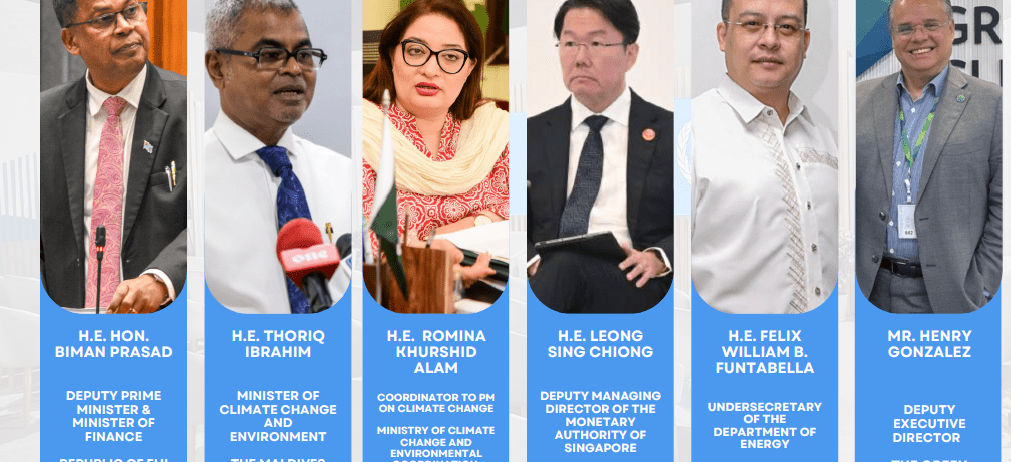
The business-as-usual (BAU) approach to financing the energy transition, characterized by continued reliance on coal, oil, and gas, must be reconsidered to unlock the potential of renewable energy investments. Collaboration between ministries of energy, finance, environment, infrastructure, and natural resources is essential to overcome these challenges and foster the development of sustainable finance and energy ecosystems. The ESCAP high-level ministerial dialogue on Energy Transition Financing will explore innovative ways that will pivot us away from BAU approaches through sharing country experiences and country insights on challenges and opportunities in accelerating the financing of the energy transition.
Objectives:
This Head of State and ministerial-level dialogue aims to identify the prerequisites needed to move away from BAU energy financing, share successful country experiences, and exchange insights into what else is needed at the regional level in terms of financing the energy transition.
1. Share experiences on the role of fiscal policies, financing policies, and macroeconomic strategies to bridge the investment gap in clean energy infrastructure.
2. Address the challenges of member States for attracting international finance for the energy transition.
3. Discuss the importance of coherence across line ministries in enabling innovative financing solutions
